
How to Set Up a Company in a Dubai Free Zone: 2026 Guide
A practical guide to Dubai free zone company registration and setup: choosing the right zone, matching your business activity to the licence, preparing the application, planning visas and banking, understanding the main cost drivers and getting the company operational after incorporation.
Setting up a company in a Dubai free zone starts with defining what the business will actually do, choosing a free zone and licensed activities that support that model, confirming the company structure and workspace, preparing the shareholder documents, completing the authority application and then dealing with the practical post-licence steps such as visas, banking, bookkeeping and tax registration.

Dubai free zones can work well for consultants, digital companies, traders, e-commerce businesses, international groups and many other models. But “free zone” is not one single licence or one set of rules. Each authority has its own permitted activities, facilities, company structures, immigration arrangements and application requirements.
That means the first question should not be “Which package is cheapest?” It should be “Which structure lets this business operate the way it needs to operate?”
What Is a Dubai Free Zone Company?
A Dubai free zone company is incorporated and licensed through one of Dubai's designated free-zone authorities rather than through the standard mainland licensing route.
The authority determines the activities available under its licences, the company structures it supports, workspace requirements and the immigration or visa arrangements associated with the setup. Some free zones have broad activity lists, while others are closely associated with particular sectors or infrastructure.
Common reasons founders consider a free zone include foreign ownership, authority-led incorporation processes, flexible workspace options in some jurisdictions, founder and employee visa routes, and access to specialist business ecosystems.
The right free zone is the one that fits the business model, customers, activity, people and operational requirements—not simply the lowest advertised licence price.
If you already know that a free-zone structure is appropriate and want to compare individual jurisdictions, see First Elite Global's Dubai free zone company formation guide.
Free Zone vs Mainland vs Offshore: Which Route Fits?
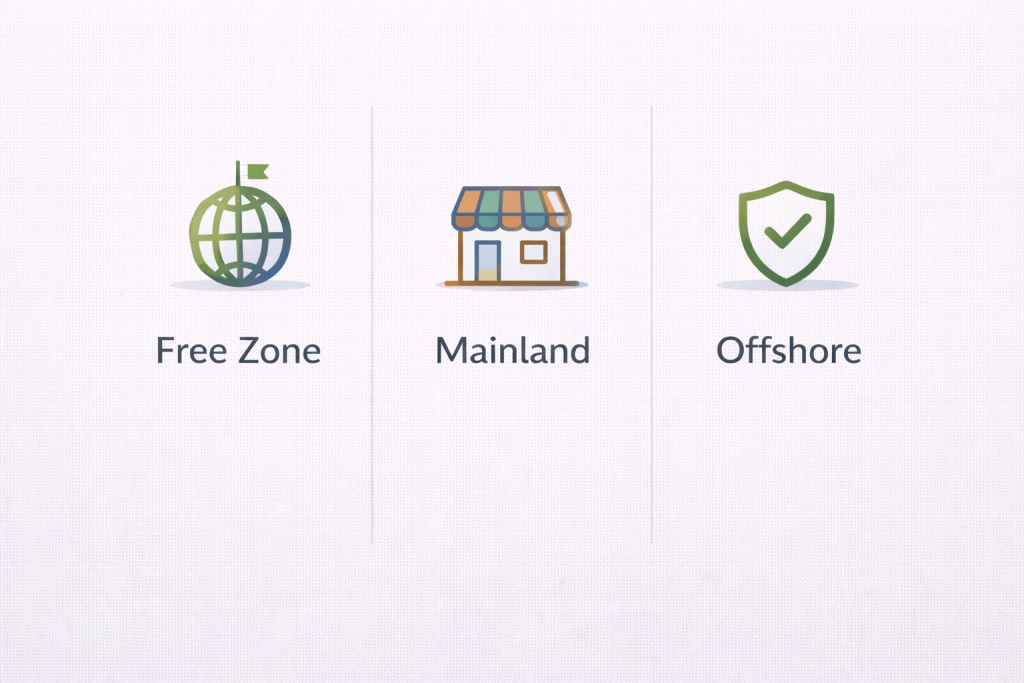
Before comparing free zones, confirm that a free-zone company is actually the right structure. Mainland and offshore structures solve different problems.
| Consideration | Free Zone | Mainland | Offshore |
|---|---|---|---|
| Typical purpose | Active UAE business incorporated through a free-zone authority. | Active business licensed for onshore operations through the relevant Dubai authority. | Usually considered for holding, asset or international structuring rather than a standard UAE operating business. |
| Workspace | Requirements vary by authority, licence and visa plan. | Commercial-premises requirements depend on activity and licensing route. | Not normally selected because the business needs a conventional operating office. |
| Visas | Visa availability commonly depends on the selected package, facility and authority rules. | Employment and owner residence arrangements depend on the licensed entity and immigration requirements. | Generally not the route chosen when UAE residence visas are a core objective. |
| Best question to ask | Does this free zone support my activity, customers, team and future growth? | Do I need a business designed primarily for direct onshore Dubai operations? | Is my main requirement a holding or international corporate structure rather than local operations? |
Dubai Executive Council Resolution No. 11 of 2025 introduced a framework under which establishments licensed by a Dubai free-zone authority may operate outside the free zone and within Dubai when the necessary licence or permit is obtained from the Department of Economy and Tourism. The exact route still depends on the business, activity and applicable requirements, so a free-zone licence should not be treated as automatic permission to conduct every activity anywhere in mainland Dubai.
Read the Dubai Media Office announcement on Resolution No. 11 of 2025 for the official summary. If onshore trading is central to the business model, it is also worth comparing the Dubai mainland company setup route before incorporating.
For a structure intended primarily for holding or international purposes, see the Dubai offshore company setup guide.
Use This 8-Point Free Zone Fit Check
Do this before comparing licence packages. It turns a long list of jurisdictions into a practical shortlist based on how the company will actually operate.
Activity fit
Confirm that the exact products or services you intend to provide can be licensed by the authority.
Customer geography
Consider where customers are based and whether the company will mainly serve Dubai, the wider UAE or international markets.
Visa plan
Work out how many owner and employee visas you need now and how that number may change over the next year.
Workspace
Check whether a flexi-desk, shared office, dedicated office, warehouse or another facility type is required.
Banking profile
Think about the industry, expected payments, countries involved, ownership and the evidence available to explain the business.
Goods and logistics
If products are involved, consider importing, exporting, customs, warehousing and fulfilment requirements before choosing a zone.
External approvals
Regulated and specialist activities may involve approvals beyond the free-zone authority itself.
Year-two cost
Compare renewal, workspace, visa and ongoing compliance requirements rather than looking only at the initial licence fee.
Dubai Free Zone Company Registration & Setup: 10 Steps
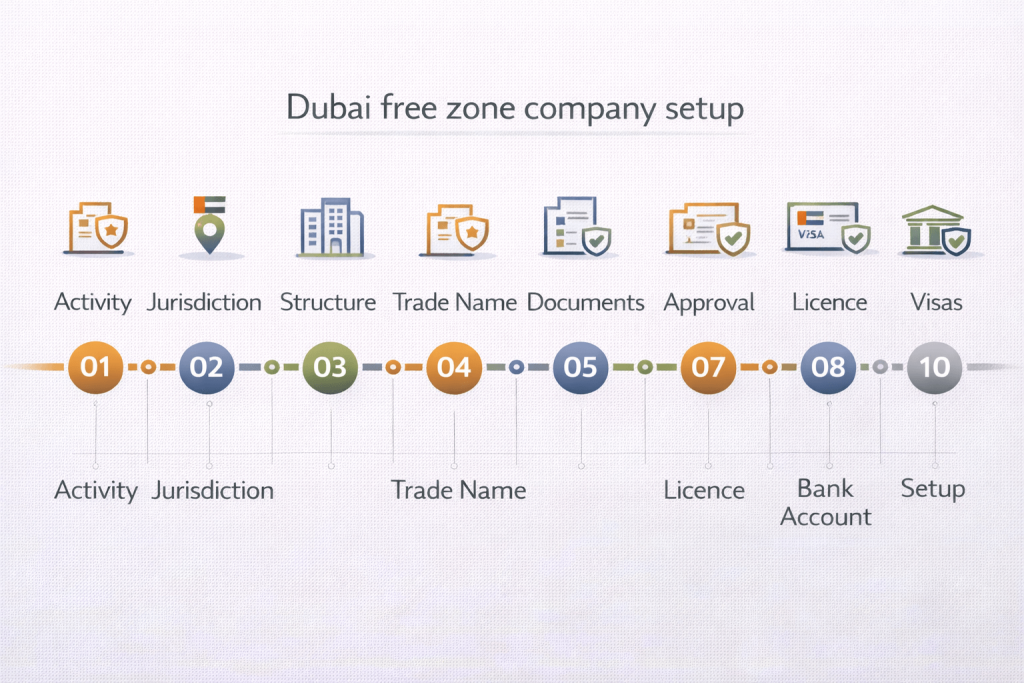
Forms and terminology vary between authorities, but most free-zone formations follow the same broad sequence.
Define exactly what the company will do
Write a clear description of what you sell, how you earn revenue, who you sell to and whether the business deals in services, goods or both. This gives you a practical basis for choosing licensed activities.
Shortlist free zones against the operating model
Use activity fit, customers, visas, facilities, banking, logistics, external approvals and renewal requirements to narrow the options.
Choose the company structure
Your options depend on the chosen authority. A setup may involve a single shareholder, multiple shareholders or a branch of an existing company. Corporate shareholders normally create additional ownership and authorisation documentation.
Select and reserve the trade name
The proposed name must satisfy the naming rules that apply to the jurisdiction. Avoid assuming that a name is available until it has been accepted through the relevant process.
Prepare the application documents
Gather shareholder, manager and ownership documents early. If the structure includes a corporate shareholder, allow extra time for corporate documents, ownership information and authorisation records where required.
Submit the application and complete authority checks
The authority reviews the proposed activities, ownership, company information, name and other required information. Regulated activities can involve additional approvals.
Complete incorporation and licence issuance
Once the applicable approvals, documents and payments are completed, the authority issues the relevant company and licensing records. The exact document set varies by legal form and jurisdiction.
Complete establishment and immigration steps if required
Companies that need residence or employment visas generally have additional immigration or establishment-file processes after the licence is issued.
Process owner and employee visas
Follow the applicable immigration route for shareholders and employees. Medical fitness, Emirates ID and other steps depend on the applicant and current immigration requirements.
Make the company operational
Incorporation is not the finish line. Set up bookkeeping, invoicing, contracts, Corporate Tax compliance, banking preparation and the basic operating records the business will need from day one.
Documents to Prepare for a Dubai Free Zone Application
There is no universal document list for every Dubai free zone. Requirements change according to the authority, activity, legal form, shareholder type and applicant circumstances. Treat the following as a preparation list rather than an authority-specific checklist.
Individual shareholders
- Valid passport copy
- Personal and contact details
- Residential-address evidence where requested
- Recent photograph where required
- UAE visa or Emirates ID information where relevant
Corporate shareholders
- Certificate of incorporation or registration
- Constitutional company documents
- Ownership and beneficial-owner information
- Board or shareholder authorisation where required
- Additional notarisation, attestation or legalisation where applicable
Business information
- Clear description of products or services
- Proposed licensed activities
- Shareholding and management structure
- Expected customer and supplier markets
- Business plan where the authority or activity requires one
Prepare for banking too
- Founder or shareholder background
- Expected transaction profile
- Source-of-funds information where requested
- Contracts, proposals or evidence explaining intended operations
- Clear ownership documentation
The application file and the banking file are not identical. Banks conduct their own due diligence and can request information beyond what was needed to incorporate the company.
Choose Licence Activities Around What You Actually Sell
Free-zone authorities use their own activity lists and licence categories. Common broad categories can include professional or service activities, trading, industrial activities and e-commerce, but the terminology and available combinations vary.
The important part is not the label on the package. It is whether the permitted activity accurately reflects the company's real revenue-generating work.
A useful activity check
Compare the proposed licence activities with:
- the products and services shown on your website;
- what invoices will describe;
- what customer contracts say;
- what suppliers and payment providers will see;
- the countries and industries involved in transactions.
A cheaper licence is poor value if the permitted scope does not support the way the company intends to earn revenue.
If you are comparing specific jurisdictions, the IFZA company formation guide is one example of how activity, workspace, visas and company structure can vary within an individual Dubai free zone.
Plan Visas Before You Choose a Package
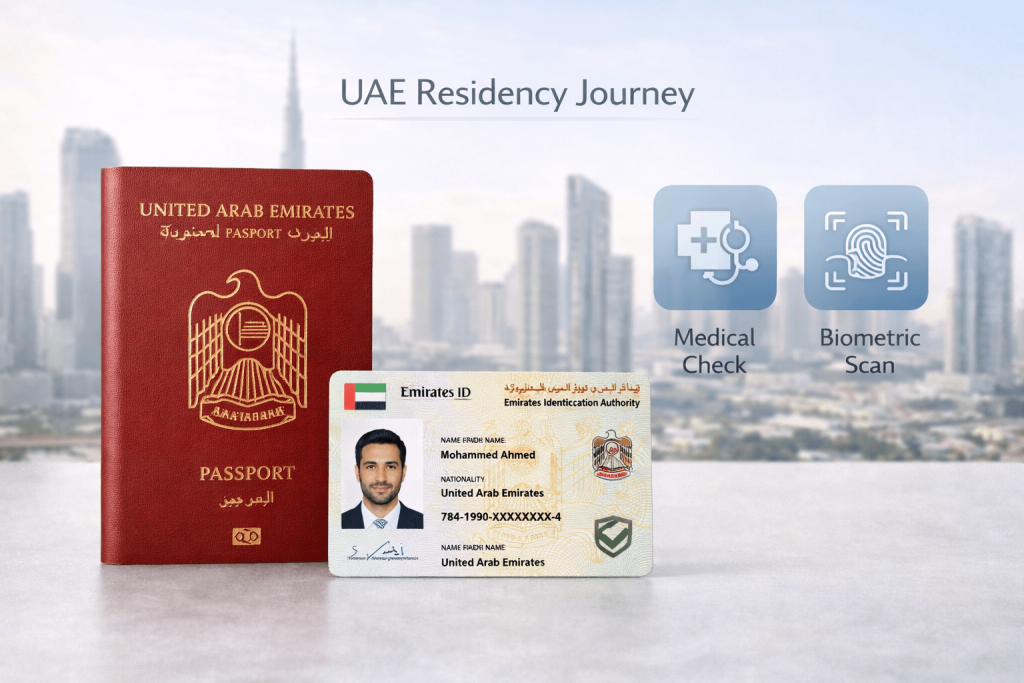
Visa requirements should be considered before paying for the setup because the available allocation can be connected to the selected free-zone package, workspace and authority rules.
Ask these questions first
- Does the owner need UAE residence immediately?
- How many employees will require visas during the first year?
- Will the company need to increase its visa capacity later?
- Does the proposed workspace support the required allocation?
- Will eligible family members also need to be sponsored?
Investor, partner and employment terminology varies between structures and immigration routes. Eligible dependants may also be sponsored subject to the sponsor's status and the immigration requirements in force at the time.
Allow for post-licence steps such as establishment records, immigration applications, medical-fitness procedures and Emirates ID requirements where applicable. The company licence and the residence process should be planned as connected—but separate—workstreams.
What Determines Dubai Free Zone Setup Cost?
There is no single meaningful price for every Dubai free zone company. Your first-year budget depends on the jurisdiction and the operating choices attached to the company.
- Licence and registration. Authority fees vary according to the jurisdiction, legal form and licensed activities.
- Workspace or facility. A flexi-desk, shared workspace, office, warehouse or other facility can materially change the total.
- Visas and immigration. Costs change with the number of shareholders or employees requiring residence processing and the associated immigration steps.
- Additional approvals. Specialist or regulated activities may involve authorities outside the free zone.
- Corporate structure. Corporate shareholders and more complex ownership can require additional documents and processing.
- Ongoing operations. Renewals, bookkeeping, tax compliance, workspace and future visas should form part of the budget from the start.
How long does formation take?
The sensible answer is that it depends on the authority, business activity, shareholder structure, external approvals and whether the submitted documents are complete.
Licence issuance may be relatively quick for a straightforward structure, but do not confuse incorporation time with the time required to become fully operational. Visas, bank onboarding, premises, tax registrations and other post-licence work can continue after the licence has been issued.
Ask what the quote includes, what is paid to the authority, which workspace is included, how many visas are covered, what renewal looks like and which costs remain outside the quoted package.
Make the Company Bank-Ready from Day One
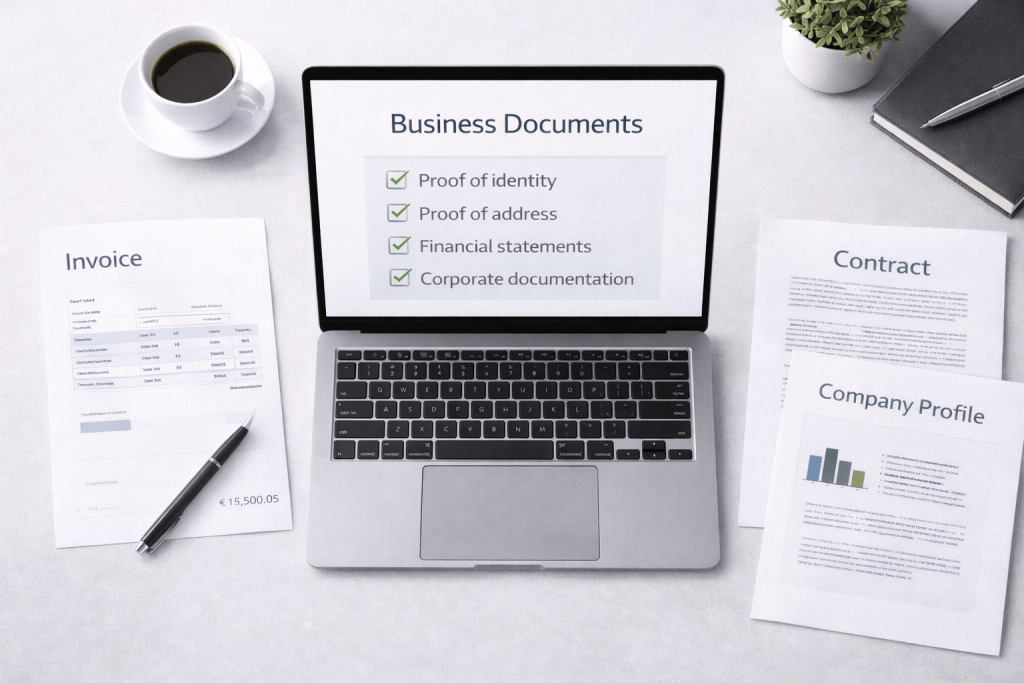
A trade licence does not guarantee a corporate bank account. Banks carry out their own customer due diligence and assess the company, shareholders, business activity, countries involved, expected transactions and supporting evidence.
Prepare a simple operating file
- one-page description of the company and business model;
- clear list of products or services that matches the licence;
- ownership and beneficial-owner information;
- expected customer and supplier markets;
- website or credible business presence where appropriate;
- contracts, proposals or invoices where available;
- founder CV or professional background for relevant businesses;
- source-of-funds and transaction information when requested.
The goal is not to manufacture evidence. It is to make the legitimate commercial purpose of the company easy to understand and to keep the information presented to the bank consistent with the licence and actual business activity.
Need to compare the formation route before you apply?
First Elite Global can help you compare Dubai free zones against your business activity, ownership, workspace and visa requirements, then coordinate the agreed formation steps.
Corporate Tax and VAT: Do Not Assume “Free Zone” Means Tax-Free
UAE free-zone companies fall within the Corporate Tax framework. Being incorporated in a free zone does not, by itself, mean that every type of income is automatically taxed at 0%.
Under the Federal Tax Authority's Free Zone Person guidance, a business that meets the conditions to be a Qualifying Free Zone Person is subject to:
- 0% Corporate Tax on Qualifying Income; and
- 9% Corporate Tax on taxable income that is not Qualifying Income.
The conditions and definition of Qualifying Income matter. A Free Zone Person, including a Qualifying Free Zone Person, also has Corporate Tax registration and compliance obligations.
You can review the FTA guidance for Free Zone Persons and the FTA Corporate Tax registration service.
What about VAT?
VAT should be assessed separately. Treatment depends on the supplies the company makes, its taxable activity and the applicable VAT rules. Do not assume that incorporating in a free zone removes VAT obligations.
Set up bookkeeping and document retention from the beginning, understand the company's Corporate Tax registration and filing position, and obtain tax advice that reflects the actual transactions rather than relying on the word “free zone”.
Six Common Free Zone Setup Mistakes
1. Choosing the jurisdiction before confirming the activity
Start with the real business model and licensed activities. Then compare jurisdictions that can support them.
2. Buying a package that cannot support the visa plan
Consider the number of owners and employees who need residence processing before selecting the facility or package.
3. Treating the lowest first-year price as the total cost
Ask about facilities, immigration, visas, renewal fees, external approvals and post-formation requirements.
4. Using licence activities that do not match the real business
Keep the licence, website, invoices, contracts and actual revenue model aligned.
5. Waiting until after incorporation to think about banking
Prepare the business profile, ownership records and operating evidence while the company is being established.
6. Assuming mainland activity is automatically covered
The 2025 Dubai framework can provide routes for free-zone establishments to operate outside their zone, but the required DET licence or permit and the applicable activity conditions still need to be confirmed.
A Practical 30-Day Plan After the Licence Is Issued
Incorporation gives you the legal company. The next objective is to turn that company into an operating business with the right records and processes.
- Organise incorporation records
- Set up bookkeeping
- Confirm immigration and visa steps
- Prepare banking documentation
- Progress required visas
- Prepare website and business profile
- Create invoice templates
- Prepare contracts or proposals
- Progress bank onboarding
- Review payment requirements
- Set up company email and systems
- Organise tax records
- Begin normal commercial activity
- Maintain invoices and contracts
- Document monthly finance routines
- Calendar renewals and filing dates
Not every company will follow this exact timetable. The purpose is to prevent licence issuance from becoming a stopping point while banking, accounting, visas and operational documents are left until later.
Frequently Asked Questions
How do I set up a company in a Dubai free zone?
Define the business activity and ownership structure, compare suitable free zones, select the licensed activities and facility, prepare the required shareholder documents, submit the authority application and complete the applicable incorporation and licence steps. Visas, banking, tax registration and operational setup generally follow or run alongside incorporation.
How long does Dubai free zone company setup take?
There is no single timeline for every company. It depends on the selected authority, activities, shareholders, external approvals and whether the documents are complete. Visa and banking processes can continue after the licence itself has been issued.
Do I need a local sponsor for a Dubai free zone company?
Dubai free-zone companies can generally be established with foreign ownership, subject to the chosen authority, legal structure, licensed activity and applicable requirements.
Can a Dubai free zone company operate in mainland Dubai?
Potentially, but not automatically. Dubai Executive Council Resolution No. 11 of 2025 provides a framework for establishments licensed by Dubai free-zone authorities to operate outside their zones and within Dubai where the necessary Department of Economy and Tourism licence or permit is obtained. The appropriate route depends on the activity and circumstances.
What documents are normally needed?
Passport and shareholder information are common starting points. Depending on the authority and structure, proof of address, photographs, UAE residence information, business information and additional corporate-shareholder records may also be required. The final checklist should come from the selected free-zone authority and activity.
Does a Dubai free zone company pay Corporate Tax?
Free Zone Persons are within the UAE Corporate Tax framework. A company that satisfies the conditions to be a Qualifying Free Zone Person can be subject to 0% Corporate Tax on Qualifying Income and 9% on taxable income that is not Qualifying Income. Free-zone entities also have Corporate Tax registration and filing obligations.
Can I get visas through a Dubai free zone company?
Many free-zone company setups provide routes for owner and employee residence visas. The number available and the requirements can depend on the free zone, company package, facility and current immigration rules.
Is a Dubai free zone suitable for e-commerce?
It can be, provided the selected authority offers activities that match the intended e-commerce model. Businesses selling physical goods should also consider import, customs, warehousing, fulfilment and mainland distribution requirements rather than choosing a licence based only on its e-commerce label.
Which Dubai free zone is best?
There is no single best free zone for every company. Compare activity fit, customers, visa requirements, workspace, logistics, banking profile, external approvals, first-year cost and renewal requirements before choosing.
Choose the Structure Before You Choose the Package
A good Dubai free zone setup begins with the business model. Define what the company will sell, where it will operate, who will own it, how many visas it needs and what banking and facility requirements are likely to matter. Once those questions are clear, comparing jurisdictions becomes far more useful.
If a free-zone structure fits the business, First Elite Global can help compare suitable Dubai jurisdictions and coordinate the formation route based on the company's actual requirements.
