Freezone immigration Dubai can feel confusing because you’re juggling two things at once: a company structure (free zone) and a residency pathway (visa + Emirates ID). This guide breaks it down in plain English: what visa options exist, how the process typically works end-to-end, what documents and steps cause delays, and how to choose the right route if your real goal is living in Dubai, hiring staff, or sponsoring family.
If you want a fast answer before the details, use this rule of thumb:
- If your priority is residency + a compliant business base, a free zone owner/investor visa route is often the cleanest.
- If your priority is selling anywhere in the UAE local market, a mainland structure may fit better (your visa pathway can still be handled, but the commercial scope changes).
- If you’re primarily joining a company, you’ll usually be on an employment visa sponsored by that employer/free zone entity.
What “freezone immigration” actually means in Dubai
When people search “freezone immigration Dubai,” they’re usually asking one of these:
- How do I get a Dubai residency visa through a free zone company?
- What are the visa types a free zone can sponsor (owner, employee, family)?
- What’s the exact process from entry permit to Emirates ID?
- How long does it take and what causes rejections or delays?
So let’s define the moving parts:
Key terms you’ll see in the process
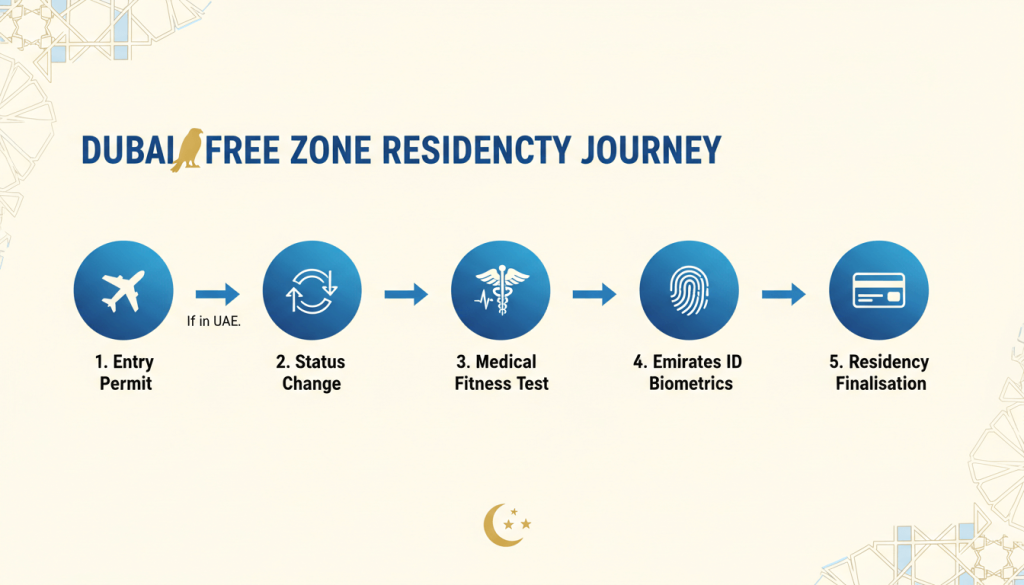
- Entry permit: Your “permission to enter/start the residency process.” It’s time-limited and must be converted into residency steps within the allowed window.
- Status change: If you’re already in the UAE on another status, you may convert without flying out (depending on your case and current rules).
- Medical fitness test: A required step for most adult residency applicants, usually involving a blood test and chest X-ray.
- Emirates ID biometrics: Fingerprints + photo registration that links your identity to your residency.
- Residency issuance / visa stamping: The residency approval step (often managed digitally now, but the sequence still matters).
- Sponsor: The entity responsible for your visa (a free zone company can sponsor owners/partners and employees; residents can sponsor dependants if eligibility is met).
The main visa options under Dubai free zones
Not all free zones are identical, but most free zone ecosystems revolve around the same core categories:
1) Free zone owner / investor (partner) residency
Best for: founders, shareholders, solo entrepreneurs, remote business owners, and professionals who want self-sponsored residency linked to their licence.
What it typically gives you:
- A residency pathway linked to your free zone business setup
- The ability to sponsor dependants (subject to eligibility)
- A compliant base for banking and business operations (requirements vary by bank and activity)
Where people get stuck:
- Choosing a free zone purely for “cheap licence” without checking visa allocation, workspace rules, or activity approvals
- Underestimating bank compliance expectations (especially for international trading, high-risk sectors, or complex ownership)
2) Free zone employment visa (employee residency)
Best for: staff hired by a free zone company (including founders who are employed by their own company structure in some setups).
Common dependencies:
- Employment contract / offer letter requirements
- Company establishment and immigration files being active
- Medical + Emirates ID sequence being completed on time
3) Family / dependant residency (sponsored by a resident)
Best for: spouses, children (and in some cases parents) of a valid UAE resident.
Typical requirements involve:
- Proof of relationship (marriage/birth certificates)
- Attested/legalised documents where applicable
- Tenancy and insurance expectations that match current rules
- Sponsor’s residency validity and eligibility thresholds
4) Specialist routes you should know exist (even if you don’t start there)
- Golden Visa: A long-term residency category with specific eligibility. Some entrepreneurs qualify depending on their profile and route.
- Student visa: Typically connected to education institutions (including some free zone-linked education setups).
- Freelance permits/visas: Offered by certain authorities; structures and benefits vary.
Free zone vs mainland visas: what changes (and what doesn’t)
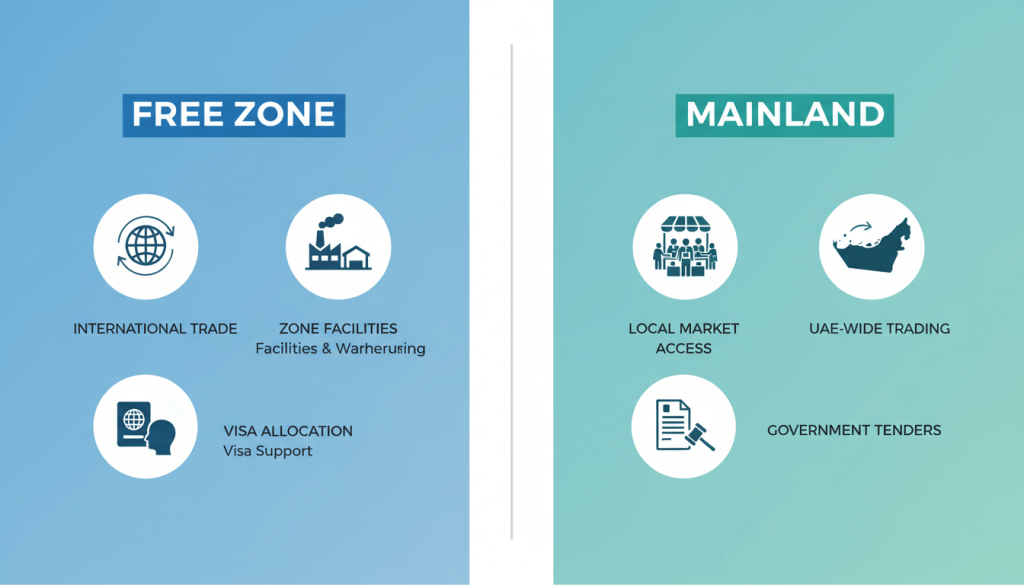
A common misconception: “Free zone visa” and “mainland visa” are completely different products. In practice, the commercial setup differs more than the residency mechanics.
What changes
- Where you can trade: Free zones are designed for specific operating models (often international trade, certain services, or zone-based activity), while mainland offers wider local market reach.
- Regulators and approvals: Some activities need extra approvals regardless of zone/mainland.
- Visa allocation and office requirements: Free zones may tie visa quotas to facility type (flexi-desk, private office, warehouse, etc.). Mainland visa quotas can also link to office requirements, but the framework differs.
What usually stays consistent
- The residency journey still relies on:
- an entry permit or status conversion
- a medical fitness step (for most adults)
- Emirates ID biometrics
- residency issuance
If you’re unsure which route fits, the fastest way to avoid expensive rework is to decide based on your real goal:
- “I want residency + a compliant base with minimal overhead”
- “I want to sell locally across the UAE”
- “I want to hire X staff quickly”
- “I need to sponsor family immediately”
- “I need banking approval as a priority outcome”
The freezone immigration Dubai process: step-by-step (end to end)
Below is the process most applicants experience when getting residency through a Dubai free zone company. Exact naming and portals vary, but the logic is consistent.
Step 1: Confirm your visa pathway and sponsor type
Before any application is submitted, align on:
- Are you applying as owner/investor, employee, or dependant?
- Are you applying outside the UAE or already inside the UAE (status change scenario)?
- Does your passport validity support the process and timeline comfortably?
- Do you need translations, attestation, or document legalisation?
Quick reality check: most visa delays aren’t immigration “problems”—they’re documentation mismatches (names, dates, formats, missing attestations) or avoidable sequencing errors.
Step 2: Entry permit (or in-country status conversion)
This is the step that opens your residency file and triggers the timeline for the next steps. If you’re inside the UAE, you may be able to convert status without travel depending on your case.
What commonly blocks this step:
- Incorrect photo format
- Passport scan quality issues
- Mismatched personal details across documents (especially when dependants are involved)
- Missing company file readiness (for employee visas)
Step 3: Medical fitness test (most adult applicants)
In Dubai, this is typically completed at authorised medical fitness centres and is a gatekeeper step—many downstream steps depend on it.
How to avoid delays here:
- Schedule early, especially during peak periods
- Keep your entry permit copy and required ID documents ready
- Don’t leave it late in the entry permit window
Step 4: Emirates ID application + biometrics appointment
This is the identity layer of residency. Biometrics timing can impact overall turnaround, so booking and sequencing matters.
Practical tip:
- If you’re trying to start work, open accounts, or sponsor family quickly, treat Emirates ID as a “critical path” milestone—not a formality.
Step 5: Residency issuance / finalisation
Once medical and biometrics steps are completed, the residency is finalised through the appropriate authority processes. The outputs you care about are:
- your residency being active in the system
- Emirates ID issuance progressing
- your ability to complete downstream tasks (banking, leasing, dependants, etc.)
Step 6: Post-visa essentials people forget
Residency is not the finish line; it’s the start of “being operational” in the UAE.
Make sure you have:
- Emirates ID delivery tracking / collection plan
- Health insurance alignment (required in many cases and often needed for dependants)
- A compliance checklist for renewals and any staff onboarding
Typical timeline: what’s realistic (and what isn’t)
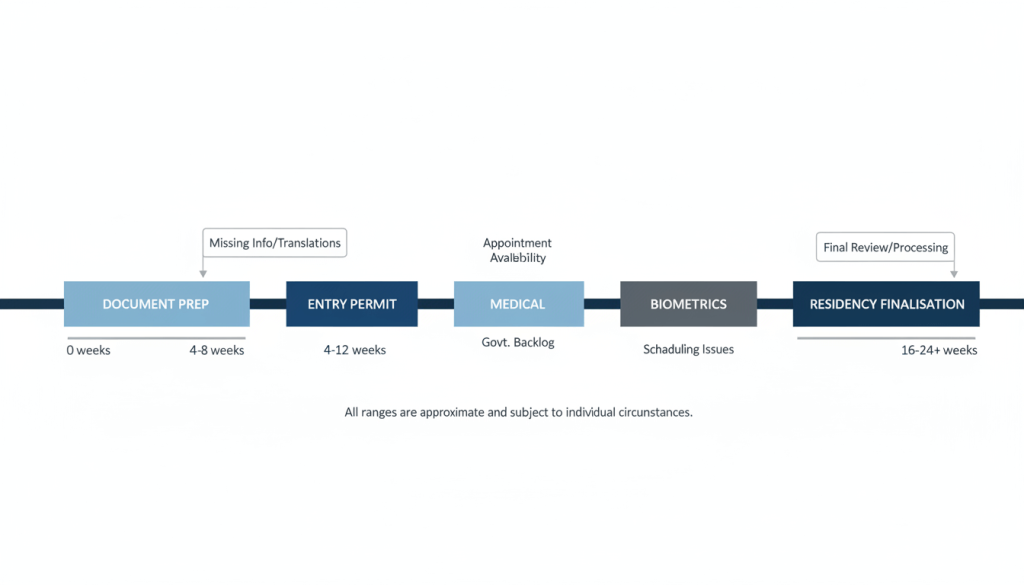
Many websites promise “fastest visa in 48 hours.” What that usually refers to is one component (like an entry permit) under ideal conditions.
A more realistic expectation for the full free zone residency journey is:
- Fast scenario: about 1–2 weeks when documents are clean, appointments are available, and you’re responsive
- Normal scenario: about 2–4 weeks, especially if you’re coordinating family, attestations, or banking needs
- Delayed scenario: longer, usually due to document issues, peak appointment slots, or complex eligibility
If you need speed, focus on the controllables:
- document quality and consistency
- early medical + biometrics scheduling
- clear sponsor type and correct visa category
- a single point of contact managing the sequence
Document checklist: what you’ll usually need (and why it matters)
Requirements differ by visa category and free zone, but most applications rely on:
For the main applicant (common baseline)
- Passport copy (high-quality scan)
- Passport photo (white background, compliant format)
- Entry permit / current status copy (if inside UAE)
- Any required forms through the relevant channels
For employee visas (often required)
- Offer letter / contract documentation
- Education documents (depending on role/category)
- Company immigration file readiness and establishment documentation
For dependants
- Proof of relationship (marriage certificate / birth certificate)
- Attestation/legalisation where required
- Tenancy and insurance documents aligned to eligibility
Most common rejection trigger: names and dates don’t match exactly across passports and certificates. If the source documents are in another language, proper translation and verification can prevent a painful restart.
Costs: what drives the total price (without the guesswork)
Visa costs in free zones aren’t one single fee. Think in “components,” each of which can vary by authority, category, and urgency:
- Entry permit / processing fees
- Medical fitness test fees
- Emirates ID issuance fees
- Status change / in-country conversion (if applicable)
- Dependant processing (per person)
- Typing centre and service charges (if you’re using assisted processing)
- Insurance requirements
- Attestation / translation (if your documents aren’t already in the required format)
If someone quotes you one number without checking:
- how many applicants are involved
- whether you’re inside or outside the UAE
- what your free zone licence includes (visa allocation, facility type)
- whether dependants need attestation
…expect surprises later.
The “hidden” part of free zone immigration: choosing the right free zone for visas
If residency is your goal, your free zone choice should not be driven by marketing slogans. It should be driven by:
1) Visa allocation logic
Ask: “How many visas can this package support now—and after we grow?”
2) Workspace rules
Some free zones tie visa quotas to:
- flexi-desk vs dedicated desk
- private office
- warehouse/industrial space
3) Activity and approval fit
If your activity needs extra approvals, choosing the wrong jurisdiction creates slowdowns or rejections.
4) Banking readiness
Even with residency, banking outcomes depend on:
- business activity clarity
- ownership structure transparency
- proof of address, contracts, invoices, and real operational evidence
If your plan requires a bank account quickly, your setup should be built “bank-first,” not just “visa-first.”
Medical & Emirates ID: what to expect and how to avoid delays
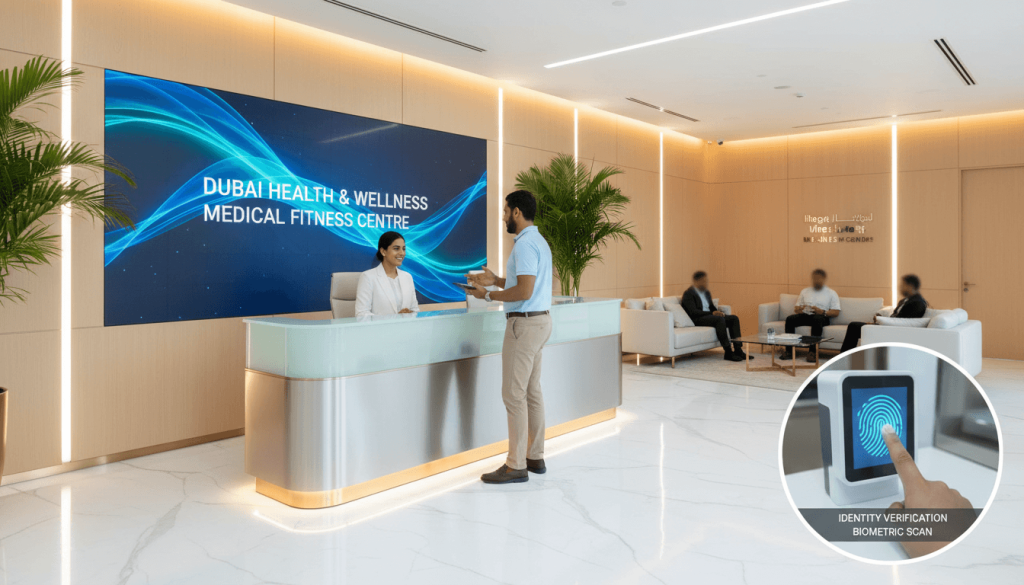
These are the two steps most applicants underestimate.
Medical: what’s involved
Typically includes:
- blood test
- chest X-ray
- verification of identity and documents
Avoidable delay triggers:
- arriving without the correct visa copy/entry permit documentation
- booking late in your permitted window
- mismatched names across typing and passport details
Emirates ID: why it matters beyond “an ID card”
Emirates ID becomes your everyday backbone for:
- telecom and utilities
- leasing and tenancy processes
- insurance administration
- many banking and compliance steps
- dependants’ processing coordination
If your life plan depends on “getting settled” quickly, prioritise Emirates ID scheduling early.
Common mistakes that cause rejections, fines, or expensive rework
Here are the top issues that repeatedly slow down freezone immigration Dubai:
- Choosing a visa category that doesn’t match your reality
- Relying on old rules (visa validity, status change options, dependant thresholds can change)
- Submitting low-quality scans or incorrect photo formats
- Leaving medical/biometrics late and running into appointment bottlenecks
- Trying to sponsor family before the sponsor file is fully ready
- Underestimating document legalisation (especially marriage/birth certificates issued abroad)
- Not planning renewals and cancellations (timing matters to avoid overstay issues)
A practical example: “Founder + spouse + one employee” free zone plan
Imagine you’re setting up a consulting business in Dubai and your goal is:
- owner residency
- sponsor your spouse
- hire one employee within 60–90 days
- open a business bank account
A clean strategy often looks like this:
- Select a free zone package that supports:
- your activity approvals
- at least your target visa allocation
- a workspace level that won’t block staffing later
- Process the owner residency first:
- entry permit → medical → Emirates ID biometrics → residency finalisation
- Once the owner residency is active:
- sponsor dependant(s) with attested relationship documents ready
- prepare employee onboarding with company immigration file readiness and offer documentation aligned
- Build banking readiness in parallel:
- a simple “bank pack” with activity explanation, contracts or pipeline evidence, and ownership clarity
Done well, this approach avoids the common trap of trying to do everything simultaneously and getting blocked by sequencing.
Credibility signals you should look for in a visa partner
You don’t just need “someone to submit forms.” You need someone who:
- understands how free zone setup and visa eligibility interact
- can plan the sequence so you don’t lose time
- flags red flags early (documents, dependants, timing)
- keeps you compliant as rules and portals evolve
Client experience snapshot (what people value most):
“Setting up my business in the UAE was seamless… Their knowledge of UAE regulations made the process stress-free.”
“Their professional and timely service was impressive.”
“Fast turnaround, attention to detail, and helpful staff made the process smooth.”
If you want this handled as a single, managed journey—free zone selection, visa processing, medical coordination, and Emirates ID steps—First Elite Global can map the exact path based on your situation and keep every step moving.
FAQs: Freezone immigration Dubai
1) What is freezone immigration Dubai?
It refers to the residency visa process sponsored through a Dubai free zone company or authority, including entry permit, medical fitness, Emirates ID biometrics, and residency finalisation.
2) How long does the free zone visa process take in Dubai?
Timelines vary by category and appointment availability, but most full residency journeys complete in a few weeks when documents are correct and steps are scheduled early.
3) Do I need a medical test and Emirates ID for a free zone residency visa?
In most adult residency cases, yes. Medical fitness and Emirates ID biometrics are core steps before residency is fully activated and your ID is issued.
4) Can I sponsor my family on a free zone visa?
Often yes, if you meet eligibility conditions and provide properly prepared relationship documents. Family applications commonly require attestation/legalisation depending on where documents were issued.
5) What’s the difference between a free zone investor visa and a free zone employment visa?
An investor/owner route is tied to shareholding/ownership and business setup, while an employment visa is sponsored through an employer relationship and requires employment documentation.
6) What causes most free zone visa delays in Dubai?
The most common causes are document inconsistencies, incorrect photo formats, late medical/biometrics scheduling, and choosing the wrong category or jurisdiction for your activity.