
Dubai marketplaces are full of listings for a “trade licence for sale in Dubai” — some with an “active bank account”, “VAT registered”, “immigration file”, or “no office required”. Done properly, buying an existing company can save time and help you start operating faster. Done casually, it can expose you to hidden liabilities, compliance problems, and unpleasant surprises after you’ve paid.
This guide breaks down what a “trade licence for sale” really means, what is (and isn’t) legal, and how to run due diligence like a buyer who wants to sleep at night.
If you want a quick, practical assessment of a specific opportunity, book a free consultation with First Elite Global and we’ll tell you what to verify before you commit.
What “trade licence for sale in Dubai” really means
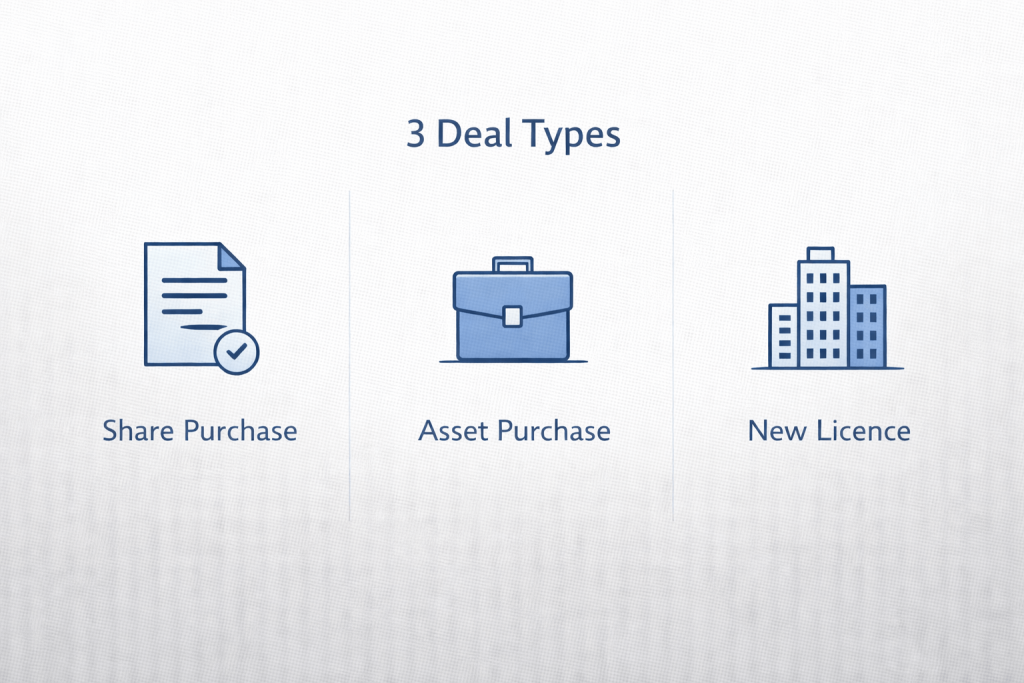
A Dubai trade licence is not a standalone asset you can simply “buy like a car”. In practice, listings usually fall into one of these deal types:
1) Share purchase (most common)
You buy the shares/ownership of the company that holds the licence. The licence continues under the same legal entity, but the owners change.
2) Asset purchase (less common for “licence-only” deals)
You buy selected assets (brand, stock, contracts) and set up your own company/licence separately. This reduces inherited liabilities, but you may lose continuity (banking history, visas, supplier accounts).
3) Licence cancellation + new issuance (often overlooked)
Some “licence for sale” offers are really just an invitation to take over a lease/space and set up new. This can be safer than buying shares when the seller’s paperwork is messy.
Key takeaway: when you see “trade licence for sale”, assume you are buying a company — and treat it like buying a company.
When buying an existing licence makes sense (and when it doesn’t)
Buying can be sensible when you need one or more of these:
- Continuity: existing contracts, supplier accounts, operational history
- Speed: quicker route to operating (depending on structure and approvals)
- Regulated activity continuity: where approvals and permits already exist (but verify transferability)
- Operational setup: staff visas, premises, systems, utilities already live
It’s often not the smartest route when:
- You only want a “cheap licence” and the company has no meaningful assets
- The seller can’t provide clean financials, clear compliance history, or proper authority to sell
- The company’s activity is regulated and approvals may not transfer smoothly
- You’re being pushed to pay quickly “because someone else is coming today”
If your goal is simply to start trading, a fresh setup (mainland or free zone) can be more predictable and sometimes cheaper than cleaning up someone else’s mistakes.
The legalities: what you must get right before money changes hands
Mainland vs free zone: the rules and process are not identical
A “trade license for sale in UAE” could be a Dubai mainland licence or a free zone licence. Due diligence is similar, but the transfer mechanics differ by authority, and the documents required can vary.
You need proof the seller can legally transfer ownership
At minimum, verify:
- The seller is the legal owner (or authorised representative)
- There are no disputes among shareholders/partners
- The constitutional documents (MoA/ownership documents) match what the seller claims
- Any required consents (partners, authorities, landlords, regulators) are obtainable
Regulated activities require extra caution
Examples include travel and tourism, recruitment, certain financial activities, healthcare, education, and other controlled sectors. For any travel and tourism license for sale in Dubai, assume additional approvals and conditions may apply — and confirm whether the approval is transferable, needs re-application, or requires fresh NOCs.
Due diligence framework: the 7 checks that prevent expensive mistakes
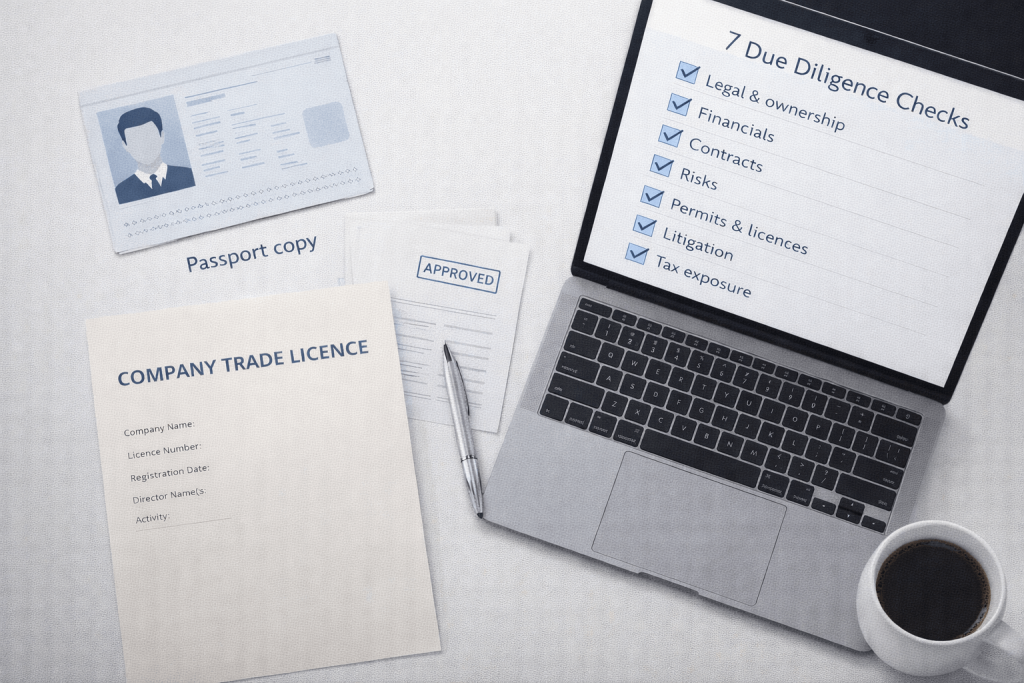
Use this as your deal “spine”. If one area fails, you either renegotiate, impose stronger protections, or walk away.
1) Licence & activity fit (the “can you legally do what you plan to do?” check)
Confirm:
- Licence is active, valid, and matches the exact activities you intend to carry out
- Any add-on permits (e.g., tourism, transport, municipality approvals) are in place and current
- The licence jurisdiction (mainland vs free zone) fits your trading model (where you sell, who you invoice, where you operate)
Practical tip: If the listing says “general trading” but you plan to run an agency, consultancy, or tourism operation, don’t assume it’s covered. Activity mismatch is one of the most common post-purchase problems.
2) Company information & ownership (the “who exactly are you buying?” check)
Ask for and verify:
- Trade licence copy + all amendments
- Company registration/incorporation documents
- Shareholder register and ownership breakdown
- Any powers of attorney used to sign on behalf of owners
- Ultimate beneficial ownership information (especially if there are layered structures)
This is where many deals go wrong: buyers fall in love with the headline (“12-year-old licence!”) and ignore the legal reality underneath.
3) Financials (the “is it real, stable, and priced correctly?” check)
Request and review:
- Bank statements (at least 6–12 months; more if it’s a trading business)
- Profit and loss statements, balance sheet, and cash flow (ideally 2–3 years if the company has history)
- Aged receivables/payables
- Inventory list and valuation basis (if applicable)
- Evidence of major customer concentration (top 5 clients) and supplier dependence
Red flag: “No financials, but trust me.” If there’s no documentation, price it like a shell company — or walk away.
4) Tax & compliance history (the “hidden liabilities” check)
This is where “cheap licences” become expensive.
Verify status and exposures across:
- VAT registration and filings (if applicable)
- Corporate tax obligations and registration status (where applicable)
- Fines, penalties, late filings, or audit history
- AML/compliance obligations relevant to the activity
- Any outstanding government fees, licence renewal issues, or compliance notices
Deal reality: if you buy the company via share transfer, you typically inherit its history. Your contract must protect you.
5) People, visas, and immigration/labour files (the “will operations break tomorrow?” check)
If the listing includes “visas available” or “immigration file”, verify:
- Current visa list (employees + dependents if relevant)
- End-of-service liabilities, unpaid salaries, gratuity accruals
- Contract status and notice periods
- Any labour disputes or pending claims
- Whether visas are tied to specific premises/quotas that will change after transfer
Important: visas are not just a perk — they can be a liability if the company has unfunded obligations.
6) Premises, lease, and third-party contracts (the “what else are you taking on?” check)
Review:
- Lease/tenancy terms, payment status, renewal clauses, exit obligations
- Whether the landlord must approve the ownership change
- Supplier/customer contracts with “change of control” clauses
- Software subscriptions, payment gateways, platform accounts, and any locked-in commitments
Common trap: buyers assume they can move the business anywhere immediately. Some licences/packages depend on the current facility type or location.
7) Reputation & operational reality (the “does it actually work?” check)
Validate:
- Online reviews, complaints, and public reputation
- Whether key relationships depend on the seller personally
- Operational capabilities: staff, systems, licences, permits, vendor approvals
- Any brand/IP ownership (trademarks, domain names, social accounts) and transfer steps
If you’re buying an “inactive licence”: be honest about what you’re buying — it’s mainly a legal shell, not a ready-made revenue engine.
Company information Dubai: what you can verify online vs what you must request
What you can often verify (fast)
- Licence details (name, number, status, activity references)
- Business identity / unified licence references (where available)
- High-level licence information to confirm the entity exists
What you must request (and verify independently)
- Financials and bank statements
- Tax filings and clearance evidence
- Full liability picture (debts, penalties, disputes)
- Contracts, leases, staff obligations
- Regulated approvals and their transferability
A seller who is serious will provide documentation. A seller who refuses basic transparency is telling you the answer.
Deal structuring: how smart buyers protect themselves
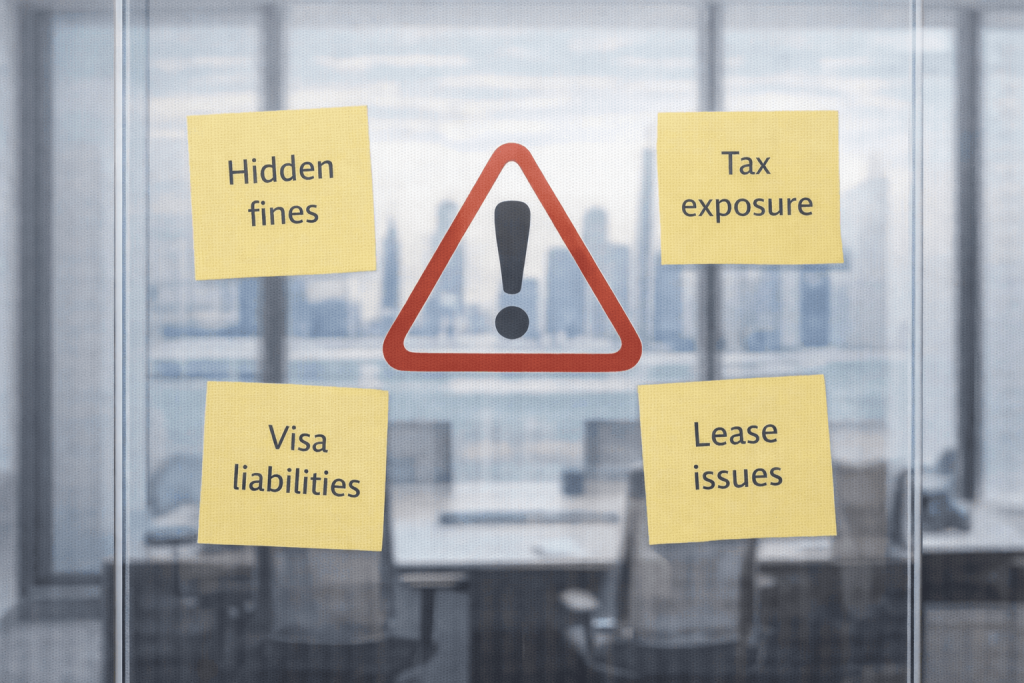
Even with strong due diligence, your contract is your safety net. Consider building protections like:
- Conditional payment: pay a portion only after ownership transfer is approved and completed
- Holdback: retain a portion for 60–90 days to cover surprise liabilities
- Seller warranties: written statements that there are no undisclosed debts, fines, disputes, or unpaid filings
- Indemnities: seller pays if a pre-sale liability appears later
- Clear deliverables list: exact documents, logins, stamps, keys, contracts, assets, and handover steps
- Pre-close clearances: require settlement of known liabilities before completion
If the seller is genuine, these won’t scare them. If the seller refuses reasonable protections, you’ve learned something valuable early.
Special note: travel and tourism license for sale in Dubai
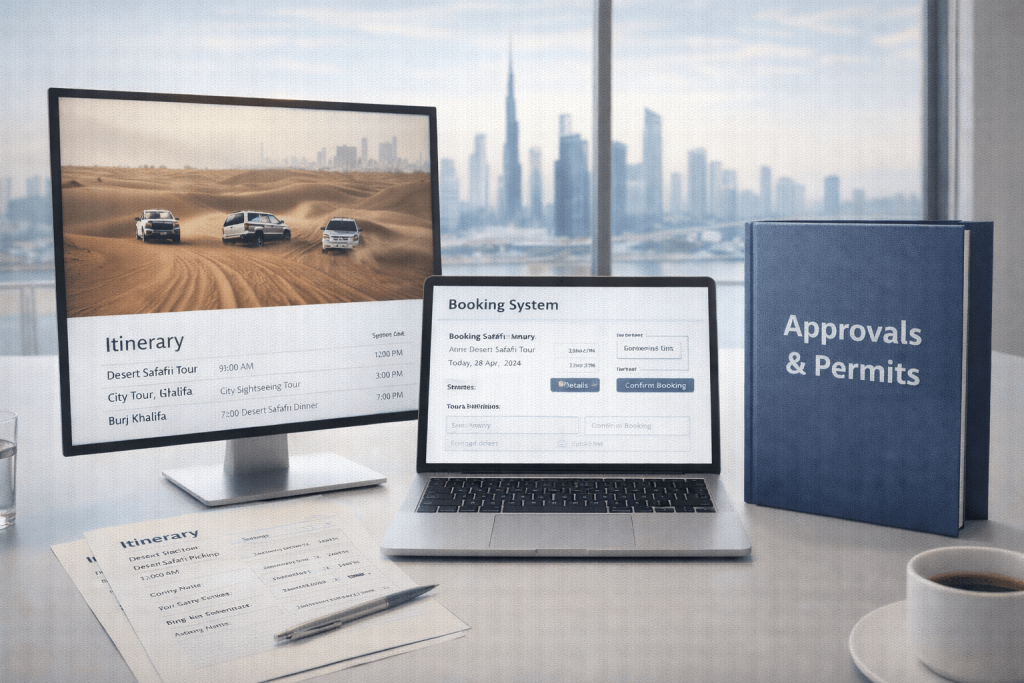
Travel and tourism is one of the most “advertised” licence categories for resale — and one of the easiest to get wrong.
Before buying any travel/tourism-related licence, confirm:
- Which specific tourism activity is licensed (travel agency, tour operator, safari/tours, ticketing, etc.)
- Whether there are special approvals tied to the licence
- Whether approvals are transferable or require re-application
- Whether the business has any obligations tied to airlines, booking systems, deposits, or customer refunds
- Whether there are pending consumer disputes or chargebacks
If you’re planning to operate immediately, this is one category where expert guidance is worth it. The downside risk (from regulatory approvals to consumer claims) is higher than most generic trading activities.
A buyer’s checklist you can forward to a seller (copy/paste)
Ask for the following before you agree a price:
- Trade licence copy + all amendments
- Company registration documents + MoA/ownership documents
- Shareholder register and proof of seller authority to sell
- Full list of activities and any add-on permits/approvals
- Bank statements (6–12 months) + basic financial statements
- VAT/corporate tax status and evidence of filings (if applicable)
- List of staff, visas, contracts, and any outstanding dues
- Lease details + proof rent is paid and transfer is allowed
- List of liabilities: loans, payables, penalties, disputes
- Asset list: inventory, equipment, IP, domains, social accounts, software logins
- Handover plan: who does what, when, and what “completion” means
Then verify what you can independently, and do not rely on screenshots as proof.
The simplest path if you’re unsure
If you’re looking at a trade licence for sale in Dubai and you’re not 100% confident about what you’re inheriting, the safest approach is:
- Verify licence and entity details
- Confirm transfer pathway with the relevant authority
- Run due diligence across the 7 checks above
- Structure the deal with protections (holdback/conditions/warranties)
- Complete transfer, then update banking, tax registrations, and operational accounts
Want a second pair of eyes before you pay a deposit? Book a free consultation with First Elite Global and we’ll help you spot risks early — and choose whether buying, restructuring, or starting fresh is the best route.
FAQs
Is it legal to buy a trade licence for sale in Dubai?
It can be legal when the transaction is structured correctly — usually as a share/ownership transfer (or an approved ownership change) under the relevant licensing authority. What’s risky is treating a “licence” like a standalone item you can buy without transferring the company properly.
How can I check company information in Dubai before buying?
Start by confirming the licence/entity exists and the details match what the seller claims (name, number, activity, status). Then request documents that prove ownership, liabilities, and compliance history — and verify them independently rather than relying on screenshots.
What should I ask for when buying a trade licence for sale in UAE?
At minimum: trade licence + amendments, ownership documents, financials/bank statements, tax status (VAT/corporate tax where applicable), lease details, staff/visa liabilities, contracts, and a complete handover list (assets, logins, domains, permits).
Can I keep the company bank account when I buy an existing Dubai company?
Sometimes, but it depends on the bank’s policies and the company’s risk profile. Ownership changes typically require updated KYC, new signatories, and re-approval of account access. You should treat “bank account included” as a claim that must be verified, not a guarantee.
What are the risks of buying a travel and tourism license for sale in Dubai?
Tourism-related activities can involve additional approvals, consumer protection issues, and operational liabilities (refunds, chargebacks, supplier obligations). You must confirm the exact activity licensed and whether approvals are transferable before assuming you can operate immediately.
Is it better to buy an existing licence or start a new company?
If you need continuity (contracts, staff, operational history), buying may make sense — but only with strong due diligence and contract protections. If you mainly want to start trading quickly with minimal inherited risk, a fresh setup is often cleaner and more predictable.