
If you’re planning a small business startup in Dubai, you don’t need a complicated strategy — you need the right licence, the right jurisdiction, and a budget plan that prevents surprises.
Dubai rewards founders who start lean, stay compliant, and build a structure that matches how they’ll actually sell (online, international, or inside the UAE). This guide breaks down the practical options, the real cost drivers, and a simple setup plan you can follow from “idea” to “licence issued”.
Want an itemised cost plan for your exact activity and visa needs? Request a free consultation with First Elite Global and we’ll map the fastest compliant route, with a clear breakdown before you spend anything.
Choose your small business setup route (the 3 options that cover 95% of founders)
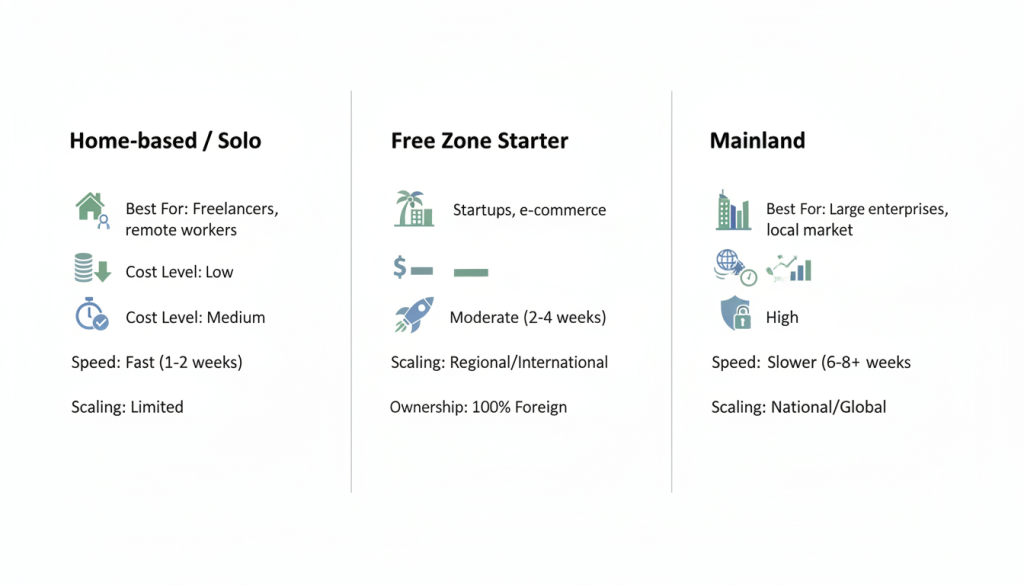
Most “cheap setup” advice fails because it ignores one question: Where will you trade — and who will you invoice? Your answer decides the structure.
Option 1: Ultra-lean, home-based or solo model (best for testing demand)
This route suits founders who:
- sell through social media or a personal website,
- deliver services personally,
- don’t need staff or a shop,
- want a low-cost entry point before upgrading.
Best for: creators, solo consultants, small online sellers, early-stage testing.
Watch-outs: eligibility can be specific, activity scope can be narrower, and scaling often requires upgrading to a full company setup.
Option 2: Free zone starter setup (best for online + international)
Free zones are popular for small businesses because they can be efficient to launch, often offer streamlined processes, and are frequently used for:
- e-commerce,
- consulting/services,
- trading aimed at international markets,
- small teams that want a clean structure.
Best for: remote-friendly businesses, global services, e-commerce brands, founders who want a tidy “starter company” structure.
Watch-outs: market access rules and “where you can trade” depend on the activity and the exact structure — you want this checked before you commit.
Option 3: Mainland (best for selling into Dubai/UAE market)
Mainland setups are typically preferred when you plan to:
- sell directly into the UAE market,
- sign local contracts freely,
- work on-site with clients,
- open a shop, office, or service operation,
- pursue certain tenders or large local clients.
Best for: local service businesses, B2B companies serving UAE clients, businesses that need maximum operational flexibility.
Watch-outs: cost depends heavily on activity approvals and premises requirements — done right, it’s straightforward; done wrong, it’s expensive.
Small business licence types in Dubai (what you’re really choosing)
Dubai licensing can sound complicated, but most small businesses fit into a few buckets:
- Professional licence: services, consulting, specialists, freelancers, agencies
- Commercial licence: trading, buying/selling goods, retail, import/export, e-commerce
- Industrial licence: manufacturing, production, industrial activities
- Specialised/regulated licences: tourism, education, healthcare, finance, media, and other sectors that may require extra approvals
Simple rule: your licence must cover what you do today and what you’ll do next quarter — not just what sounds close enough.
Need help matching your activity properly? Ask for a quick eligibility and activity-mapping call. Getting the activity wrong is one of the most common causes of delays and rework.
What a small business startup in Dubai actually costs (the levers that move your budget)
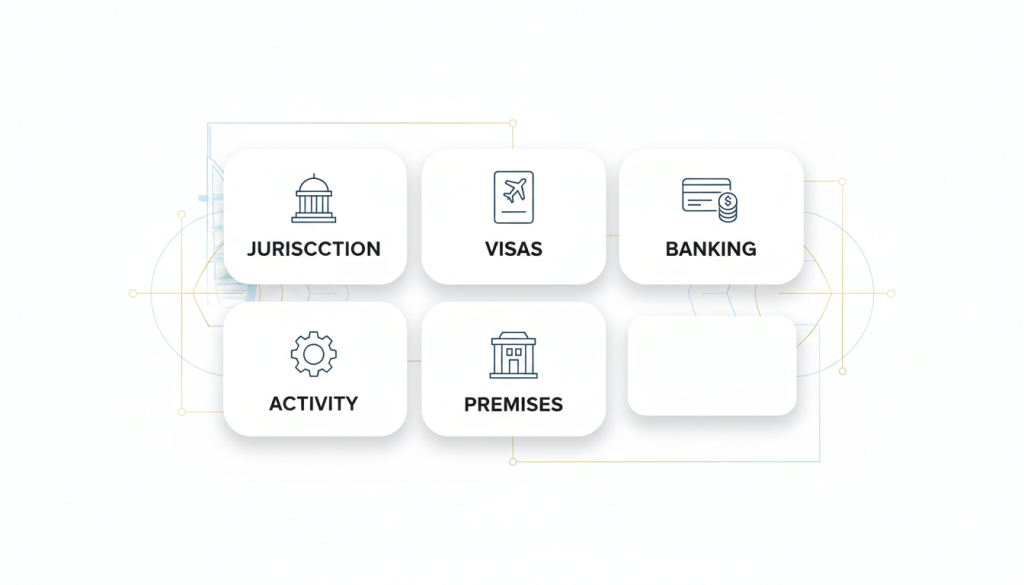
There is no single fixed “small business licence cost” because your total is the sum of moving parts. The smart way to budget is to separate costs into must-haves and growth choices.
The 5 cost drivers that change almost every quote
- Jurisdiction: free zone vs mainland vs a home-based route
- Business activity: some activities trigger higher fees or external approvals
- Visa needs: number of partners/employees, plus dependent visas later
- Premises: virtual/flexi-desk vs serviced office vs shop/warehouse
- Bank account complexity: nationality mix, business model, and supporting documents
A practical cost framework you can budget with
Think in three layers:
- Formation & licensing: approvals, trade name, licence issuance, corporate documents
- Operating base: address/desk/office, compliance basics, renewals planning
- Scale costs: visas, staffing, upgraded space, marketing, accounting depth
If you plan your setup this way, you can start lean without boxing yourself into a structure you’ll outgrow immediately.
Want clarity in writing? Request a personalised proposal and we’ll provide an itemised breakdown (no vague “package pricing”), with optional upgrades clearly separated.
Low-cost setup playbook (how to keep costs down without risking compliance)
If budget matters (and it usually does), focus on these four principles:
1) Start with the minimum viable structure
Pick the setup that matches your first 3–6 months:
- no staff,
- low visa requirements,
- flexible premises,
- activities tightly aligned to what you sell.
2) Choose an activity list that avoids unnecessary approvals
Some sectors are regulated. If your business doesn’t truly require a regulated activity, don’t select it “just in case” — it can increase time, cost, and documentation.
3) Don’t pay for visas you don’t need yet
Many founders can start without multiple visas (or even any in the very early stage), then upgrade when cashflow supports it.
4) Avoid premature office commitments
An office can be required depending on the route, but that doesn’t mean you need a long lease on day one. Match premises to what the authority requires and what your clients expect.
A simple setup plan (step-by-step) you can follow
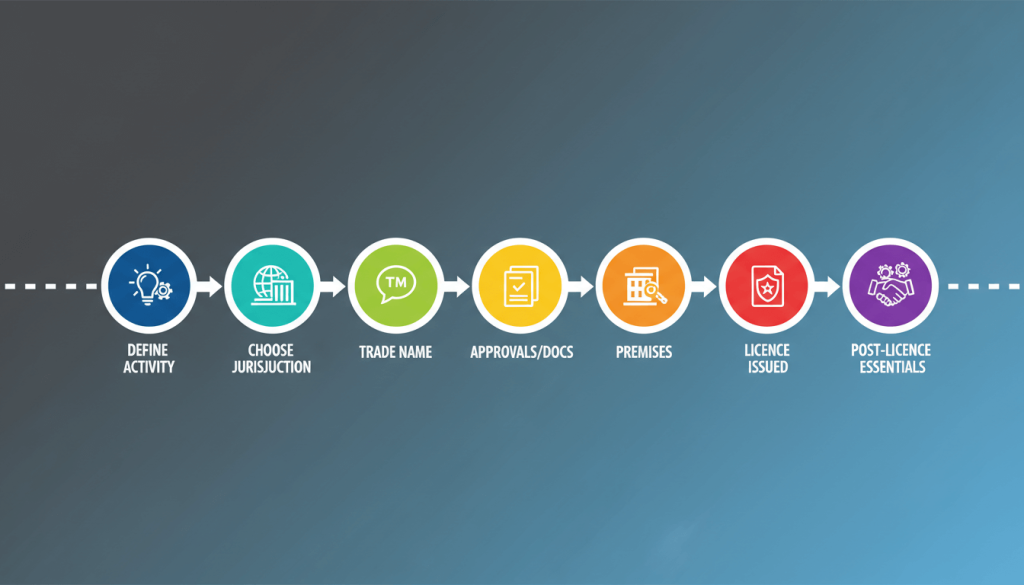
You can usually treat a small business startup in Dubai as a sequence of checkpoints:
Step 1: Define what you sell (in one sentence)
Write:
- what you sell,
- who buys it,
- where they are (UAE vs outside),
- how you deliver.
This is how you choose the right licence and jurisdiction.
Step 2: Choose jurisdiction and legal form
Decide whether you need:
- free zone structure,
- mainland flexibility,
- a lean home-based route (where eligible).
Step 3: Reserve a compliant trade name
This is often where first-time founders lose time. Common issues include:
- restricted terms,
- names that imply regulated activity,
- names that clash with existing registrations.
Step 4: Initial approval + documentation
Typically includes:
- passport/ID documents,
- entry status or residence details (where relevant),
- basic forms and signatures,
- corporate documents depending on structure.
Step 5: Premises solution
This could be:
- flexi-desk/virtual desk (where accepted),
- serviced office,
- physical office/shop/warehouse.
Step 6: Licence issuance
Once the authority is satisfied, the licence is issued.
Step 7: Post-licence essentials (don’t skip these)
- establishment/immigration file (if visas are planned),
- bank account preparation and applications,
- bookkeeping/compliance baseline,
- renewal calendar.
If you want the fastest path with the least back-and-forth: book a free consultation and we’ll run your setup like a project (activity mapping, approvals, submissions, and follow-ups handled end-to-end).
Timeline: how long does a small business startup in Dubai take?
A realistic planning range looks like this:
- Fast-track (best-case): 7–14 days
Simple activity, clean documents, minimal approvals, straightforward premises solution. - Typical: 2–4 weeks
Most small businesses fall here, especially if you want everything structured properly from the start. - Complex: 4–8+ weeks
Regulated activities, multiple shareholders, extra approvals, or complex banking/documentation.
Speed tip: delays usually come from mismatched activities, missing documents, or choosing a structure that conflicts with how you intend to trade.
Budget checklist for a small business startup in Dubai
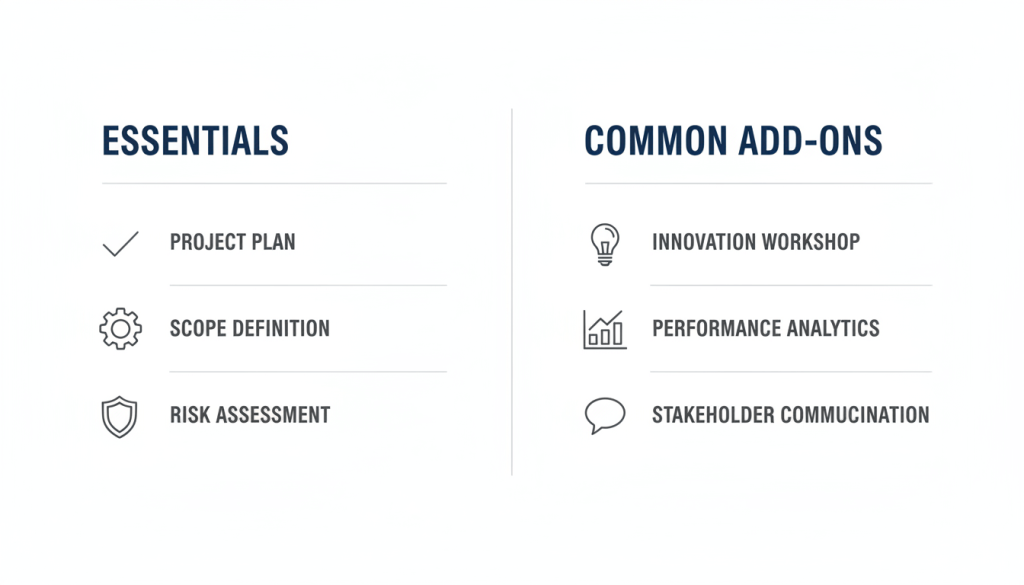
Use this as your “no-surprises” checklist before you apply.
Essentials (almost always required)
- Business activity selection (precise, not approximate)
- Jurisdiction decision (free zone vs mainland vs eligible home-based route)
- Trade name shortlist (3–5 options)
- Basic documents for owners/shareholders
- Premises solution aligned to the route
- Licence issuance and corporate documents
- Renewal planning (don’t budget only for year one)
Common add-ons (budget if relevant)
- Visas (owners/employees)
- Dependent visas later (family)
- Medicals, Emirates ID processes
- Bank account support (document pack + application strategy)
- Accounting/tax registration support (as applicable)
- PRO services for ongoing filings and renewals
Want this checklist as a one-page sheet tailored to your exact business activity? Request a free consultation and we’ll send a customised version with your likely cost drivers highlighted.
Three realistic examples (so you can see the best-fit route)

Example A: Solo consultant (services)
Goal: invoice clients quickly, keep overheads low, add a visa later if needed
Often fits: professional licence route with minimal premises requirements
Why it works: clean structure, scalable later, avoids unnecessary extras early on
Example B: Small e-commerce brand (online store)
Goal: operate online, hold stock (or dropship), sell internationally and/or in the region
Often fits: free zone starter setup
Why it works: streamlined formation, practical for online models, easy to scale with visas and space later
Example C: On-site services business (servicing UAE clients)
Goal: deliver work physically in Dubai/UAE, sign local contracts confidently
Often fits: mainland setup
Why it works: broad market access and operational flexibility for local service delivery
If you tell us your activity and where you’ll sell, we can recommend the cleanest route in one call — and show you the cost impact of each choice before you decide.
Common mistakes that make “low-cost setup” expensive
- Choosing an activity that triggers extra approvals you don’t need
- Picking the wrong jurisdiction for where you intend to trade
- Underestimating visa and banking documentation requirements
- Locking into premises too early
- Building a structure that can’t scale without re-licensing later
- Using “package price” quotes without understanding what’s excluded
A good setup quote should be itemised — licence/fees, premises, visas, banking support, and optional services clearly separated.
FAQs
1) What is the cheapest way to start a small business startup in Dubai?
The cheapest route is usually the one with the fewest moving parts: simple activity, minimal premises requirements, and no unnecessary visas at the start. The best option depends on whether you’ll trade locally in the UAE or mainly online/internationally.
2) Do I need an office for a small business licence in Dubai?
Some routes allow flexi-desk or virtual desk solutions, while others require a physical office/shop depending on the activity and jurisdiction. Premises should match what’s required — not more.
3) Can I start in a free zone and still sell to UAE customers?
It depends on your activity, structure, and sales model. Some businesses use distributors/agents or set up the right permissions. This should be checked before you set up to avoid compliance issues.
4) How long does it take to get a small business licence in Dubai?
Simple cases can move quickly, but a practical planning range is 2–4 weeks for many small businesses, depending on documentation, approvals, and premises.
5) What documents do I need to start a small business in Dubai?
Most setups require identity documents for owners/shareholders and supporting details aligned to the structure. Some activities and visa plans require extra documentation.6) Should I choose mainland or free zone for a low-cost setup?
If your priority is selling directly into the UAE market with maximum flexibility, mainland is often stronger. If your model is online, international, or remote-friendly, a free zone starter setup can be efficient. The best choice depends on your revenue plan.