Starting a company in Dubai can be surprisingly fast—if you choose the right setup route and submit a clean, compliant application the first time. This guide walks you through the exact process, the documents required, the main licence types, and the decisions that determine your cost, timeline, and ability to trade across the UAE.
If you want a tailored setup plan (with the quickest path to your trade licence, visas, and bank account), book a free consultation with First Elite Global and we’ll map the best route based on your activity, budget, and growth goals.
The 3 decisions that shape your entire setup
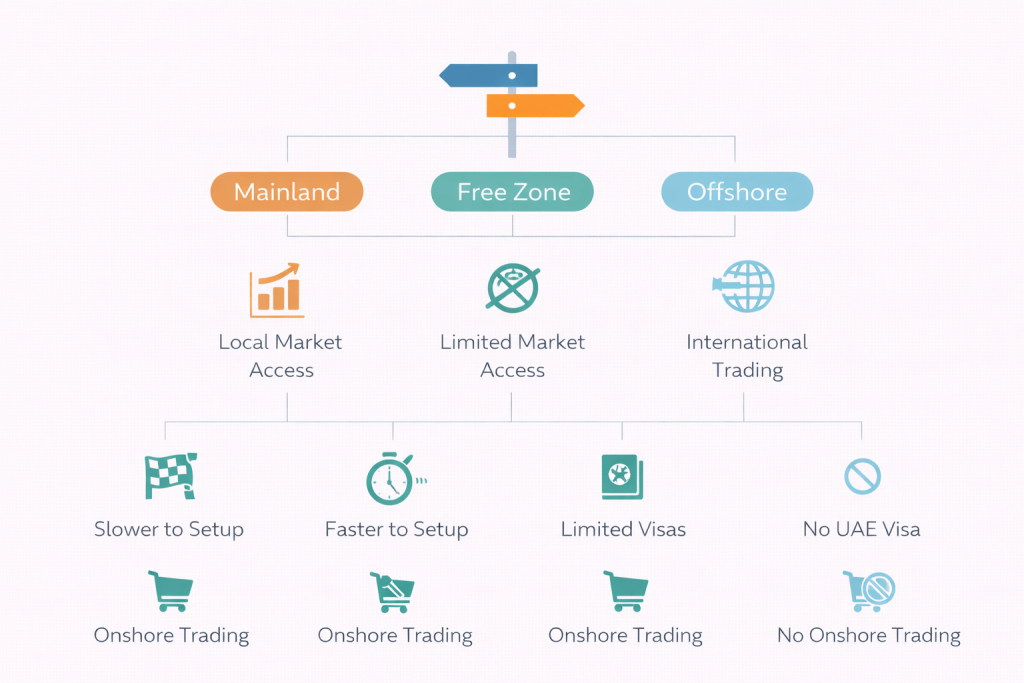
Most delays and unexpected fees happen because founders pick a structure first, then try to force their business into it. Flip that. Decide these three things up front:
1) Where you need to trade: mainland vs free zone vs offshore
Mainland (Dubai):
Best if you want to trade across the UAE market, bid for local contracts, open a shop/office in Dubai, or invoice UAE clients freely.
Free zone (Dubai/UAE):
Best if you want a streamlined setup, bundled packages, and you primarily trade internationally or within the free zone ecosystem (many models also support UAE trading via compliant routes, depending on activity and permissions).
Offshore (Dubai):
Best for holding assets, shares, or international contracting structures—not typically used when visas and active UAE trading are the priority.
Quick rule: If your revenue depends on UAE clients, don’t guess—choose a structure that matches your sales plan, not your paperwork preference.
2) Your trade licence type (what you’re legally allowed to do)
Your licence is tied to your business activity. Choose the activity carefully because it affects approvals, banking, visas, and whether additional regulators are involved.
Common licence categories include:
- Commercial licence (trading, e-commerce trading, import/export, general trading in some cases)
- Professional licence (consulting, services, marketing, IT services, advisory work—often skills-based)
- Industrial licence (manufacturing, production, certain processing activities)
- Tourism-related licences (if you’re in travel, hospitality, certain tourism services—often need extra approvals)
If you’re unsure, describe what you sell, who you sell to, and where delivery happens. A correct activity selection is one of the biggest “silent” success factors.
3) Your legal structure (how ownership and liability work)
These are the most common structures founders consider:
- LLC (Limited Liability Company): The most common route for operating businesses.
- Sole establishment: Often used for certain professional activities (structure rules depend on the authority and activity).
- Branch: Used when an existing company (UAE or foreign) wants a branch presence.
- FZE / FZCO / FZ-LLC (free zone entities): Free zone variants that affect shareholder count and governance.
Definition: Limited liability generally means the company is responsible for its debts, not you personally—subject to compliance and legal obligations.
How to start a company in Dubai: the step-by-step process
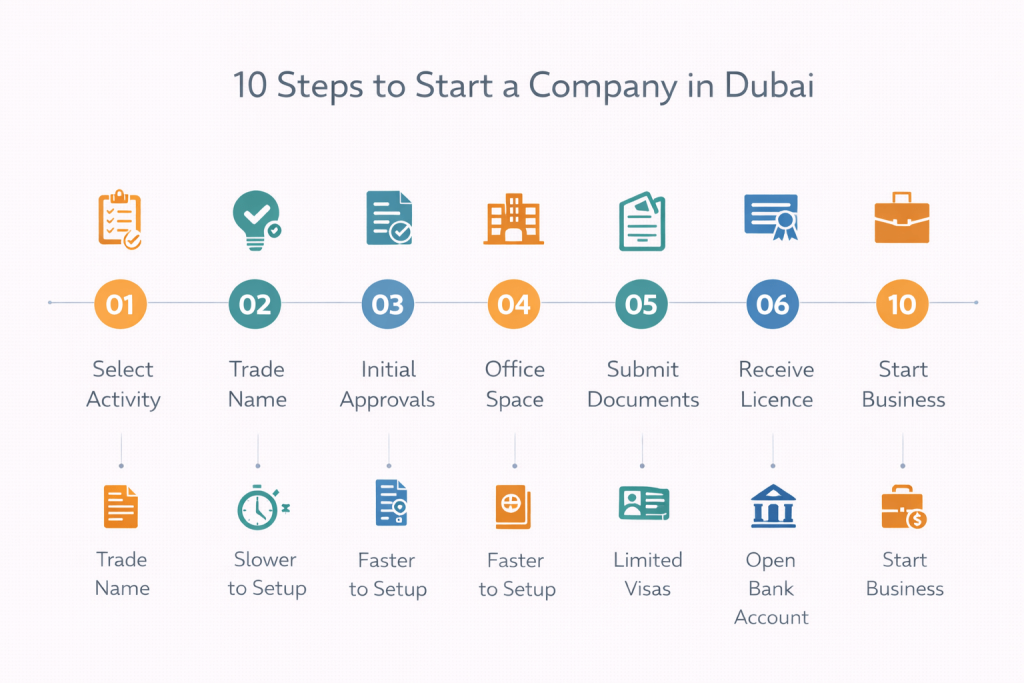
Below is the practical sequence that keeps things moving quickly and avoids rework.
Step 1: Choose your business activity (and confirm any special approvals)
Write a one-sentence description of what you do and identify:
- What you sell (service/product)
- Who you sell to (UAE clients, international clients, both)
- Where you deliver (online, on-site in Dubai, physical goods)
Some activities require extra approvals (for example, regulated professional services or specialised sectors). Confirm early so it doesn’t stall you later.
Step 2: Choose your setup route (mainland, free zone, or offshore)
Match the structure to your operating reality:
- UAE clients + local contracts + Dubai presence → mainland is often the cleanest route
- International clients + faster setup + packaged options → free zone is often the fastest
- Holding company / asset structure → offshore may fit (with clear limitations)
If your plan includes visas for owners or staff, factor visa quotas and office requirements into the decision.
Step 3: Pick a compliant trade name (then reserve it)
Trade names in the UAE follow rules (content, wording, and availability). A good trade name is:
- Easy to approve (compliant words, correct format)
- Close to your brand (without triggering restrictions)
- Suitable for bank KYC and invoicing
Once you’ve selected options, reserve the name through the relevant authority’s process. Some founders save time by preparing 3–5 backup names in order of preference.
Practical tip: Budget for trade name reservation separately—fees can vary by platform and name category.
Step 4: Submit for initial approval
Initial approval is the government “green light” to proceed—without yet authorising you to trade.
To keep this smooth:
- Ensure your activity and legal form match
- Use consistent details across all documents (names, passport numbers, addresses)
- Confirm shareholder and manager roles upfront
Step 5: Arrange your office solution (physical, flexi, or compliant workspace)
Depending on your route, you may need:
- A physical office
- A flexi-desk/shared workspace option
- A specific lease/tenancy arrangement that meets the authority’s requirements
This isn’t just a formality—office requirements can affect visa allocations, inspections, and approvals.
Step 6: Prepare incorporation documents (and sign correctly)
Typical documents may include:
- Memorandum and Articles (or equivalent formation documents)
- Shareholder/manager resolutions (if applicable)
- Passport and ID documentation
- Any NOC requirements (for certain UAE residents)
Common delay: Incorrect signatures, mismatched names, or missing supporting documents. A clean file saves weeks.
Step 7: Pay fees and issue the trade licence
Once approvals and documents are accepted, you pay the relevant fees and your trade licence is issued.
At this point, you have the legal foundation to operate—subject to any remaining steps like immigration files and bank account readiness.
Step 8: Set up immigration and labour files (for visas)
If you need residence visas for owners, employees, or family members, you’ll typically need the right establishment registrations set up. This is where many founders lose time if they haven’t planned the visa pathway early.
Step 9: Process visas, medical, and Emirates ID (if needed)
A typical visa pathway includes:
- Entry permit (where applicable)
- Medical test
- Emirates ID registration
- Visa stamping/issuance steps
If you’re building a team, plan visa needs realistically—don’t overbuy visas early “just in case.” Expand as your revenue proves the need.
Step 10: Open a business bank account (and set up compliance from day one)
Bank account opening is often the most underestimated step. Approval depends heavily on:
- Your activity risk profile
- Clean corporate documents
- Proof of address and identity
- Clear business model (clients, markets, expected volumes)
- Source of funds clarity (especially for international founders)
At the same time, put compliance basics in place:
- Keep bookkeeping from day one (banks and tax compliance both benefit)
- Register for VAT if you meet mandatory thresholds
- Understand corporate tax obligations and filing expectations
- Keep company records and ownership disclosures accurate and current
A simple win: Keep business income and expenses in the business account—mixed personal/business activity creates avoidable risk flags.
Documents required: Dubai company setup checklist
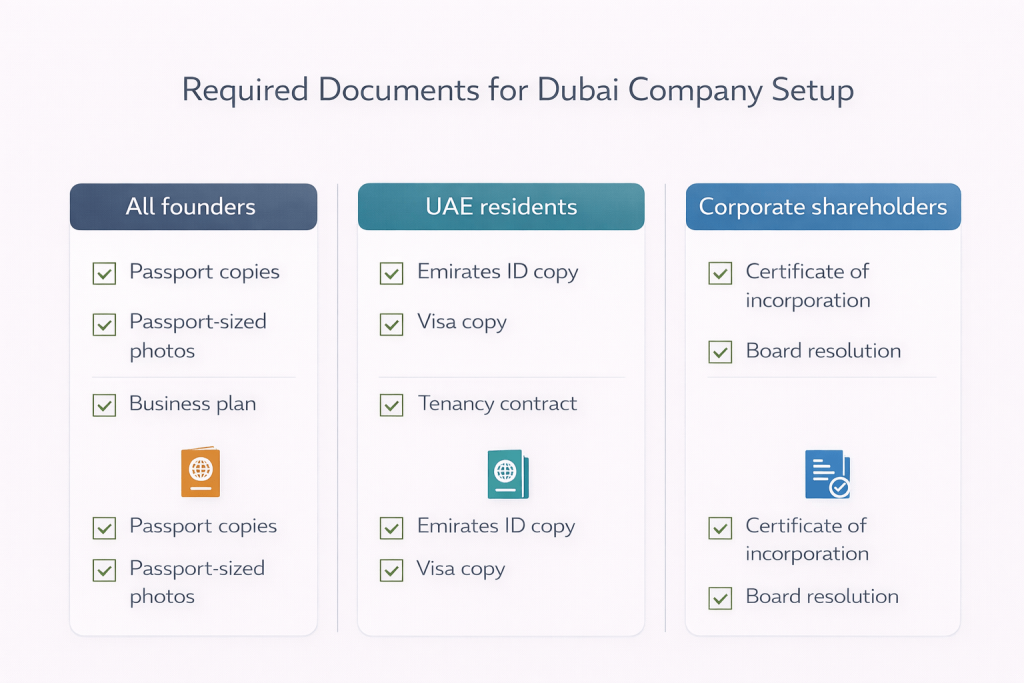
Exact requirements vary by authority and structure, but most applications need a version of the following.
Core documents (most common)
- Passport copy for each shareholder
- Passport-size photo (often required)
- Contact details and residential address for each shareholder
- Proposed company name options
- Business activity description
- Shareholding structure and manager details
If you’re a UAE resident (often required)
- Emirates ID copy
- Visa copy/status page
- No Objection Certificate (NOC) from sponsor (in some cases)
If you’re using a corporate shareholder
- Certificate of incorporation
- Memorandum/articles and ownership documents
- Board resolution approving the UAE setup
- UBO/ownership chain details
If you want, First Elite Global can review your documents before submission so the file is consistent and ready for approval.
Costs and timelines: what founders should realistically budget for
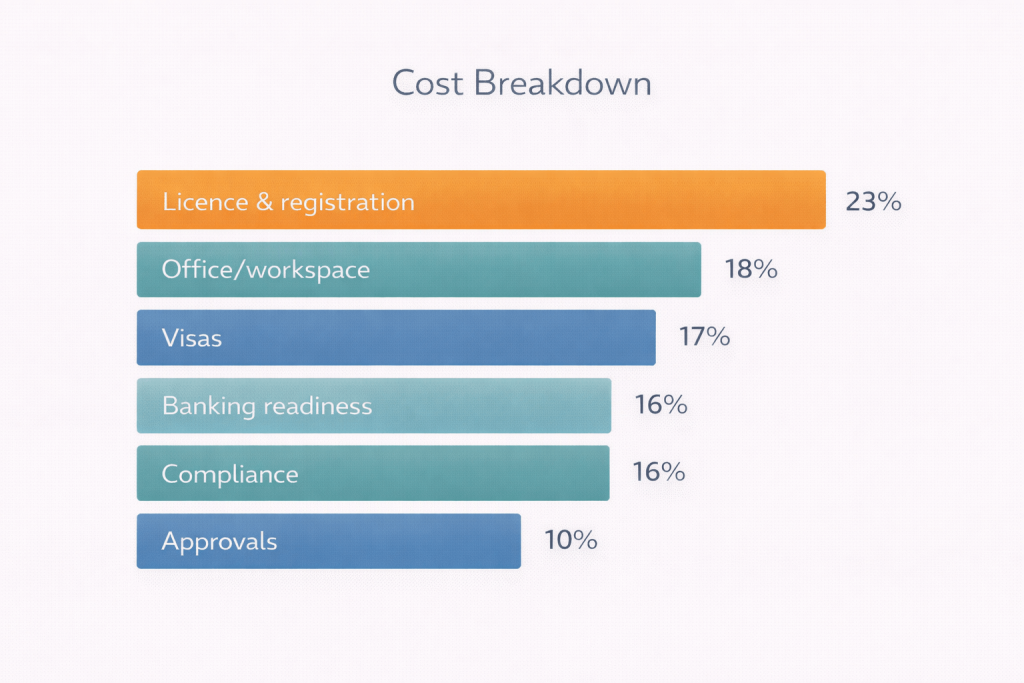
There’s no single “fixed” cost because your setup is a bundle of moving parts. Your overall budget typically includes:
What you pay for
- Trade name reservation and approvals
- Licence issuance and registration fees
- Office/flexi desk or lease requirements
- Visa allocations and processing (if needed)
- Establishment and immigration files (when applicable)
- Bank account support and compliance preparation
Typical timeline expectations
- Free zone setups: often faster once documents are ready, but timelines vary by free zone, activity, and approvals
- Mainland setups: can be quick, but additional approvals, office requirements, or inspections may extend timelines
- Bank account opening: can add extra time depending on your model and documentation readiness
Reality check: You don’t just “start a company” in Dubai—you start a compliant operating entity, then build bank readiness and visa structure around it. Planning those three together is what makes the timeline feel fast.
Mainland vs free zone: which is better for your business?
Use this decision framework:
Choose mainland if you need:
- UAE-wide trading as your default
- Local contracts and invoicing freedom
- A physical Dubai presence that supports growth locally
- Flexible client servicing inside the UAE
Choose free zone if you prioritise:
- Streamlined setup experience and packaged options
- International trading and cross-border operations
- Faster initial formation (in many cases)
- A structure aligned to your industry ecosystem
Choose offshore if you primarily need:
- A holding structure for assets, shares, or global business arrangement
- A non-operating entity for structuring (not typically a visa-first choice)
Three real-world setup examples (so you can choose faster)
Example 1: UK consultancy selling services to UAE clients
Best-fit approach: Mainland professional/service setup
Why: Cleaner local invoicing, simpler client servicing, and fewer operational workarounds.
Example 2: E-commerce brand selling internationally (with UAE logistics)
Best-fit approach: Free zone e-commerce/trading setup (with warehousing/logistics planning)
Why: Bundled setup packages, operational alignment with fulfilment, and faster start.
Example 3: Investor building a holding structure for global assets
Best-fit approach: Offshore holding route
Why: Designed for structuring rather than day-to-day UAE trading and staffing.
Common mistakes that slow approvals (and how to avoid them)
- Picking the wrong activity and needing re-approval later
- Choosing a structure that doesn’t match how you’ll actually sell
- Submitting inconsistent documents (names, formats, addresses)
- Underestimating banking KYC requirements
- Buying too many visas too early
- Ignoring office requirements until the last minute
- Using a trade name that triggers extra checks or restrictions
- Poor bookkeeping from day one (creates problems later)
- Mixing personal and business transactions
- Treating compliance as an afterthought rather than a system
If you want a “clean file” approach from the start, First Elite Global can manage the end-to-end process—from structure to trade licence, visas, and bank account readiness—so you don’t lose weeks in preventable back-and-forth.
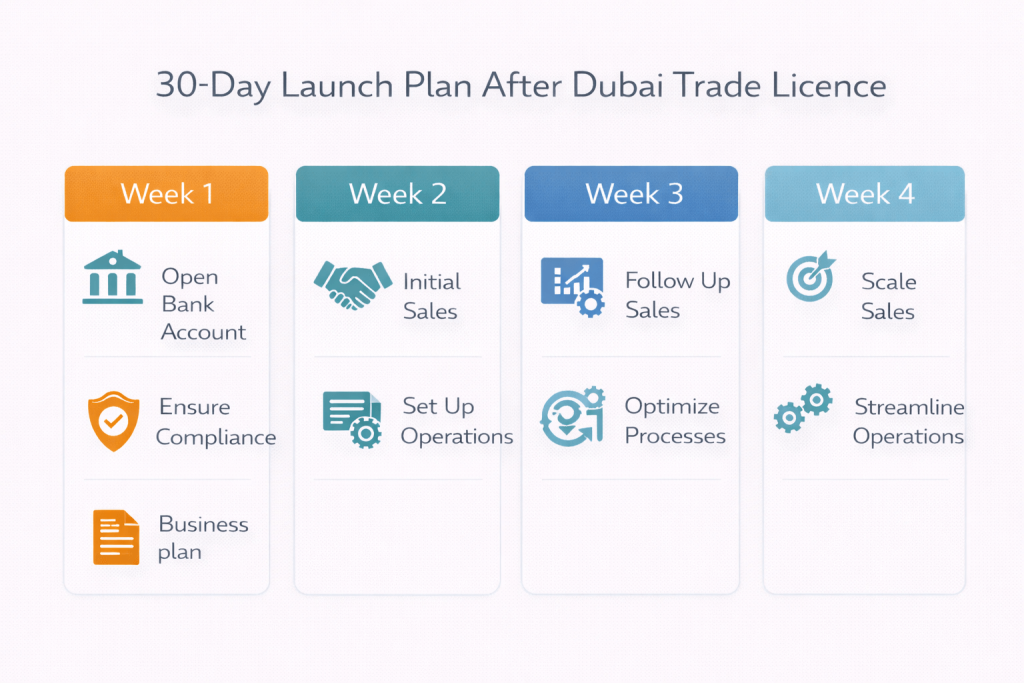
A practical 30-day launch plan after you get your licence
Week 1: Set foundations
- Confirm your operating model and deliverables
- Finalise contracts, invoicing templates, and compliance basics
- Set up bookkeeping and a simple reporting dashboard
Week 2: Banking and payments
- Finalise bank account application pack
- Prepare source of funds narrative and basic projections
- Set up payment links/invoicing workflows for faster collections
Week 3: Build pipeline
- Launch a focused outreach plan (20–50 target leads)
- Activate referrals and partner channels
- Build your first 3 offers and pricing packages
Week 4: Operationalise
- Deliver first projects, document your process
- Tighten your onboarding and service delivery steps
- Plan hiring/visas only as revenue justifies it
FAQ
1) How long does it take to start a company in Dubai?
Timelines vary by your route (mainland vs free zone), activity approvals, and how ready your documents are. Many founders can complete formation quickly once documents are clean, while visas and bank account opening can extend the overall timeline.
2) How much does it cost to start a company in Dubai?
Costs depend on your licence type, activity, office requirements, visa needs, and whether you choose mainland or a free zone package. A realistic budget includes formation, workspace, and (if needed) visas and banking preparation.
3) Can a foreigner own 100% of a company in Dubai?
In many activities and structures, full foreign ownership is available. However, rules can vary by activity and regulatory category, so it’s important to confirm your specific activity before you apply.
4) Do I need an office to start a company in Dubai?
Many setups require a compliant workspace solution—this could be a lease, an office, or a flexi/shared option depending on the authority and package. Office requirements can also affect visa eligibility.
5) Do free zone companies in Dubai pay corporate tax?
Free zone entities are within the corporate tax system, and certain free zone arrangements may benefit from special treatment depending on conditions and income type. It’s important to align your structure with how you earn revenue and where you trade.
6) What documents are required to start a company in Dubai?
Most applications require passport copies, business activity details, and formation documents. UAE residents may also need Emirates ID and an NOC (in some cases). Corporate shareholders typically require additional company and ownership chain documents.
Helpful Links
- UAE government guidance on starting a business (mainland steps)
- Dubai’s official “Invest in Dubai” business setup platform
- Dubai Department of Economy & Tourism licensing overview
- UAE corporate tax overview (official platform)
- UAE Ministry of Finance corporate tax guidance (incl. free zone context)
- Federal Tax Authority VAT registration thresholds (AED 375,000)
- Federal Tax Authority Small Business Relief guidance