If you’re searching for business opportunities in Dubai, 2026 is a year where “good ideas” won’t be enough. The ventures that win are the ones built around real demand, clear licensing pathways, and a route to revenue that fits Dubai’s pace and expectations.
Dubai rewards founders who come prepared: a crisp offer, a compliant structure, and a plan for bank, visa, and operations from day one. This guide focuses on what’s genuinely viable in 2026 — not recycled lists — and helps you decide which businesses to start, what kind of setup you need, and when it’s smarter to invest in the company rather than start from scratch.
What’s actually “viable” in 2026?
A business is viable when it hits three conditions:
- Market pull: people already pay for the problem you solve (and pay repeatedly).
- Operational fit: you can deliver consistently (staffing, suppliers, fulfilment, approvals).
- Compliance fit: your activity is licensable, bankable, and scalable without constant friction.
Dubai has opportunities everywhere — but viability depends on matching the right model to the right route: mainland vs free zone, professional vs commercial licence, regulated vs non-regulated activity.
A quick decision tool: what kind of business should I start in UAE?
Use this to narrow your options fast.
Start with your customer
- Selling to UAE residents (B2C): you’ll usually need a strong mainland strategy (or a structure that can trade locally without bottlenecks).
- Selling to businesses (B2B): mainland and free zone can both work — what matters is where your clients expect you to be and how you’ll invoice and deliver.
- Serving global clients remotely: a free zone setup is often the leanest start.
Then check your delivery model
- Online-first / remote delivery (consulting, digital services, B2B support): usually fastest to launch.
- Needs premises or inspections (F&B, clinics, education centres, manufacturing): more approvals, more capital, longer runway.
Finally: choose your “speed-to-revenue”
- Fastest: B2B services + recurring retainers
- Medium: trading + e-commerce (depends on supply chain)
- Slowest: regulated and asset-heavy ventures (but potentially very defensible)
If you want, First Elite Global can turn this into a 15-minute viability call and recommend the most practical route based on your nationality, activity, and budget.
The 2026 viability scorecard (use this before you spend)
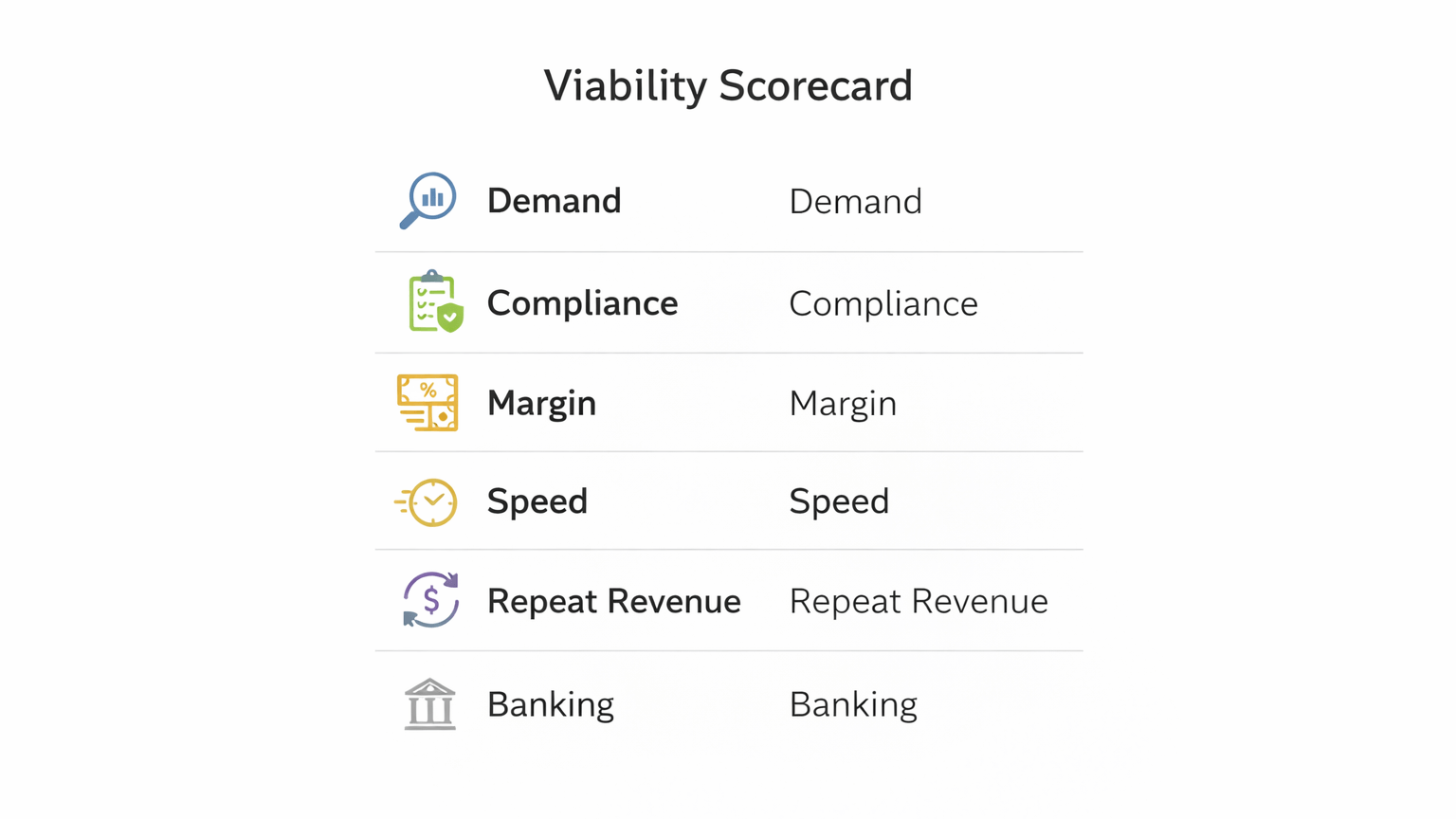
Rate each idea from 1–5:
- Demand certainty (Are buyers already paying?)
- Launch complexity (Approvals, premises, hiring)
- Margin clarity (Can you estimate gross margin within 10%?)
- Sales cycle length (Days/weeks vs months)
- Repeat revenue (Subscription/retainer vs one-off)
- Bank friendliness (Clear invoices, low-risk activity)
- Defensibility (Brand, compliance, systems, partnerships)
If your total score is below 24/35, you don’t need motivation — you need a better model.
The best business opportunities in Dubai for 2026 (with practical setups)
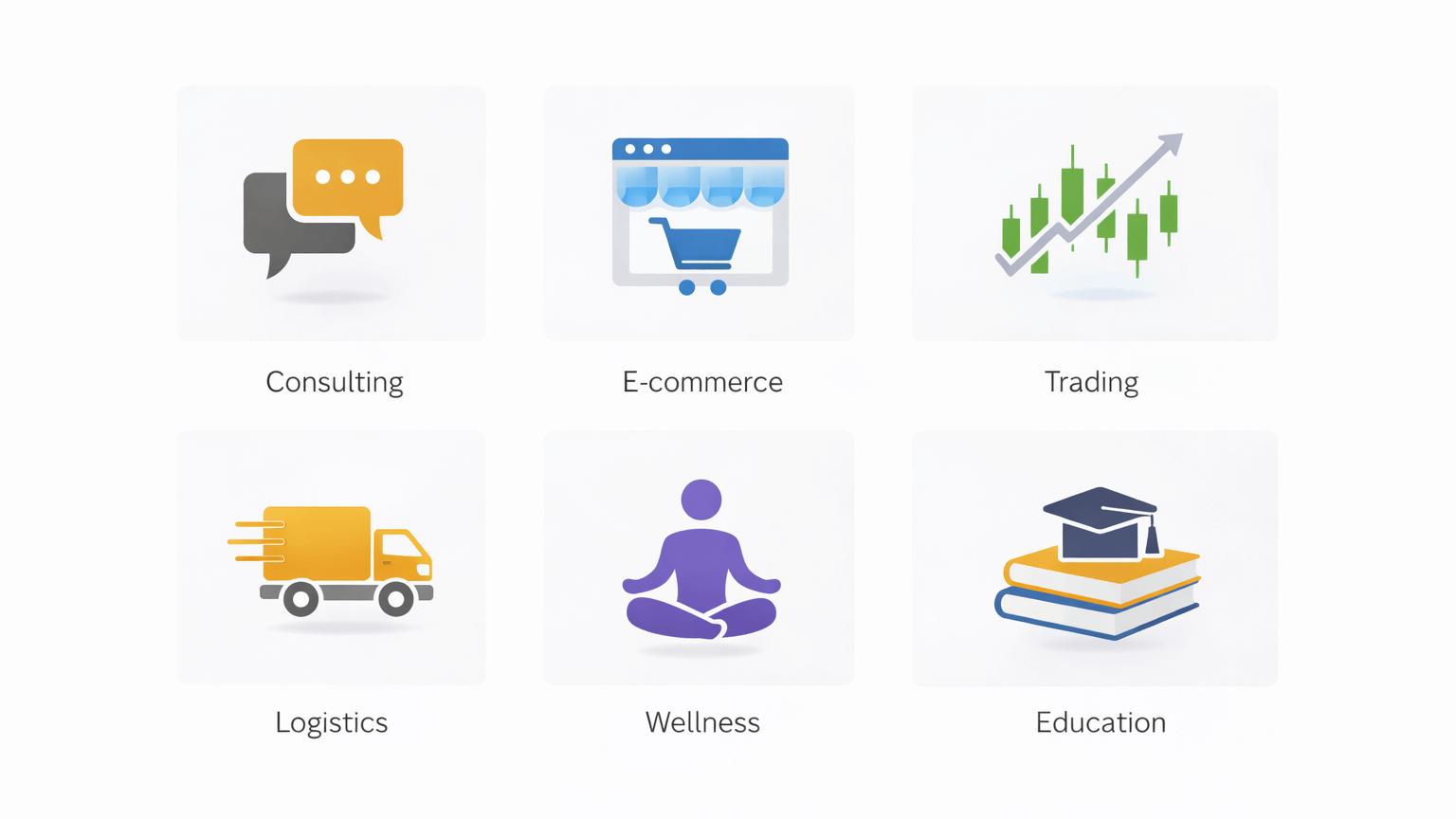
Below are the categories that consistently perform — because they align with Dubai’s market reality and scale well when structured correctly.
1) Specialist B2B consulting and done-for-you services (low capital, high margins)
What it is: practical services businesses need every month — delivered by experts, not generic agencies.
Examples of businesses to start:
- performance marketing for clinics / real estate / B2B brands
- CFO services for SMEs (reporting, cashflow, compliance coordination)
- HR, recruitment, and training support
- procurement and vendor management for growing companies
- compliance documentation, policies, and internal SOP build-outs
Why it’s viable in 2026: Dubai has endless new business formation — and new companies need execution support immediately.
Best-fit setup: typically a professional licence (mainland or free zone depending on client profile).
Make it win: sell a clear outcome (not hours). Package it into a monthly retainer with defined deliverables.
Common mistake: offering “everything” (brand, SEO, ads, design, websites) and delivering nothing consistently.
Mini-case insight: A two-person compliance and operations consultancy can reach profitability faster than a retail business — because the first client can cover overhead and the second can fund growth.
2) Premium niche e-commerce with a real supply advantage
What it is: not “a store”. A tight product line with a reason to exist (exclusive sourcing, superior quality, regional taste, fast delivery).
Examples:
- wellness and supplements (with compliant claims)
- modest fashion and occasion wear
- premium home and office essentials
- niche B2B supplies (salon consumables, clinic supplies, hospitality items)
Why it’s viable in 2026: customers buy online by default — but they stay loyal only when the brand delivers consistently and fast.
Best-fit setup: often a commercial licence with an e-commerce activity (route depends on where you will store and dispatch inventory).
Make it win:
- choose one hero product category
- build repeat purchases (bundles, subscriptions, replenishment reminders)
- treat fulfilment like your core product
Common mistake: copying a crowded category with no differentiation and no retention strategy.
3) Import, export and re-export trading (Dubai as a gateway)
What it is: sourcing goods efficiently and selling into markets where you have distribution access.
Examples:
- building materials and fit-out supplies
- specialty foods and FMCG (with approvals where needed)
- electronics accessories and components
- industrial spares
Why it’s viable in 2026: Dubai remains a logistics and trading hub — but trading succeeds only when you control margins, payments, and compliance.
Best-fit setup: a general trading or trading licence (often paired with warehousing/fulfilment partners).
Make it win:
- secure 2–3 reliable suppliers
- pre-sell to distributors or large buyers where possible
- keep documentation clean (invoices, packing lists, shipping)
Common mistake: starting with too many products, no payment terms plan, and no working capital buffer.
4) Fulfilment, last-mile services, and B2B logistics support
What it is: operational services that e-commerce brands and importers can’t scale without.
Examples:
- fulfilment for SMEs (pick/pack/dispatch)
- cross-border shipping coordination
- cold-chain support (where applicable)
- niche courier services for defined routes / segments
Why it’s viable in 2026: more online businesses means more delivery pressure — and brands outsource logistics quickly when volumes rise.
Best-fit setup: depends on activity and operations footprint; this is one to structure carefully from day one.
Make it win: specialise (beauty, pharma-adjacent, fragile goods, same-day B2B routes) rather than “we deliver anything”.
Common mistake: underpricing operations and discovering the unit economics are negative after month two.
5) Health, wellness and lifestyle services (strong demand, higher approvals)
What it is: services people pay for repeatedly — when the experience is premium and the results are clear.
Examples:
- physiotherapy / rehab services
- specialised fitness concepts (small group, performance-based)
- wellness clinics and preventative care models
- beauty services with a strong brand and process discipline
Why it’s viable in 2026: consumers spend on outcomes — but they expect trust, hygiene, and consistency.
Best-fit setup: regulated pathways; approvals can be significant and should be planned early.
Make it win: premium positioning + operational system (staff training, retention, standards).
Common mistake: launching before the approvals and facility requirements are fully understood.
6) Education, training, and corporate upskilling
What it is: training businesses that solve real skills gaps (not generic “coaching”).
Examples:
- corporate English / business communication
- digital skills training for teams
- compliance training programmes for regulated industries
- niche tutoring models with premium parents’ segments
Why it’s viable in 2026: companies keep hiring and training; families invest heavily in education.
Best-fit setup: depends on whether you deliver online, in-company, or via a centre.
Make it win: sell transformation (assessment → programme → certification/competency outcome).
Common mistake: relying on one-off workshops without a long-term programme offer.
7) Hospitality and experiences with a differentiated theme
What it is: curated experiences that tourists and residents genuinely seek out.
Examples:
- niche food concepts (lean menus, strong brand identity)
- premium event services for corporates
- guided experiences (photography, culture, desert, wellness retreats)
Why it’s viable in 2026: the market rewards originality — but punishes operational chaos.
Best-fit setup: activity-specific; this is where choosing the right jurisdiction and approvals matters.
Make it win: design a repeatable “signature experience” and build partnerships with hotels, concierges, and corporate planners.
Common mistake: launching a broad restaurant concept without a clear angle or cost control.
8) Property-linked services that scale (without becoming a brokerage)
What it is: services that benefit from real estate growth without relying on commission-only brokerage income.
Examples:
- short-term rental operations and guest experience management
- maintenance packages for landlords and investors
- fit-out coordination and project management
- home and office organisation, move-in services, staging
Why it’s viable in 2026: property activity creates downstream demand — and investors prefer reliable operators.
Best-fit setup: usually services-focused licensing, depending on scope.
Make it win: predictable packages and SLAs (service-level standards).
Common mistake: taking on complex projects without process controls and vendor discipline.
9) Sustainability services (practical, compliance-friendly, B2B ready)
What it is: measurable improvements businesses pay for because it reduces cost and risk.
Examples:
- energy efficiency audits and implementation coordination
- waste reduction and recycling services (within permitted activities)
- sustainability reporting support for SMEs
- EV charging ecosystem support (where applicable)
Why it’s viable in 2026: companies want lower operating costs and clearer ESG narratives — but they need implementers.
Best-fit setup: often B2B services; can work well as a consultancy + partner network model.
Make it win: offer “audit + implementation + maintenance” rather than reports only.
Common mistake: selling strategy decks without execution capability.
10) Fintech, regtech and digital assets services (high upside, high scrutiny)
What it is: financial and compliance-enabled tech businesses — including digital asset-related services — built around strong governance.
Why it’s viable in 2026: the region continues to attract financial innovation, but compliance expectations are serious.
Best-fit setup: depends heavily on activity; you must structure this category carefully.
Make it win: start with compliant, service-based revenue (B2B compliance, risk ops, tooling) before attempting complex regulated offerings.
Common mistake: assuming a “tech licence” covers regulated finance activity.
11) Creative production studios and content operations (for brands that need constant output)
What it is: high-quality content production with a system — not ad-hoc freelancing.
Examples:
- short-form video production retainers
- studio + editing pipeline for e-commerce brands
- multilingual content localisation for regional expansion
- event coverage + rapid turnaround packages
Why it’s viable in 2026: brands compete on attention; consistent content beats sporadic campaigns.
Best-fit setup: typically straightforward for services.
Make it win: productise it (X deliverables per month, fixed turnaround, predictable pricing).
Common mistake: charging per video without controlling revision cycles and scope.
12) Light manufacturing and industrial services (defensible, but not beginner-friendly)
What it is: production, assembly, packaging, or industrial support that benefits from Dubai’s infrastructure.
Examples:
- niche packaging and labelling
- small-batch manufacturing
- 3D printing and prototyping services
- repair/refurb operations for specific categories
Why it’s viable in 2026: defensibility rises when you control production and quality.
Best-fit setup: requires careful planning: approvals, premises, and operational readiness.
Make it win: start with contracted production or B2B commitments before scaling capacity.
Common mistake: leasing space and buying equipment before demand is proven.
Start new, or invest in the company? (a smarter question than people think)

Sometimes the best “business opportunity in Dubai” is not a new launch — it’s buying what already works.
When starting a new business in Dubai makes sense
- your advantage is expertise, relationships, or a unique model
- you can launch lean and sell immediately
- you want full control over brand and operations
When it’s better to invest in the company (or acquire)
- the business already has licences, staff, contracts, and systems
- you want speed and existing cashflow
- you can improve margins through better operations or marketing
Due diligence checklist before you invest
- verify licence activity matches actual operations
- review financial statements and bankability
- confirm liabilities, disputes, and supplier contracts
- inspect customer concentration (one client risk)
- understand visa and staffing dependencies
- validate inventory and receivables (if trading)
If you’re considering acquisition or partnership, First Elite Global can help you structure the cleanest route so you don’t inherit avoidable compliance problems.
Mainland vs free zone: which one fits your opportunity?
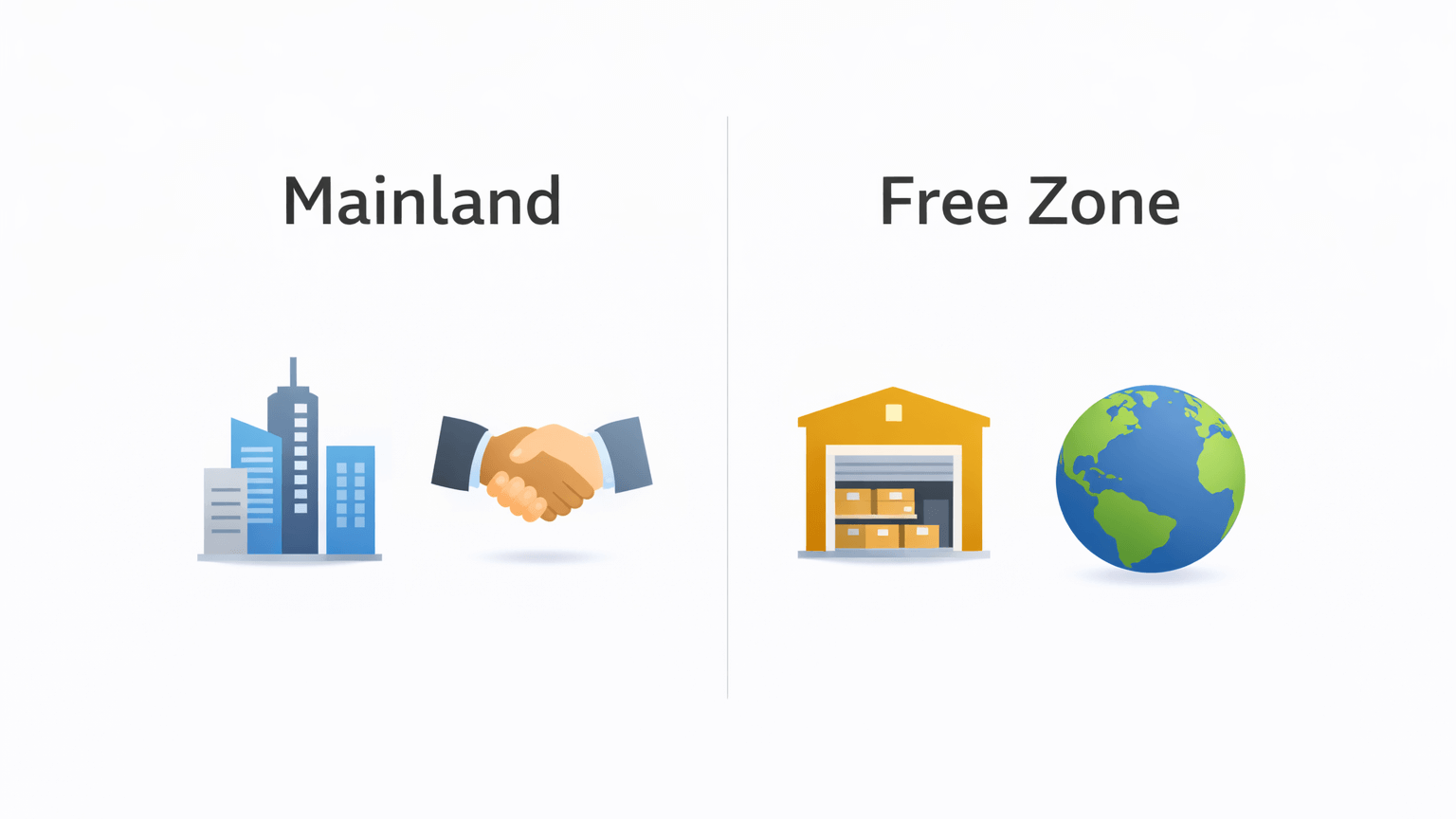
A practical way to choose:
Mainland is usually best when you…
- need to trade directly across the UAE market
- plan to bid for larger local contracts
- want maximum flexibility for on-the-ground operations
Free zone is usually best when you…
- serve global clients or operate online-first
- want a streamlined setup pathway
- prefer a packaged approach to licence + workspace + visas
Offshore structures can make sense when you…
- need a holding entity (assets, IP, group structuring)
- don’t need local operations under that entity
Choosing wrong doesn’t just cost money — it can slow banking, restrict how you invoice, and force restructuring later.
A practical 30-day launch plan (from idea to operational business)
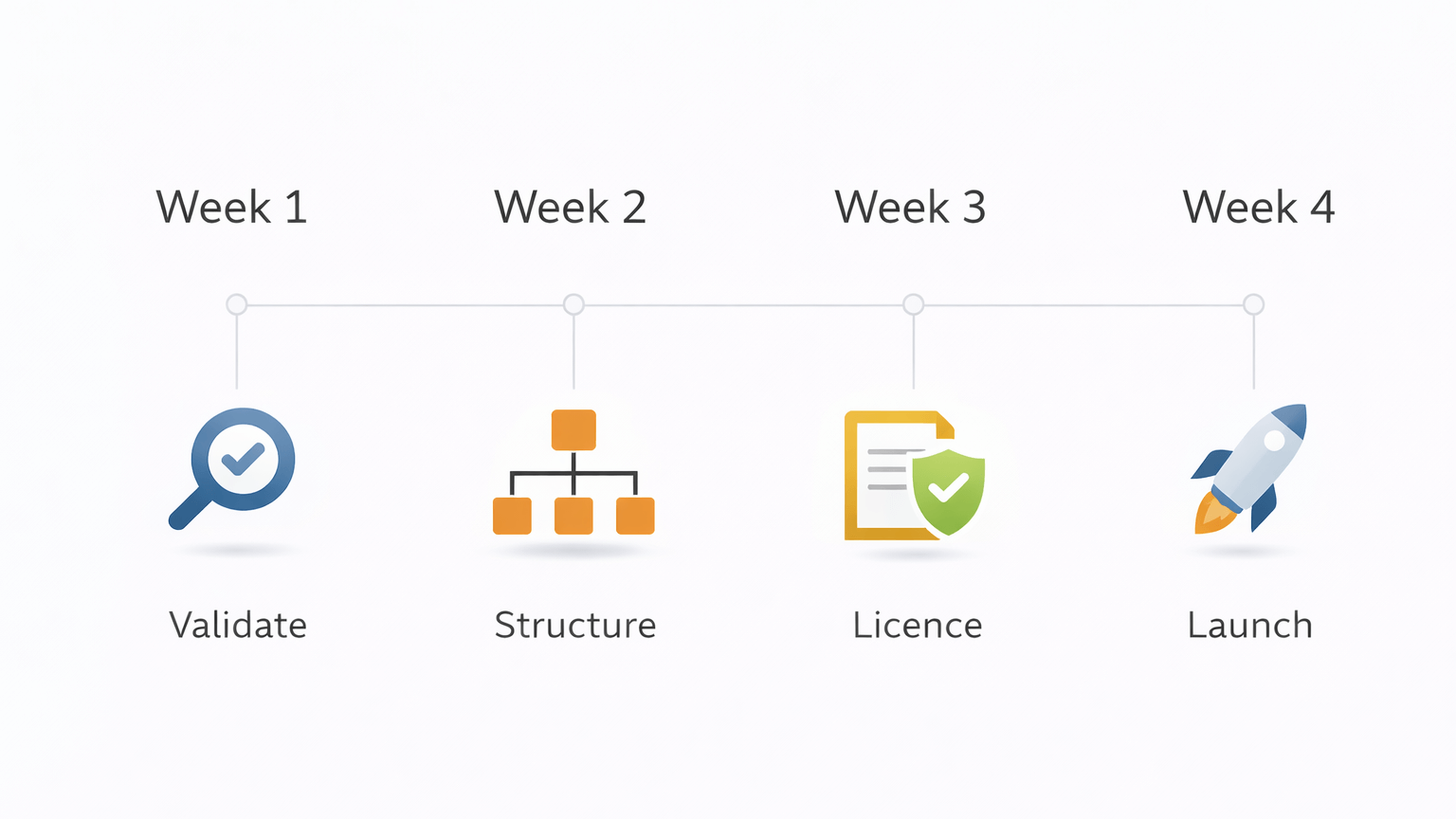
This is the pathway most successful founders follow — regardless of industry.
Week 1: Validate and lock the offer
- define your ideal customer (one segment only)
- set a clear offer (what you deliver, price, timeline)
- confirm what you will not do (scope boundaries)
Week 2: Choose the correct activity and structure
- select the exact business activity that matches your real operations
- decide mainland vs free zone based on your customer and delivery model
- prepare shareholder and company documents cleanly (to avoid rework)
Week 3: Licence and operational basics
- proceed with trade name and approvals
- align workspace requirements (flexi-desk vs office vs facility)
- set up invoicing, accounting readiness, and policies
Week 4: Visas, banking, and go-to-market
- proceed with visa steps as needed
- prepare bank application with a coherent profile (activity, revenue logic, contracts)
- launch your go-to-market: partnerships, outreach, and your first 10 sales conversations
If you want this mapped to your exact situation, book a free consultation with First Elite Global and we’ll give you a clear, step-by-step setup plan aligned to your business model.
A quick credibility check: if your idea depends on these, rethink it
Be cautious if your plan relies on:
- “I’ll just run ads and see what happens”
- “I’ll open a shop and people will come”
- “I’ll hire a team later, once it works”
- “I’ll figure out licensing after the brand is ready”
- “Everyone is doing it, so it must be profitable”
Dubai is full of opportunity — but it’s not forgiving when fundamentals are missing.
Ready to move from research to action?
If you’re serious about launching in 2026, the fastest way to reduce mistakes is to match your business model to the right structure from the start.
“First Elite Global made setting up in Dubai surprisingly straightforward. They handled the paperwork, dealt with the relevant authorities, and kept us informed at every step.”
Speak to a First Elite Global consultant and get a clear, no-obligation plan for your setup, including the most practical route for licensing, visas, and banking.
FAQs
1) What are the best business opportunities in Dubai in 2026?
The most viable options in 2026 are typically specialist B2B services, niche e-commerce with strong fulfilment, import/export trading with clean documentation, logistics support, education/training, and well-run lifestyle services with clear positioning.
2) What kind of business should I start in UAE if I’m a beginner?
If you’re a beginner, the safest starting points are usually service-based businesses with low overhead (consulting, done-for-you services, content production, B2B support) because they can reach revenue quickly and scale without heavy approvals.
3) Is it better to start a new business in Dubai or invest in the company?
Start new if you have a clear competitive edge and can launch lean. Consider investing in the company (or acquiring) if you want speed, existing cashflow, and operational infrastructure — but only after proper due diligence.
4) Mainland vs free zone: which is better for business opportunities in Dubai?
Mainland is often best for direct UAE market trading and local contracts. Free zones can be ideal for online-first, international, and service-based models seeking streamlined setup. The “better” option depends on your customer and operating model.
5) Can I set up a business in Dubai while living abroad?
In many cases, yes — you can start remotely and travel only for steps that require physical presence, depending on visa and banking requirements.
6) What are the biggest mistakes people make when choosing businesses to start in Dubai?
Picking a crowded idea with no differentiation, choosing the wrong licence/jurisdiction, underestimating operational costs, and assuming banking or approvals will be straightforward without a coherent business profile.