
If you’ve searched for a DAFZA companies list, you’re probably trying to do one of three things:
- Find suppliers, partners, or clients based in Dubai Airport Freezone
- Shortlist logistics companies in DAFZA for freight, warehousing, customs, or fulfilment
- Work out whether DAFZ is the right free zone for your company setup (and what it takes to get licensed)
Here’s the problem: most “lists” online are incomplete, outdated, or unverified. Companies move, rename, merge, close, or change activities. And many free zone tenants prefer not to be publicly indexed.
This guide solves that by giving you:
- A practical DAFZA directory-style breakdown (by sector and use-case)
- The fastest way to build a verified list for your exact needs
- A clear, step-by-step DAFZ setup overview (licence, entity, space, visas, banking)
If you want a tailored shortlist of DAFZ-based companies (by sector, activity, and credibility checks) and a setup plan mapped to your budget, First Elite Global can handle it end-to-end through one dedicated consultant.
What is DAFZA (DAFZ) and why companies choose it
You’ll often see DAFZA used interchangeably with DAFZ.
- DAFZA is the older naming people still search for.
- DAFZ is the current brand most commonly used for Dubai Airport Freezone.
What makes it distinct is simple: airport adjacency.
For businesses that rely on speed, air cargo, regional distribution, time-sensitive inventory, high-value goods, or frequent international travel, DAFZ is often shortlisted early because it’s built around operational efficiency.
Common reasons companies choose DAFZ include:
- Faster access to air freight and international routes
- A strong ecosystem for freight, logistics, trading, distribution, aviation, tech, pharma, and premium goods
- Professional free zone infrastructure and regulated onboarding
- Free zone advantages (ownership structure, operational setup, and clear licensing routes)
Is there an official DAFZA companies list?
There isn’t a single, universally complete public directory that stays perfectly current.
Instead, you build the most reliable “DAFZA companies list” by combining:
- Official / direct verification (best for accuracy)
- Business directories (best for discovery)
- Proof-based screening (best for procurement and compliance)
The rest of this article shows you exactly how to do that quickly—without relying on random, outdated company-name dumps.
DAFZA companies directory: who you’ll typically find there
Think of this as a “directory view” of companies in DAFZA, organised the way real buyers and founders search.
Logistics companies in DAFZA (freight, warehousing, customs, fulfilment)

If your search includes “logistics companies in DAFZA”, you’re usually looking for one of these categories:
- Freight forwarders (air/sea/road coordination, consolidated shipping, documentation)
- Customs clearance brokers (import/export processing, HS classification guidance)
- 3PL / warehousing (storage, pick/pack, inventory handling, bonded workflows where applicable)
- Last-mile / courier and express services (regional distribution and delivery networks)
- Cold-chain logistics (pharma, medical devices, temperature-controlled distribution)
- E-commerce fulfilment operators (seller onboarding, returns management, packaging, labelling)
How to shortlist fast: look for companies that can show (a) clear service scope, (b) active presence in DAFZ, and (c) proof of licensing and insurance where relevant. A logo and a website are not enough.
Trading and distribution (import/export, regional hubs)
Many dafza companies operate as regional distribution or trading hubs for:
- Electronics and accessories
- FMCG and premium goods
- Industrial components and spare parts
- Beauty, cosmetics, and lifestyle products
- Specialist B2B products (medical, aviation-related, engineering)
What to check: whether their listed activity matches what you need (trading vs distribution vs services), and whether they can legally sell into the mainland directly or through approved channels.
Aviation, aerospace, and airport-adjacent services
DAFZ’s location naturally attracts businesses supporting aviation supply chains:
- Parts and components distribution
- Maintenance support services
- Engineering and technical support firms
- Aviation tech and specialist trading
What to check: additional approvals or regulated activities if your scope touches controlled goods, safety standards, or restricted equipment.
Pharma, healthcare, and regulated distribution
Where speed and compliance matter, DAFZ is often considered for:
- Pharma and healthcare trading/distribution
- Medical equipment suppliers
- Regional headquarters for healthcare brands and procurement teams
What to check: storage and handling requirements, temperature control needs, and whether your activity triggers additional compliance steps.
Tech, telecoms, and high-value equipment
You’ll find firms focused on:
- IT hardware and enterprise solutions
- Telecoms equipment distribution
- Systems integration and B2B services
- Regional sales/support offices
What to check: whether the company is licensed for services, trading, or both—and whether they need visas for technical staff quickly.
How to build a verified DAFZA companies list (the method professionals use)
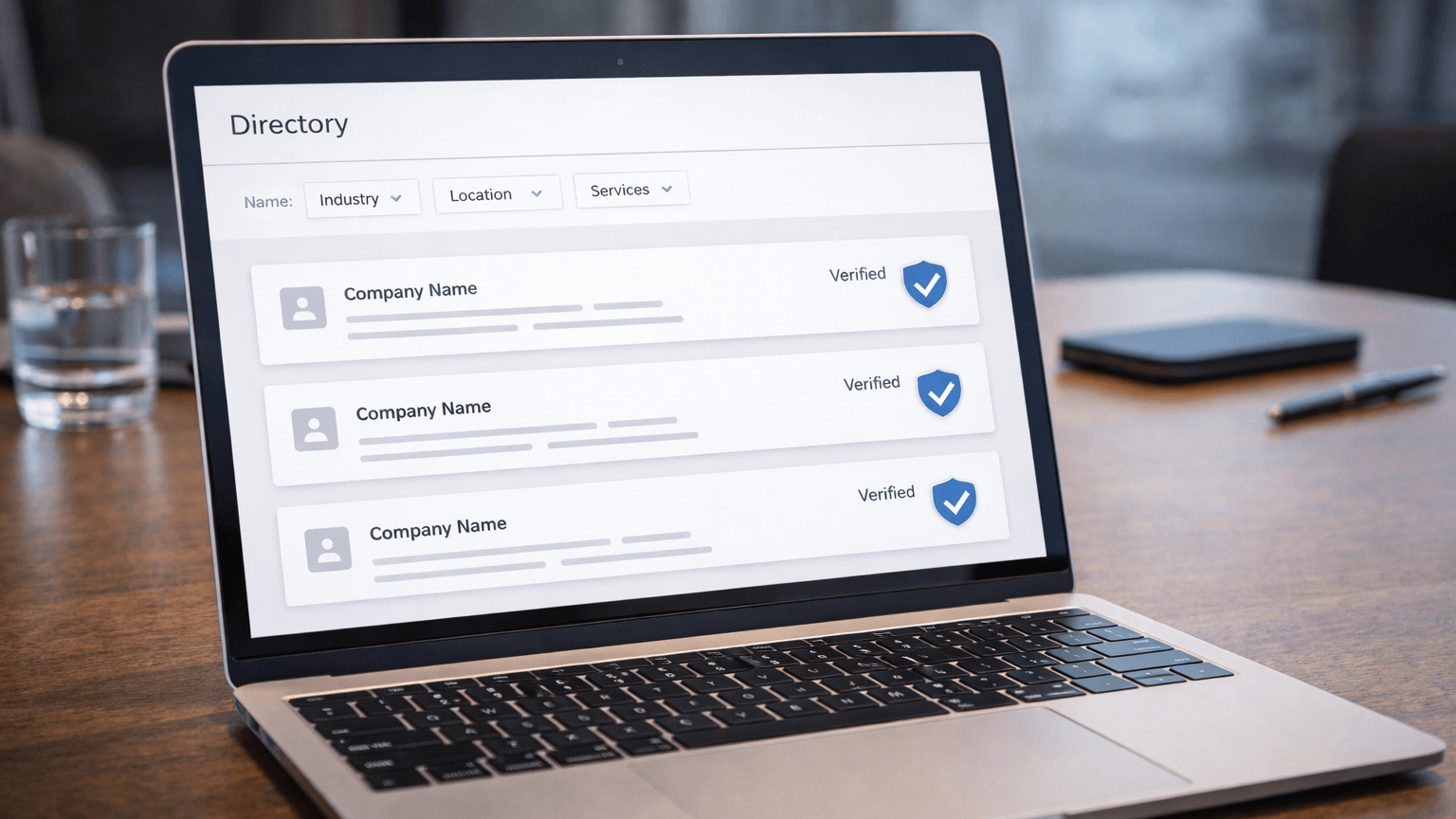
If you want a list you can trust—whether for procurement, partnerships, or due diligence—use this workflow.
Step 1: Define your list’s purpose (this changes everything)
Write one sentence:
- “I need logistics companies in DAFZA that handle air freight + customs + last-mile.”
- “I need companies in DAFZA that distribute medical devices in the GCC.”
- “I need a list of dafza companies in electronics trading with a regional warehouse.”
This single line determines your filters, keywords, and verification checklist.
Step 2: Build your discovery list (who exists)
Use a mix of:
- Company websites that state DAFZ as the address
- Professional networks (for sector discovery and decision-makers)
- Business map platforms (useful for location-based discovery)
- Industry associations and trade references (often higher quality leads)
At this stage you’re collecting candidates, not confirming legitimacy.
Step 3: Verify (who is real, current, and relevant)
For each candidate, request or confirm:
- Trade licence copy (or certificate of incorporation / registration document)
- Legal name exactly as on documents (watch spelling variations)
- Activity / licence scope (does it match the service or product you’re buying?)
- Validity (licence status and renewal)
- Authorised signatory (who can sign contracts?)
- Insurance (particularly for logistics, warehousing, and high-value goods)
For serious procurement: also request a brief capability statement (2 pages) and references.
Step 4: Put your list into a usable directory format (copy/paste template)
Use this structure so your “DAFZA companies list” becomes a working directory:
- Company legal name
- Trading name (if different)
- Sector (logistics / trading / pharma / aviation / tech)
- Service category (e.g., customs clearance, 3PL, air freight)
- DAFZ address (building/unit)
- Website + main contact
- Decision-maker contact (name + role)
- Proof received (licence copy: yes/no)
- Licence scope matches need (yes/no)
- Notes (pricing model, lead time, coverage, constraints)
This format makes your directory link-worthy because it’s actually usable.
How to verify a company is genuinely based in DAFZ (quick checklist)

Use this when you’re vetting companies in DAFZA for contracts, shipments, or partnerships.
Ask for:
- Trade licence (latest copy)
- Certificate of incorporation / registration
- Signatory authorisation (if you’re issuing contracts)
- VAT details (where relevant)
- Company letterhead matching the legal name and address
- Service insurance (if logistics/handling is involved)
Red flags:
- They won’t share licence details but pressure you to pay deposits
- The company name on invoices doesn’t match the legal name
- Address is vague (no building/unit reference)
- Emails don’t match the domain, and you can’t identify leadership
- “We are in DAFZ” but all operations appear elsewhere and can’t be explained
Setting up in DAFZ: who it’s best for
DAFZ tends to suit businesses that prioritise:
- International trading and distribution
- Speed-to-market in the GCC and wider region
- Logistics and freight efficiency
- Regional headquarters for commercial teams
- Access to a professional free zone ecosystem near the airport
It may not be the best fit if your business model requires:
- Retail sales directly across the UAE mainland without approved channels
- Heavy industrial manufacturing that needs large, low-cost land footprint
- A very low-budget setup where you’re optimising purely for minimum cost (some other zones may be cheaper)
How to set up a company in DAFZ (step-by-step)

Below is the real-world setup flow founders follow, with the steps that typically slow people down highlighted.
1) Choose your business activity and licence category
This is the foundation. Your activity determines:
- What you can legally do
- Whether extra approvals are needed
- How banking and compliance will be assessed
- What type of facility makes sense (desk vs office vs warehouse)
Tip: Don’t choose an activity just because it sounds broad. Banks and regulators prefer clarity.
2) Choose your legal structure
Most setups fall into one of these:
- Free zone entity (commonly used for new setups)
- Branch (commonly used when an overseas or UAE company is expanding)
Your best option depends on shareholder count, governance, and whether you want a clean UAE entity or an extension of an existing company.
3) Decide on your space (this impacts cost, visas, and practicality)
DAFZ setups typically include options such as:
- Flexi desk / shared workspace
- Private office
- Warehouse or operational space (if your model requires it)
Your space choice can affect:
- Visa allocations
- Operating permissions
- Total setup and renewal costs
- Credibility for certain banking profiles
4) Prepare documents and submit the application
You’ll usually need:
- Passport copies and personal details for shareholders/managers
- A simple business plan or activity description (especially helpful for banking)
- Corporate documents if a company is a shareholder (notarised/legalised where required)
- UBO / compliance declarations (common in modern onboarding)
If you want a smooth bank account process later, align your documents and activity narrative now—don’t treat it as “paperwork later”.
5) Approvals, leasing, and licence issuance
Once approved:
- Your facility arrangement is finalised
- The licence is issued
- You can proceed with establishment and immigration steps (for visas)
In many straightforward cases, incorporation can be completed within a few weeks once documents are ready and there are no special approvals.
6) Visas, Emirates ID, and employee onboarding (if required)
If you need visas (owner, staff, family), this stage includes:
- Immigration file / establishment registration
- Entry permits (where applicable)
- Medicals, biometrics, Emirates ID processing
- Status changes and stamping (process varies by applicant status)
7) Corporate bank account planning (do this early)
Banking is where many founders lose time.
A strong application typically includes:
- A clear business model (what you sell, who you sell to, where funds come from)
- Transparent shareholder background and source of funds
- Contracts, invoices, or pipeline evidence (where available)
- A licence activity that matches your real operations
If your bank file is prepared properly from day one, approvals become dramatically easier.
Costs: what drives the total price in DAFZ
There isn’t a single fixed number that applies to everyone. Costs vary mainly due to:
- Licence type and number of activities
- Facility type (desk vs office vs warehouse)
- Visa count and immigration processing needs
- Shareholder structure (individual vs corporate shareholder)
- Regulated activities and additional approvals
- Ongoing compliance needs (renewals, accounting, corporate tax registration, etc.)
Smart budgeting approach: decide your “lean launch” version first (minimum viable licence + space + essential visas), then build your scale plan for month 3–12.
DAFZ vs other Dubai free zones (quick decision guide)
Choose DAFZ when:
- Airport proximity materially improves your operations
- You handle high-value, time-sensitive, or regulated goods
- You need a strong distribution or logistics ecosystem
- Your team travels frequently and values location efficiency
Consider other zones when:
- You prioritise the lowest cost package above all else
- You need a specialised cluster (e.g., certain niche media or industry-specific ecosystems)
- Your model is mainland-heavy and requires maximum onshore flexibility
If you’re unsure, a short structuring call can save you weeks by matching your activity, budget, and banking path to the right jurisdiction.
Practical next step (so you don’t waste time)

If you want this done properly, the fastest route is to:
- Define the exact list you want (sector + capability + location constraints)
- Build a discovery list
- Verify it with proof-based screening
- Align your company setup plan so your licence, visas, and banking all match the same story
First Elite Global can deliver:
- A tailored DAFZ company setup plan (licence, structure, timeline, costs)
- A verified DAFZA companies shortlist for your sector (especially logistics, trading, and distribution)
- End-to-end handling of the setup process with clear updates and a single point of contact
FAQs
1) Is there an official DAFZA companies list I can download?
There isn’t one universal public list that stays fully current. The most reliable approach is to build a list from multiple sources and verify each company via trade licence evidence.
2) How can I find logistics companies in DAFZA quickly?
Start with location-based discovery (DAFZ address references), then filter by capability (air freight, customs, warehousing, fulfilment). Always confirm licensing and insurance before contracting.
3) Are “DAFZA companies” and “DAFZ companies” the same thing?
Yes—DAFZA is the older commonly searched term, while DAFZ is the current brand naming used for Dubai Airport Freezone.
4) How long does it take to set up a company in DAFZ?
In many straightforward cases, setup can be completed within a few weeks once documentation is ready, subject to approvals, activity type, and visa requirements.
5) Can a DAFZ company trade with mainland UAE customers?
Often yes, but the route depends on your activity and the permitted channels (for example, approved distributors or specific permissions). Your structure should match your actual sales model.
6) What’s the biggest mistake people make when setting up in DAFZ?
Choosing an activity that doesn’t match real operations (which later causes delays in banking, compliance, and contract execution).