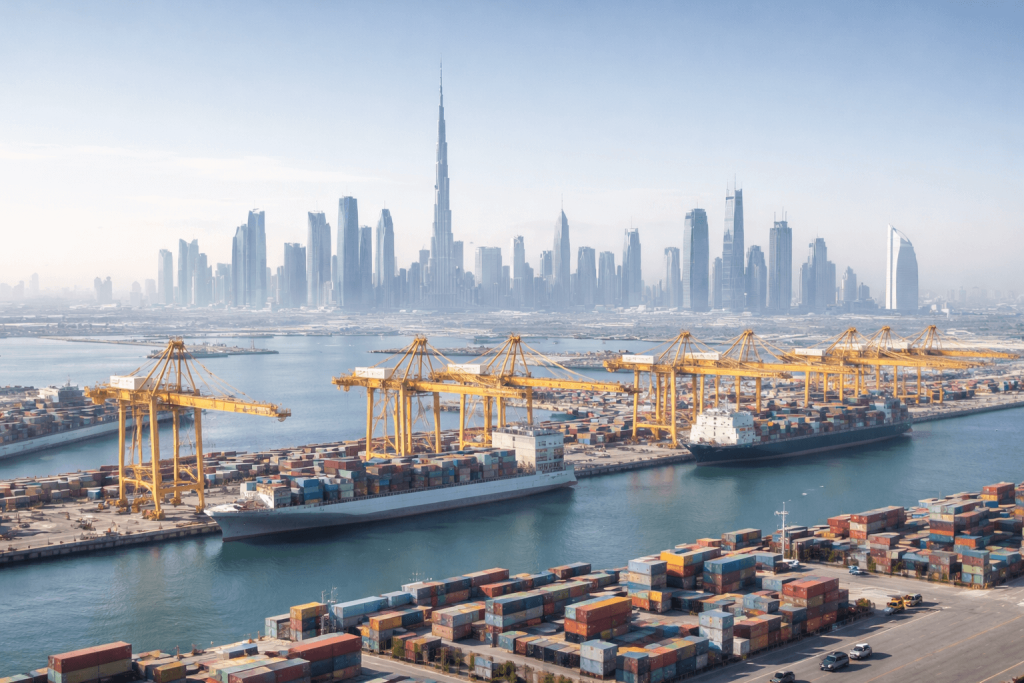
If you’re planning to trade, import, export, or build a regional base, a Dubai free trade zone can be one of the fastest ways to launch — with modern infrastructure, streamlined licensing, and international-friendly ownership rules.
But “free zone” is not one-size-fits-all.
Choose the wrong one and you can end up with:
- A licence that doesn’t match your activity (and delays at approval time)
- Surprises around office/warehouse requirements and visa quotas
- A structure that makes UAE mainland selling harder than expected
- Banking friction because your setup doesn’t match your real-world operations
This guide explains what Dubai free trade zones are, what they’re best for, and a practical method to choose the right Dubai free zone based on your business model — especially if you care about customs benefits, logistics, and a trading licence in Dubai.
If you want a tailored shortlist (with a clear cost-and-timeline comparison), request a free consultation with First Elite Global and we’ll map your ideal zone options in one call.
What is a Dubai free trade zone?

A Dubai free trade zone (commonly called a Dubai free zone) is a designated economic area regulated by its own authority, where businesses can incorporate and operate under that zone’s licensing framework.
In plain terms:
- You set up your company inside the zone
- The free zone authority issues your trade licence
- The zone provides the rules, facilities, and approvals for your sector
Many people use “free trade zone” and “free zone” interchangeably in Dubai. What matters is the function: these zones are designed to attract international business, trade, and investment — especially for import/export, re-export, logistics, e-commerce, and regional HQ activity.
Free zone vs mainland (the quick difference)
- Free zone: best for international trade, cross-border services, warehousing, e-commerce, and scalable setups
- Mainland: best if you want full freedom to sell directly in the UAE market (especially retail, local contracts, and onshore operations)
You can also build a hybrid structure (free zone + mainland access) if your model needs both.
Why Dubai free zones are popular for trading and logistics
Dubai has built a global reputation as a trading hub because it combines:
- Major seaports and airports
- Highly efficient logistics networks
- Strong digital government infrastructure
- A large expat market and regional access to GCC, MENA, Africa, and South Asia
For many founders, the big draws of Dubai free zones include:
1) Strong international setup advantages
- Fast incorporation pathways (often remote-friendly for many steps)
- Investor-friendly ownership rules in many structures
- Clear licensing categories for trade, services, and sector activities
2) Customs benefits and duty planning
Free zones are often ideal for businesses that:
- Import goods to store, assemble, or package
- Re-export to other countries
- Use Dubai as a distribution base for the region
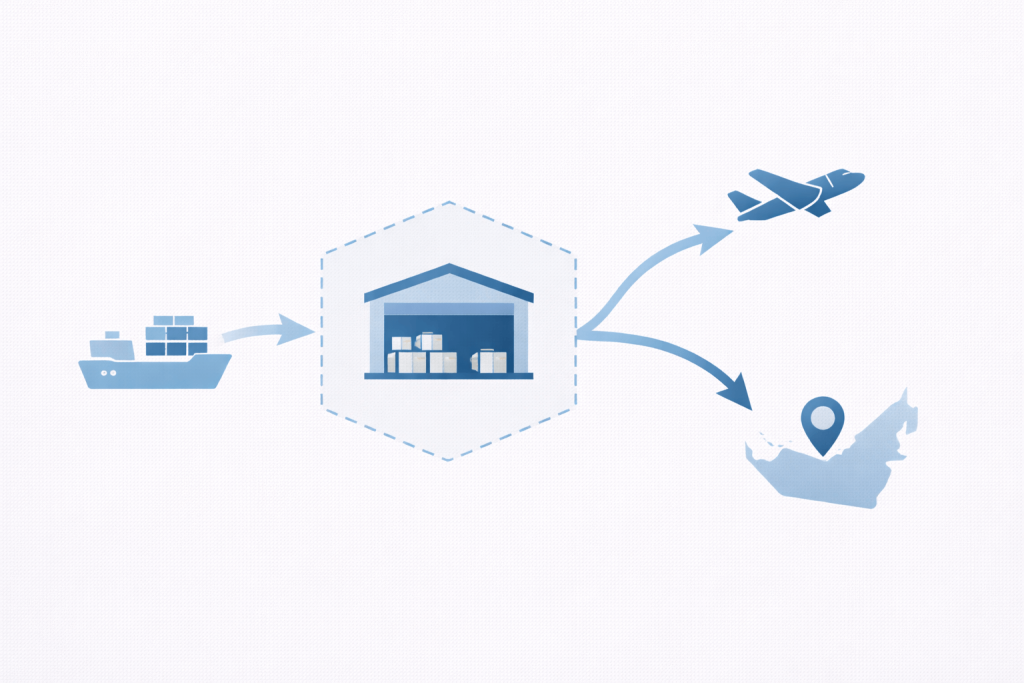
The key idea: customs duty is typically triggered when goods enter the UAE mainland market, not when they’re simply moved, stored, or re-exported through free zone logistics routes (subject to correct declarations and compliance).
3) Logistics free zones built for speed
If your business relies on:
- Quick container turnaround
- Air freight movement
- Warehousing and last-mile fulfilment
…then choosing a logistics-aligned free zone can reduce friction and cost over time.
The most common licence types in Dubai free trade zones
While each zone has its own activity list, most Dubai free zones revolve around these licence families:
- Trading licence (Commercial): importing, exporting, re-exporting, distribution, general trading (scope varies)
- Service/Consultancy licence (Professional): advisory, marketing, IT services, management, etc.
- Industrial licence: manufacturing, light assembly, production (often requires specific facilities)
If you’re targeting the keyword “trading licence Dubai”, here’s the practical rule:
Your licence must match what you actually do day-to-day.
If you’re trading physical goods, don’t structure like a pure consultancy. And if you’re mainly selling services, don’t pay for warehouse-heavy requirements you’ll never use.
Customs benefits explained simply (without the confusion)
A lot of online content oversimplifies customs and VAT. Here’s the clean, practical view for most trading businesses:
When free zones help most
A Dubai free trade zone is especially powerful if you:
- Import stock and re-export to other countries
- Need bonded-style storage and controlled movement
- Want proximity to a port/airport corridor
- Plan to serve clients outside the UAE
When you’ll face extra steps
If you want to sell directly into the UAE mainland, you may need one of these routes:
- A mainland entity (or branch) for onshore trading
- A distributor/agent model for local sales
- A dual/hybrid permission arrangement (where applicable)
For many trading businesses, the right structure is not “free zone or mainland” — it’s free zone for global trade + a compliant path to serve UAE customers.
Logistics free zones vs general free zones: what’s the real difference?
Some zones are designed for:
- Ports, containers, freight forwarding, warehousing
- Manufacturing and industrial activity
- Multi-country distribution
Others are designed for:
- Professional services
- Small teams and flexible desks
- E-commerce and light operational models
If you are importing physical goods, shipping volume matters. A logistics-aligned zone can mean:
- Better warehouse options
- Faster freight workflows
- More natural alignment with customs procedures
- Lower operational friction as you scale
How to choose the right Dubai free trade zone (a practical scoring method)
Here’s the method we use with clients so the decision doesn’t turn into guesswork.
Step 1: Define your “real business model” in one sentence
Examples:
- “We import electronics, store in Dubai, and re-export to Africa.”
- “We sell services internationally and need 2 visas plus a bank account.”
- “We run an e-commerce brand with fulfilment and regional shipping.”
That one sentence determines almost everything.
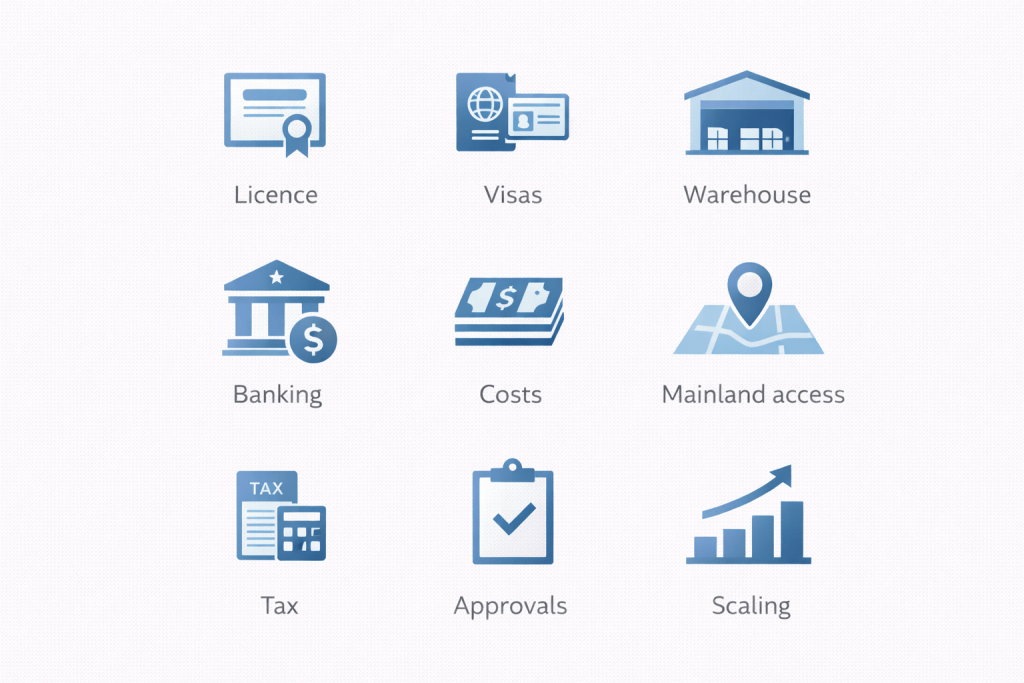
Step 2: Score free zones against 9 decision factors
1) Activity fit (licence approval risk)
- Does the zone clearly allow your activity?
- Is your category regulated (health, finance, education, legal, crypto, etc.)?
Red flag: you’re forced to “choose a close enough activity” to get approved.
2) Mainland selling needs
Ask: “Do we need to invoice UAE mainland clients regularly?”
- If yes, plan mainland access properly (don’t assume it will be simple later).
3) Customs and logistics reality
- Port-aligned vs airport-aligned vs general zones
- Warehousing availability (now and later)
- Freight forwarder ecosystem
4) Visa quota and workspace requirements
- How many visas do you need in year 1?
- Will you need visas for dependants later?
Some packages are attractive until you realise the visa allocation is too limited.
5) Total cost structure (not just the headline package)
Compare:
- Licence fee
- Registration and establishment card
- Workspace (desk/office/warehouse)
- Visa costs (and renewals)
- Medical/Emirates ID processing
- Mandatory audits (where required)
- Renewal costs (annual reality)
Rule: the cheapest option upfront can be the most expensive by year two.
6) Banking and compliance readiness
Banks care about:
- Clear business activity
- Contracting and invoice trail
- Substance (real operations that match your story)
If your business model and setup don’t match, bank account timelines suffer.
7) Corporate tax positioning (practical, not hype)
Corporate tax and compliance rules can apply across structures. The right approach is:
- Choose a structure that fits your revenue model and counterparties
- Maintain clean accounting and documentation from day one
8) Reputation and ecosystem
Some zones are stronger for:
- Commodities
- Aviation/logistics
- Tech and innovation
- Finance and wealth structures
- E-commerce and digital trade
Ecosystem matters when you want partnerships, hiring, and credibility.
9) Scale pathway
Ask:
- Can we upgrade visas smoothly?
- Can we expand facilities?
- Can we add onshore access later without rebuilding everything?
A quick “decision tree” for free zone selection
Use this as a shortcut:
If you import and re-export physical goods…
Prioritise:
- A logistics-aligned zone
- Warehouse options
- Proven customs workflows
- Port or airport proximity based on your shipping profile
If you sell services internationally…
Prioritise:
- Clear professional activity lists
- Flexible workspace
- Efficient visa pathways
- Banking friendliness for your sector
If you sell online (e-commerce)…
Prioritise:
- E-commerce-friendly activity lists
- Payment and banking compatibility
- Fulfilment and courier ecosystem
- Options to scale visas as the team grows
If you want UAE mainland sales as a core revenue stream…
Prioritise:
- A structure that supports onshore selling properly (often mainland or hybrid)
- Clear commercial permissions
- A straightforward invoicing pathway for UAE clients
Dubai free trade zones that are often shortlisted (by use case)
You should always confirm your exact activity, but these categories help you shortlist faster.
Best known for large-scale logistics and warehousing
- Port-centric logistics zones (ideal for container-based trade, warehousing, and re-export models)
Strong for commodities and multi-industry trading ecosystems
- Commodity and multi-sector trade hubs (often used for trading groups, brokers, and global import/export structures)
Strong for airport-linked trade and air freight speed
- Airport-linked zones (often preferred for high-value, time-sensitive goods)
Strong for e-commerce and digital trade models
- E-commerce-focused zones (aligned with fulfilment and distribution networks)
Strong for tech and innovation companies
- Tech and innovation zones (good for software, IT services, and scalable teams)
Strong for finance and regulated financial activity
- Financial districts (when your activity requires a specific regulatory environment)
If you want a shortlist that matches your exact model, request a free consultation and we’ll narrow this to 2–4 best-fit zones with a cost-and-timeline comparison.
The step-by-step process to set up in a Dubai free trade zone

While details vary by zone, the setup path usually looks like this:
- Pick the activity and licence scope (this is where most mistakes happen)
- Choose legal form (single shareholder vs multiple; branch vs new entity)
- Reserve trade name and submit initial application
- Prepare documents (passport copies, profiles, sometimes business plan depending on activity)
- Lease workspace (desk, office, or warehouse as required)
- Receive initial approval and issue licence
- Immigration file + visas (if needed)
- Open corporate bank account (best done with strong documentation and clear business story)
In straightforward cases, setup can be completed in weeks — but timelines depend heavily on activity type, approvals, and banking.
Common mistakes that cost founders time and money

Mistake 1: Choosing a zone based on price alone
A low headline fee can hide:
- Limited visa allocation
- Mandatory upgrades later
- Higher renewal costs
- Workspace limitations
Mistake 2: Picking the wrong activity to “get approved”
This can create problems later with:
- Banking
- invoicing
- compliance
- renewals
Mistake 3: Assuming free zone automatically means “no VAT” or “no corporate tax”
Tax and compliance depend on:
- your revenue, clients, and transaction types
- how your company operates in practice
- whether you meet conditions under current rules
Mistake 4: Ignoring the mainland selling pathway
If UAE customers matter, build that pathway from day one — don’t patch it later.
Mistake 5: Treating banking as an afterthought
Your bank account experience improves dramatically when you have:
- clear activity scope
- contracts or pipeline evidence
- an operational plan that matches your licence
A practical checklist: questions to ask before you commit
Use these questions when comparing Dubai free zones:
- Is my exact activity clearly allowed — and under what licence name?
- What is included in the package, and what is extra?
- How many visas are realistically supported in year 1 and year 2?
- What workspace is required for my visa plan?
- If I need warehousing later, can I upgrade without moving zones?
- What is the renewal cost and process?
- What documents will banks typically expect for my activity?
- If I want UAE mainland sales, what is the compliant route?
- What approvals apply to my sector (if any)?
If you’d like, First Elite Global can run this comparison for you and deliver a simple outcome: the best 2–4 zones for your model, with clear costs and a realistic timeline. Request a free consultation and we’ll handle it.
A real-world style example (to make the decision clearer)
Example: Trading business importing stock and re-exporting
Business model: import products, store in Dubai, re-export to Africa and GCC
Best-fit priorities:
- logistics alignment (port/airport based on shipping method)
- warehousing options and customs workflows
- a trading licence that matches product categories
- a scalable visa plan for operations staff
What often goes wrong: choosing a “cheap desk-only” setup with no realistic warehouse pathway, then rebuilding the structure later.
What First Elite Global does (and why it matters)
A free zone setup isn’t just paperwork — it’s a structure you’ll live with for years.
When you work with First Elite Global, we:
- Translate your business model into the right licence scope and jurisdiction
- Compare free zone options with a clear, honest cost breakdown
- Manage the application end-to-end (licence, visas, and setup steps)
- Help position your business for smoother banking and operational readiness
“First Elite Global made our Dubai free zone setup surprisingly straightforward. Everything from licence to visas and bank account was handled with professionalism and clear updates.”
Request a free consultation and we’ll build your zone shortlist based on your activity, logistics needs, and growth plan.
Frequently asked questions
1) What is a Dubai free trade zone?
A Dubai free trade zone is a designated economic area regulated by a zone authority where companies can incorporate and obtain a trade licence under that zone’s rules, often used for international trade, logistics, and regional operations.
2) Which Dubai free zone is best for trading?
The best Dubai free zone for trading depends on what you trade, where you ship, and whether you need warehousing or air/sea freight alignment. A tailored shortlist based on your products and routes is the safest way to choose.
3) Can a free zone company sell to UAE mainland customers?
In many cases, free zone companies can work with mainland clients through approved routes, but direct onshore selling often requires a compliant structure such as a mainland licence, a distributor model, or specific permissions depending on the activity.
4) What are the customs benefits of Dubai free zones?
Dubai free zones can support duty planning for businesses that import, store, assemble, and re-export goods. Customs duty is typically triggered when goods enter the UAE mainland market, subject to proper declarations and compliance.
5) Do I need an office for a Dubai free zone company?
Many free zones allow flexible workspaces such as shared desks or small offices, but visa quotas and certain activities may require specific workspace types. If you plan multiple visas, workspace requirements become a key factor.
6) How long does Dubai free zone company formation take?
Timelines vary by zone and activity, but straightforward cases can complete in weeks. Regulated activities, special approvals, or banking requirements can extend the timeline.
Helpful Links
- Dubai Free Zones list / gateway (Invest in Dubai)
- Starting a business in a free zone (Official UAE Portal)
- Dubai business licensing overview (DET)
- UAE Corporate Tax overview (Ministry of Finance)
- Free zone corporate tax guidance (FTA – Free Zone Persons guide PDF)
- VAT Designated Zones guide (FTA PDF)
- Dubai Customs FAQ (free zone to mainland declarations)
- One Freezone Passport announcement (Dubai Media Offiice)
- Dubai Unified Licence guide (Invest in Dubai)