
Dubai freezones make it possible to launch a UAE company with streamlined licensing, modern infrastructure, and business-friendly rules—often without needing a local shareholder. But not all free zones are built for the same purpose, and choosing the wrong one can cost you time, money, and flexibility later.
This guide breaks down the main types of Dubai freezones, the real benefits (and limits), what drives setup cost, and a practical way to pick the best free zone for your licence, visas, and business model.
What “Dubai freezones” actually means
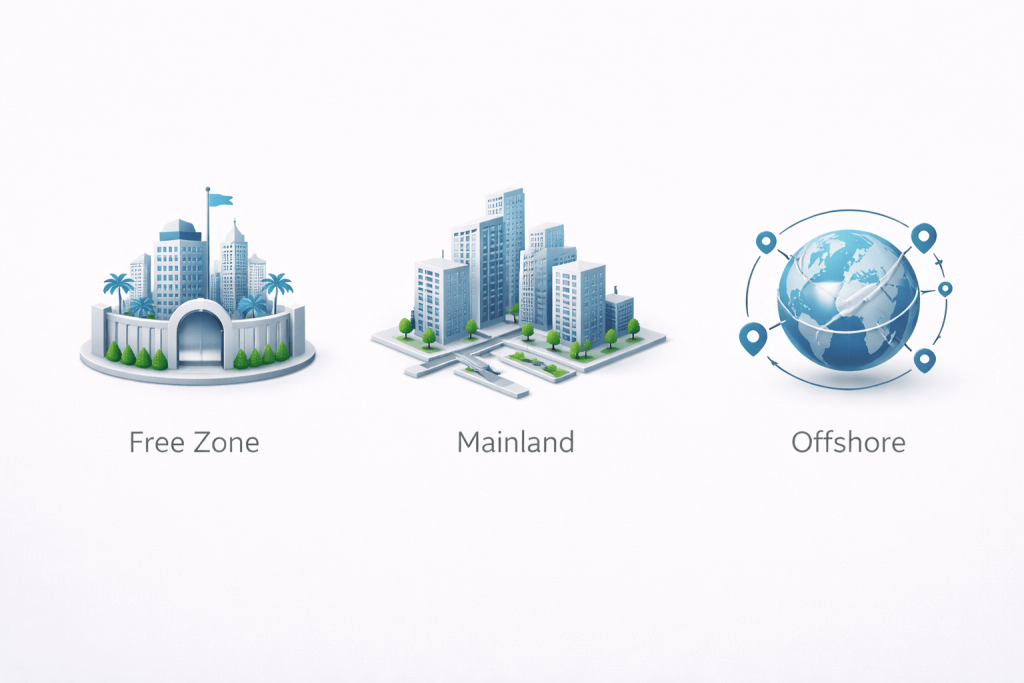
Dubai freezones are designated economic areas regulated by their own free zone authorities. When you set up inside a free zone, your company is licensed under that authority’s rules and activity lists, rather than under Dubai mainland licensing.
In plain terms:
- Free zone company: great for international work, online businesses, consulting, many trading models, and structured growth
- Mainland company: better if you need to sell directly across the UAE market without specific structuring
- Offshore entity: typically for holding structures and specific international use-cases (not for operating locally)
If you’re aiming for speed, clarity, and a base that supports cross-border growth, Dubai freezones are often the first option worth testing.
Best next step: If you want a short list of suitable Dubai freezones (with a clear cost breakdown), book a free consultation with First Elite Global and we’ll map your activity, visas, and budget to the right options.
Types of Dubai freezones

Most people search “Dubai freezones” expecting a single list. What matters more is the type of free zone and what it’s designed to support.
1) General-purpose freezones (broad activity options)
These are built to serve many business models—especially consulting, services, e-commerce, and light trading.
Typically suitable for:
- solo founders and SMEs
- agencies and consultancies
- online-first brands
- service providers working globally
What to watch: activity fit (your exact activity wording matters), visa quotas, workspace rules, and banking readiness.
2) Trade, logistics, and import/export freezones
These focus on movement of goods, warehousing, freight, and regional distribution.
Typically suitable for:
- import/export and re-export businesses
- logistics, shipping, freight forwarding
- trading companies needing warehousing solutions
What to watch: customs processes, warehouse requirements, and whether you need onshore distribution support for UAE mainland sales.
3) Sector-focused freezones (clusters)
Dubai has freezones built around specific industries—technology, media, healthcare, finance, commodities, aviation, and more.
Typically suitable for:
- tech and innovation companies that want ecosystem benefits
- media and creative businesses
- regulated industries (where approvals and standards matter)
- sector-heavy brands that value credibility and location
What to watch: extra approvals, higher setup costs in premium zones, and stricter compliance requirements.
4) Premium, highly regulated hubs
Some Dubai zones come with higher barriers to entry but strong brand value, regulatory frameworks, and international recognition in their domain.
Typically suitable for:
- firms with regulated activities
- larger teams
- businesses that need a recognised regulatory environment
- companies planning local substance and long-term scale
What to watch: office requirements, audit expectations, and total first-year cost.
Dubai free zone list (practical categories, not just names)
Instead of a long list, here’s a way to think about a Dubai free zone list by business purpose—so you can shortlist faster.
If you’re launching a consultancy, agency, or professional service
- broad activity coverage
- low overhead workspace options
- visa planning that scales with your team
If you’re trading goods internationally
- strong logistics links
- import/export support
- warehouse and distribution options (if needed)
If you’re building e-commerce (product or digital)
- flexible activity selection
- cost-effective packages
- clear visa pathway for founders and key staff
If you’re in tech, media, or a specialist industry
- ecosystem and credibility
- sector-specific activity lists
- potential partnerships and community advantages
If you need a UAE base but will operate globally
- remote-friendly incorporation process
- bank-ready documentation planning
- simple compliance structure
Best next step: Share your activity, whether you’ll invoice UAE clients, and how many visas you need. We’ll shortlist the best free zone options and show true first-year cost—before you commit.
Benefits of Dubai freezones (and what they really mean in practice)
100% ownership and control
For most founders, this is the headline benefit: you can fully own the company structure in many free zone setups.
Faster setup pathways
Many freezones are built for streamlined approvals and digital applications—especially for standard service and trading activities.
Workspace flexibility
Depending on the free zone and package, you may be able to start with flexi-desk or shared workspace solutions rather than committing to a full office immediately.
Visa routes for founders and staff
Free zones typically offer a defined visa quota framework linked to your package and workspace category—useful for planning growth.
International positioning
Dubai’s connectivity makes it a strong base for serving clients across the GCC, Africa, Europe, and Asia from one hub.
Customs and logistics advantages (for the right models)
If your business involves goods movement, certain freezones are designed to make the operational side smoother—especially where warehousing and re-export are central.
Tax considerations (important nuance)
Free zones can be tax-efficient, but the result depends on how you operate, where income is sourced, and whether your structure meets the relevant conditions. The smartest approach is to structure correctly from day one—so your licensing, invoicing, and compliance align with your plans.
Dubai free zone setup cost: what you pay for (and why totals vary)

A common frustration: one website says “from X”, another says “all-in package”, and then the quote changes once you mention visas, activities, or office needs.
The most accurate way to understand setup cost is to break it into components.
The main cost buckets (year one)
- Registration + licence fees
- varies by free zone, licence type, and number of activities
- premium zones typically cost more (for ecosystem/regulatory reasons)
- Workspace
- flexi-desk / co-working / serviced office / leased office
- workspace category often affects visa quota
- Visas
- investor/founder visas, employee visas, and dependants (if needed)
- costs vary based on entry status, medical/ID steps, and authority fees
- Establishment card and immigration file
- needed if you’ll issue visas
- Approvals and regulated activity add-ons
- certain industries require extra approvals or documentation
- Banking readiness
- not always a direct “fee”, but a real cost in time and documentation preparation
- you can reduce delays by aligning your company profile and paperwork early
Cost realities most founders overlook
- “Cheapest free zone” isn’t always the cheapest total
A low headline package can become expensive if it forces a workspace upgrade, restricts activities, or complicates visas later. - Renewals matter
Your year-one setup cost is only half the story. Always compare the renewal structure before committing. - Activity wording can change the quote
Two similar business models can fall under different activity categories depending on the exact description.
Quick cost sense-check (use this before you commit)
If you want a simple way to avoid surprises, sanity-check your quote against these questions:
- Does this include the exact licence category you need?
- How many activities are included—and what’s the fee for adding more later?
- What workspace level is required and what does it cost to renew?
- How many visas are included and what’s the cost per additional visa?
- Are there any third-party approvals for your activity?
- What is the renewal cost and timeline?
Best next step: Request a tailored cost breakdown (not a generic package). We’ll separate government fees from service fees and show renewal costs upfront—so you can compare options properly.
How to choose the best free zone in Dubai (a practical decision framework)

“Best free zone” depends on your activity, your growth plan, and how you’ll operate. Use this framework to pick confidently.
Step 1: Define your operating model
Choose the closest match:
- Online-first services (consulting, agency, professional services)
- E-commerce (digital or physical products)
- Trading (import/export, regional distribution)
- Specialist industry (tech, media, healthcare, finance, etc.)
- Holding or group structure (needs careful structuring)
Step 2: Score each free zone using 9 factors
Use a simple 1–5 score for each factor:
- Activity fit (exact activity match, not “close enough”)
- Licence flexibility (add activities, amend later)
- Visa quota scalability (now + next 12 months)
- Workspace rules (flexibility and renewal)
- Speed and clarity of process (documentation, approvals)
- Banking friendliness (company profile alignment)
- Compliance burden (audits, reporting, additional requirements)
- Total first-year cost (all-in, not headline)
- Renewal cost and stability (what you’ll pay next year)
Step 3: Use this “best-fit” shortlist (by common goal)
If your priority is speed + simplicity
- focus on general-purpose zones with broad activity lists and streamlined processes
If your priority is trading + logistics strength
- focus on zones designed for goods movement and warehousing capabilities
If your priority is credibility in a specialist industry
- focus on sector-specific zones where the ecosystem and regulatory framework support your positioning
If your priority is a lean start with room to scale
- choose a zone where adding visas, upgrading workspace, and amending activities is straightforward and transparent
Best next step: If you tell us your activity and how many visas you need, we’ll shortlist the best free zone options and explain why each is a fit—before you pay anything.
Free zone licence basics: choose the right licence category early
Most Dubai free zone licences fall into common categories such as:
- Professional / services (consulting, marketing, IT services, many agencies)
- Commercial / trading (buying/selling goods, import/export)
- Industrial (manufacturing or production-related activity)
- E-commerce / digital commerce (varies by zone—sometimes a dedicated category)
Why this matters: the licence category affects activity lists, fees, documentation, and how your business is perceived by banks and counterparties.
Step-by-step: how Dubai freezone setup usually works
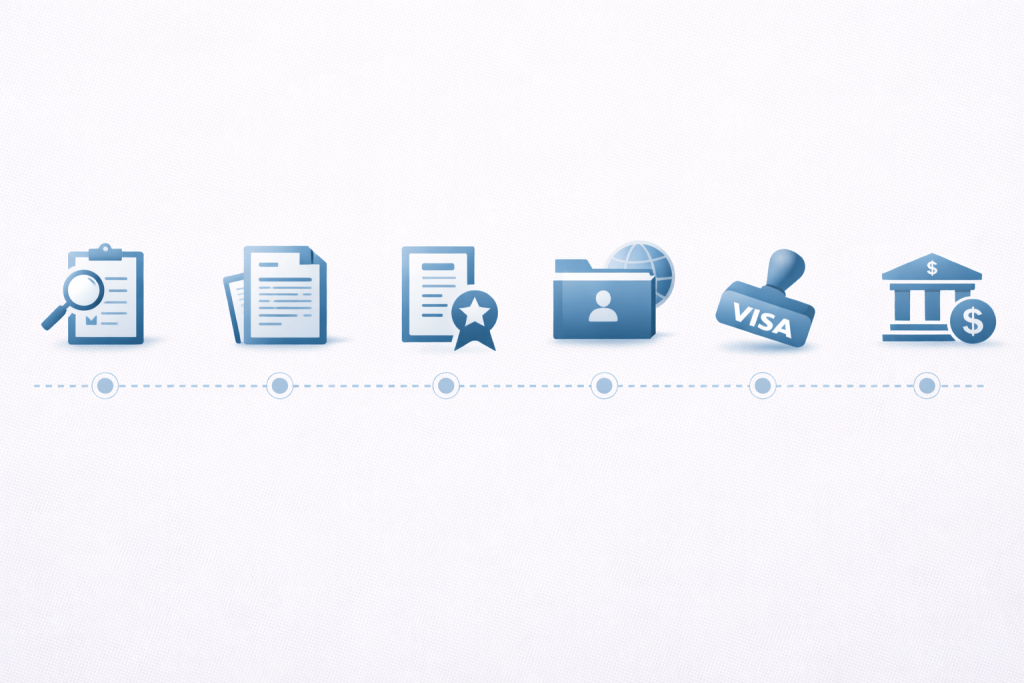
While each authority has its own process, most follow a similar journey:
- Choose activity + legal structure
- Select the free zone + package (based on visas, workspace, and cost)
- Reserve trade name (if required)
- Submit documents (passport copies, application forms, sometimes business plan)
- Approval + payment
- Licence issued + incorporation documents
- Immigration file + establishment card (if visas are needed)
- Visa processing (entry permit, medical, Emirates ID, stamping as required)
- Corporate bank account preparation and application
- Ongoing compliance and renewals
For many founders, the smoothest path is the one with the fewest re-submissions. That comes from matching your activity correctly and submitting a bank-ready file from the start.
Best next step: Book a free consultation and we’ll give you a step-by-step plan tailored to your activity, visas, and whether you’re setting up remotely.
Common mistakes that make Dubai freezones feel “complicated”

Mistake 1: Choosing based on the lowest headline price
Low-price packages can restrict activities, visas, or workspace options. The better question is: what’s the total cost for the setup you actually need?
Mistake 2: Picking an “almost right” activity
Your activity description can affect approvals, fees, and banking. If the wording is wrong, you may face amendments later.
Mistake 3: Not planning visas and workspace together
Visa quotas are often tied to workspace category. If you need staff soon, choose a structure that scales without forcing a costly reshuffle.
Mistake 4: Treating banking as an afterthought
Banking can be straightforward when your documents, company profile, and activity are aligned. It becomes slow when they aren’t.
Mistake 5: Ignoring renewals
A low first-year deal can become expensive in year two. Always compare renewal costs and what’s included.
Real-world examples (illustrative scenarios)
Example A: UK-based consultant serving global clients
Goal: UAE company for invoicing, founder visa, simple setup
Best-fit logic: broad activity coverage, lean workspace, clean documentation path
Key focus: activity wording + visa planning + bank-ready profile
Example B: Trading business importing goods for regional distribution
Goal: import/export capability, potential warehousing, scalable visas
Best-fit logic: trade/logistics-oriented zone with clear operational pathways
Key focus: customs needs, warehousing options, distribution structuring for UAE sales
Example C: Small team launching an e-commerce brand
Goal: quick licence, option to grow headcount, workable renewal fees
Best-fit logic: flexible e-commerce/trading activities, visa scalability, transparent renewals
Key focus: total cost of ownership over 24 months
If you’d like, we can take your scenario and turn it into a one-page plan: recommended free zones, expected steps, timeline, and a clean cost breakdown.
Frequently asked questions
1) What are Dubai freezones and who should use them?
Dubai freezones are special economic areas regulated by free zone authorities. They’re ideal for many international, online, consulting, and trading models—especially when you want a structured setup and a clear visa framework.
2) How do I find the best free zone in Dubai for my business?
Start with your exact activity, how many visas you need, and whether you’ll trade locally in the UAE. The best free zone is the one that matches your activity list, scales with your team, and offers transparent renewal costs.
3) What is the typical Dubai free zone setup cost?
Setup cost depends on the free zone, licence type, activities, visas, and workspace. The most accurate approach is to compare total first-year cost (fees + visas + workspace) and renewal fees—rather than relying on headline package pricing.
4) Can a free zone licence be used to sell in Dubai mainland?
Free zone companies can do business with UAE mainland in certain ways, but direct onshore selling may require structuring (for example, using specific permissions or arrangements). If mainland access is essential, it’s worth comparing free zone vs mainland early.
5) How long does it take to set up a company in Dubai freezones?
Timelines vary by free zone and activity, but many standard setups can be completed relatively quickly once documents are correct and approvals are straightforward. Adding visas, regulated activities, or complex shareholder structures can extend timelines.
6) Do Dubai freezones still offer tax advantages?
Free zone structures can be tax-efficient, but outcomes depend on the company’s situation and whether it meets the relevant conditions under current rules. It’s smart to structure correctly from day one and align compliance with your operating model.