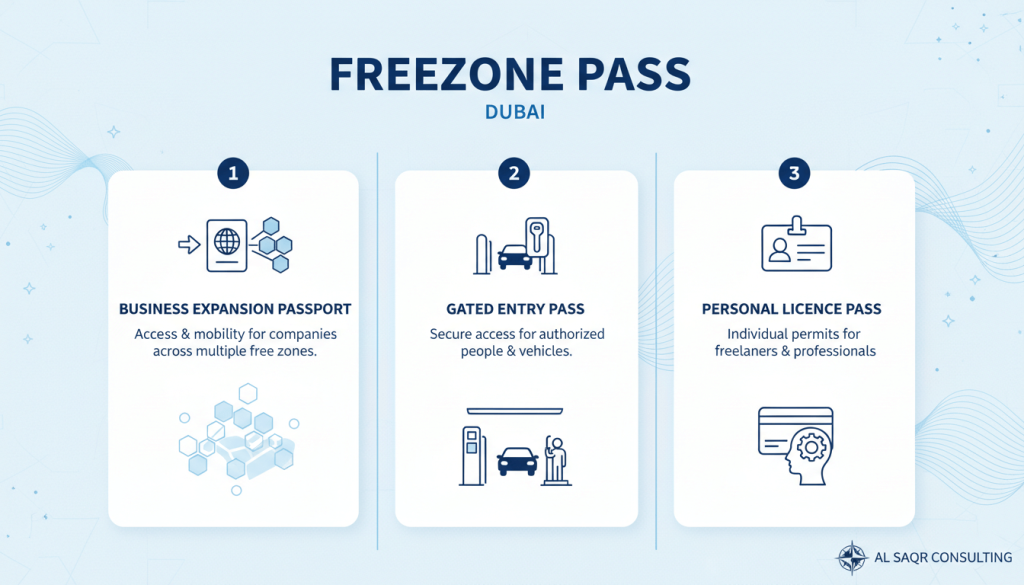
If you’ve searched “freezone pass” and found completely different answers, you’re not alone. In the UAE, the phrase is used in three common ways, and each one solves a different problem.
A “freezone pass” can mean:
- A business expansion “passport” that lets a company operate across multiple Dubai free zones under one licensing framework
- A physical access or gate pass that lets people, vehicles, tools, or shipments enter/exit certain gated free zones and port areas
- A personal “pass” style licence (often marketed as a talent/freelance route) that gives an individual a legal base, visa pathway, and portal access via a free zone
This guide breaks down each meaning, what it’s used for, who needs it, and the fastest way to handle the admin without rework.
If you want someone to confirm the right option for your exact situation, book a free consultation with First Elite Global and we’ll map your plan to the correct authority, portal, and approvals.
The fastest way to identify the “right” freezone pass
Use this quick test:
You’re looking for the “Freezone Pass” that…
- Lets your company operate across multiple free zones → you’re likely referring to the One Freezone Passport (business expansion framework)
- Lets you enter a gated zone or port area (JAFZA, port gates, certain logistics areas) → you need a gate/access pass
- Lets you work as a solo professional under a free zone structure (often with visa options) → you may be looking for a talent/freelance-style licence
Still unsure? That’s normal, because all three get called “freezone pass” in day-to-day conversations.
Freezone pass meaning, side-by-side
| What people say | What it usually means | Who it’s for | What it unlocks | What it does not replace |
| “Freezone passport” | Cross-free-zone business expansion framework | Existing Dubai free zone companies | Additional free zone presence without re-licensing from scratch | Visas, customs/gate passes, office/warehouse requirements |
| “JAFZA freezone pass” | Gate/access pass (visitor, contractor, permanent, tools) | Visitors, staff, contractors, vendors | Entry to gated zones/ports and controlled sites | A trade licence or company registration |
| “Freezone pass for me” | Personal licence route (talent/freelance-style) | Individuals/solo operators | Legal base + authority portal access (often visa pathway) | Employment contract (unless structured that way), automatic mainland retail rights |
1) Freezone “passport”: operating across multiple Dubai free zones
What it is (in practical terms)
Dubai introduced a unified expansion approach that allows a company licensed in one participating Dubai free zone to operate in other participating free zones without needing to set up a completely separate new licence structure for each zone.
Think of it as: one primary licence + approved access to additional zones where you need a second site, a second facility, or a different type of infrastructure.
Why it matters
This is especially valuable if you want to combine:
- Warehousing or logistics in a zone built for it
- Corporate offices in a zone built for HQ functions
- Sector clusters (trade, tech, media, finance) where being in the right ecosystem matters
A high-profile early example involved a global brand keeping warehouse operations in one free zone while establishing corporate offices in another, completed on an accelerated timeline.
Who typically benefits most
- Trading and distribution companies that need logistics capability in one zone and client-facing offices elsewhere
- Regional HQ setups that want a premium address but still need a practical operational base
- Groups consolidating multiple entities and trying to reduce duplicative licensing and admin
- Companies scaling from flex space into real substance (office/warehouse) and needing compliant footprints
Common eligibility realities (the “fine print” people miss)
While the concept is simple, approval depends on rules that can include:
- Matching activities across the primary and additional free zone presence
- Consistency of ownership and management (shareholders/directors/managers usually need to remain aligned)
- Restrictions by business type (certain regulated categories may not qualify)
- Facility requirements in the additional zone (virtual/flex desk arrangements may not be accepted for secondary presence in some cases)
In other words: the “passport” helps you expand, but it doesn’t remove the need to be properly set up where you operate.
How to use it without delays
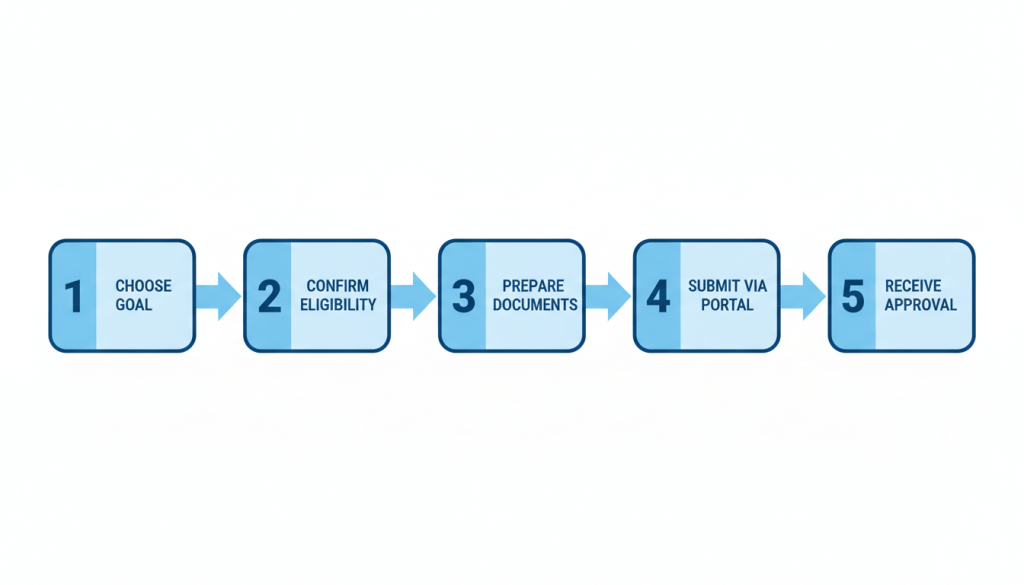
Here’s the clean workflow we recommend:
- Confirm your primary licence is the right foundation
- Your activity list matters more than most people realise.
- Define your expansion reason
- Warehouse, office, showroom, team base, or operational facility.
- Choose the secondary zone based on function
- Don’t choose on price alone if substance rules will force a more expensive setup later.
- Prepare a consistent corporate file
- Shareholding, management, authorisations, and supporting documents.
- Apply via the correct authority route
- The process can vary by authority and participating zone.
The most expensive mistake: starting a secondary setup with assumptions (especially around desks, activities, or ownership alignment) and then having to restructure mid-application.
If you want this mapped properly from the start, First Elite Global can review your current licence and expansion plan and tell you whether your intended secondary presence is likely to be accepted before you spend on leases, deposits, or application fees.
2) Freezone “pass” for entry: gate passes, access cards, and controlled-site entry
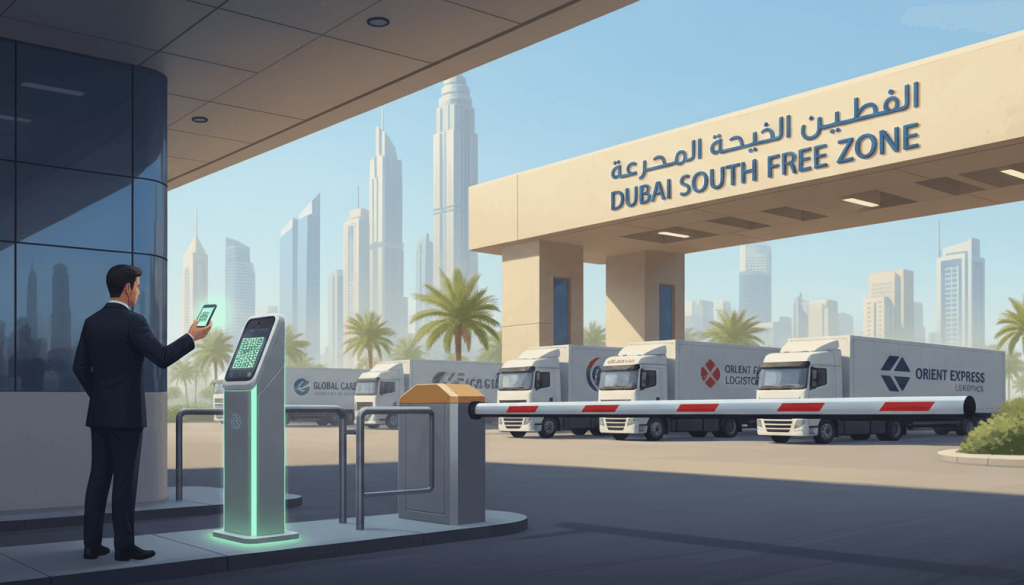
If someone says “I need a freezone pass” right before a meeting, a site visit, or a delivery, they’re usually talking about access.
What a gate pass is
A gate pass is permission to enter or move through a controlled access point. Depending on the zone and facility, passes can apply to:
- People (visitors, staff, contractors)
- Vehicles
- Tools and equipment
- Filming/photography
- Cargo movement in and out of a free zone
Some zones are physically gated and require pre-approval for entry.
Typical use cases
- You’re visiting a company inside a gated free zone for a meeting
- Your vendor needs access for maintenance
- Your staff need repeated entry for operations
- You’re bringing in equipment temporarily
- Your shipment requires an electronic gate clearance for movement
Types of passes you’ll commonly see
While names vary by portal, most fall into patterns like:
- Visitor/day pass (one-time entry)
- Temporary pass (multi-day or multi-week)
- Contractor/maintenance pass (site work)
- Annual/permanent pass (regular access)
- Tools/equipment pass (controlled items)
- Media/filming pass (restricted activities)
The simplest way to avoid rejection at the gate
Gate passes typically fail for boring reasons:
- Name or ID details don’t match exactly
- Vehicle plate details are missing or wrong
- The host company hasn’t approved the request in the portal
- Supporting documents are incomplete
- The pass type doesn’t match the visit purpose (e.g., using a visitor pass for contractor work)
Operational tip: If you’re visiting a company, confirm who inside the host company is responsible for approving passes. Many delays are just internal routing.
“Portal access” and why it matters here
In many cases, the pass is issued through an official portal (or a portal-connected system). That means:
- You may need an account
- The host company may need to approve you
- Passes may have strict validity windows
- A screenshot isn’t always enough; some gates verify digitally
If your team frequently works in controlled free zone environments, we can help you set up the correct access approach so you aren’t repeating manual steps each week.
3) “Freezone pass” for individuals: talent/freelance-style routes
Sometimes “freezone pass” is used as a casual way to describe a personal licensing route, usually designed for:
- Solo operators
- Consultants
- Creators
- Specialists
- Remote service providers
These routes can be attractive because they may offer:
- A simpler structure than a full multi-visa company plan
- A defined authority process and portal access
- A pathway to residency under the right setup
Where people go wrong
This type of “pass” is often marketed as “easy”, but approvals still depend on:
- The activity you choose (and whether you can actually do what you sell)
- Whether you need visas for staff later (scaling can change the best choice)
- Banking expectations (your profile and documentation matter)
- Whether you need to trade in specific ways (B2B vs retail vs regulated activity)
A personal route can be perfect, but only if it matches your operational reality.
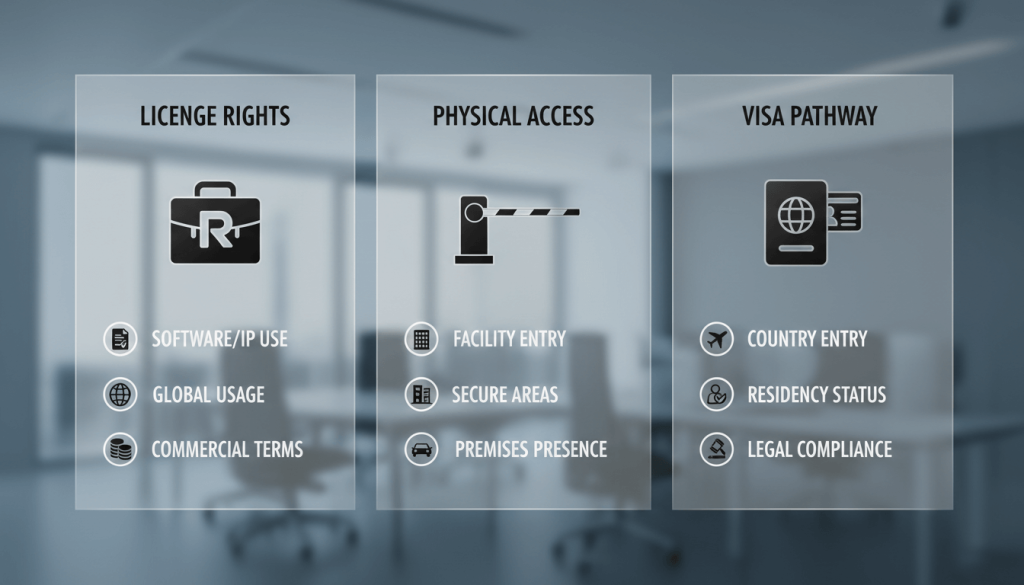
The “hidden” confusion: licence rights vs physical access vs visa status
Here’s the clarity that saves time:
- A business expansion passport is about where your company can operate across zones
- A gate pass/access card is about entering a controlled location
- A personal/talent-style pass is about your legal base and often your residency pathway
One does not automatically grant the others.
A simple decision checklist (copy/paste)
Use this checklist before you apply for anything:
- What are you trying to do?
- Expand business operations across zones
- Enter a gated zone/port facility
- Set yourself up as a solo operator
- What must you access?
- Authority portal access
- Physical site access
- Visa/immigration steps
- What can’t change?
- Ownership/management structure
- Activity list
- Facility requirements (office/warehouse vs desk)
- What’s your timeline?
- Same-day entry needs a different approach than a multi-zone expansion
If you want this validated quickly, First Elite Global can review your goal and tell you exactly which “freezone pass” you actually need, plus the cleanest path through the portals.
Mini case-style examples (realistic scenarios)
Example A: Trading company scaling operations
A trading firm has a Dubai free zone licence and wants:
- Warehousing/logistics aligned with its supply chain
- A separate corporate office where the team can meet partners and manage contracts
Solution approach:
- Confirm activity alignment and ownership consistency
- Use a cross-zone expansion framework where applicable
- Set up the correct facility requirements in the secondary zone
Example B: Contractor needs site entry next week
A maintenance contractor needs multiple entries to a gated free zone for two weeks.
Solution approach:
- Use the correct contractor/temporary pass type
- Ensure host-company approvals and matching ID details
- Prepare vehicle and equipment documentation in advance
Example C: Solo consultant relocating to Dubai
A consultant wants a compliant structure and a pathway to residency but doesn’t need staff yet.
Solution approach:
- Choose a personal licensing route aligned to the activity
- Plan for banking documentation from day one
- Build in an upgrade path if hiring later
Common mistakes to avoid
- Assuming “freezone pass” is one universal thing
- Choosing an activity that doesn’t match your real business
- Starting a secondary presence without checking facility rules
- Treating gate passes like informal invitations
- Leaving portal approvals to the last minute
- Building a structure that works today but blocks scaling later
A practical next step that prevents wasted spend
If you’re dealing with a free zone expansion, gate access, or a personal licensing route, the fastest way to avoid delays is to confirm:
- the correct authority
- the right portal path
- the right documents
- and the right facility/eligibility expectations
Book a free consultation with First Elite Global and we’ll outline the clean route to the correct freezone pass (and tell you what to avoid before you pay for anything).
Frequently Asked Questions
1) What does “freezone pass” mean in Dubai?
“Freezone pass” can refer to a business expansion passport across free zones, a gate/access pass for entering a controlled free zone area, or a personal licensing route for individuals.
2) Is a freezone pass the same as a trade licence?
No. A freezone pass is not automatically a trade licence. Some “passport” frameworks relate to licensing expansion, but access passes are for entry, and personal “passes” are licensing routes for individuals.
3) Do I need a freezone pass to visit JAFZA or a gated free zone?
Often, yes. Many gated zones require an approved gate pass for visitors, contractors, or suppliers. The pass type depends on your purpose and visit duration.
4) How long does it take to get a freezone pass?
It depends on the type. Some gate passes can be issued quickly once approvals are completed, while cross-zone business expansion and personal licensing routes depend on eligibility, documents, and authority processing.
5) Can one freezone pass work for multiple free zones?
If you mean business operations, certain frameworks can enable multi-zone operation under one licensing approach (subject to eligibility). If you mean physical entry, gate passes are usually site- and purpose-specific.
6) What’s the most common reason a freezone pass gets delayed?
Missing or mismatched details in documents, incomplete portal steps, and waiting for the host company or authority approval are the most frequent causes.