IFZA Dubai is one of the most popular ways to set up a UAE free zone company quickly, keep overheads lean, and scale visas as your business grows. But most guides skip the details that actually decide whether IFZA is right for you: which licence you need, how activities and approvals work, what your real first-year budget looks like, and how to avoid banking and compliance delays.
This guide is built for founders who want a clear plan—not vague promises.
IFZA Dubai in 60 seconds
IFZA (International Free Zone Authority) is a Dubai free zone community widely used by startups, consultants, e-commerce operators, trading firms, and international businesses that want:
- A UAE company with 100% foreign ownership
- A fast, structured setup (often remote-friendly)
- Flexible licence packages that can start lean and grow with visas
- A practical path to banking, residency visas, and compliance-ready operations
Quick facts snapshot
- Best for: service businesses, trading/e-commerce, small teams, international operators
- Office options: flexi-desk/shared workspace through to private offices
- Visas: start with zero visas and upgrade later if needed
- Activities: wide list, with some regulated categories requiring extra approvals
Why IFZA is so common for new UAE businesses
Most founders choose IFZA for practical—not hype—reasons:
1) Lean entry cost without “forced scale”
If you’re not hiring immediately, you can structure your setup around what you need now (licence + basic facilities), then add visas when revenue justifies it.
2) Broad activity options (with clearer approvals than many expect)
IFZA supports a large range of activities. Some are simple approvals; some need additional government approvals. The key is selecting activities correctly on day one so you don’t get blocked later.
3) Remote-friendly setup (when your profile fits)
Many founders complete large parts of the process without living in the UAE at the start—then travel for banking and visa steps when it’s actually necessary.
4) It’s easy to keep the business “clean”
A clean setup means:
- Your licence matches your invoicing reality
- Your company documents are consistent
- Your compliance files are ready if a bank asks
That’s what prevents months of delays.
Is IFZA Dubai right for you? A simple decision test
IFZA is usually a strong fit if you say “yes” to most of these:
You want a UAE company primarily to:
- Invoice international clients
- Operate e-commerce/import-export
- Run a consultancy or professional services firm
- Build a startup with a small initial team
- Establish UAE presence without locking into high rent immediately
You might be better outside IFZA if:
- You need to trade freely across the UAE mainland from day one with maximum flexibility (mainland may be better)
- Your business is heavily regulated (finance, certain healthcare, education, etc.) and needs specialised approvals early
- You need a very specific industry ecosystem, premium address, or specialised facilities that another free zone is built around
If you’re unsure, the fastest clarity comes from mapping (1) your activities, (2) where your customers are, (3) your visa needs, and (4) your banking profile—in that order.
IFZA licence types explained (and what founders get wrong)
Your licence must match what you actually do—how you market, how you invoice, and what contracts say. The most common categories founders consider:
Professional / Services licence (common for consultants)
Best for:
- Consulting, management, marketing, tech services, design, coaching, recruitment support (where allowed), and other service-based activities
Common mistake: choosing “consultancy” that doesn’t cover the exact service you provide. Banks and counterparties notice mismatches.
Commercial / Trading licence (common for e-commerce and import/export)
Best for:
- E-commerce trading, general trading (when appropriate), import/export, distribution, product sales
Common mistake: assuming one activity covers everything. If you sell multiple product categories, you may need a structure that supports that scope properly.
Industrial licence (only if you truly manufacture/produce)
Best for:
- Manufacturing or industrial processing (this often impacts facility needs)
Common mistake: selecting industrial when you’re actually doing assembly/light trading.
Rule of thumb: pick the licence category that matches your invoices and contracts—not your aspiration.
Business activities in IFZA: how approvals really work
Think of activities in three practical buckets:
- Standard activities
Often the fastest approvals, suitable for many service and trading setups. - Regulated activities
These require additional approvals from relevant authorities. This can add time and documentation. - High-scrutiny activities
Even if technically possible, they can increase bank onboarding friction unless your profile is strong (experience, contracts, clear source of funds, etc.).
Smart approach: choose the minimum set of activities that fully covers your current business model, and keep future expansion as a planned amendment—not guesswork.
Step-by-step: IFZA Dubai company setup (what happens, in what order)
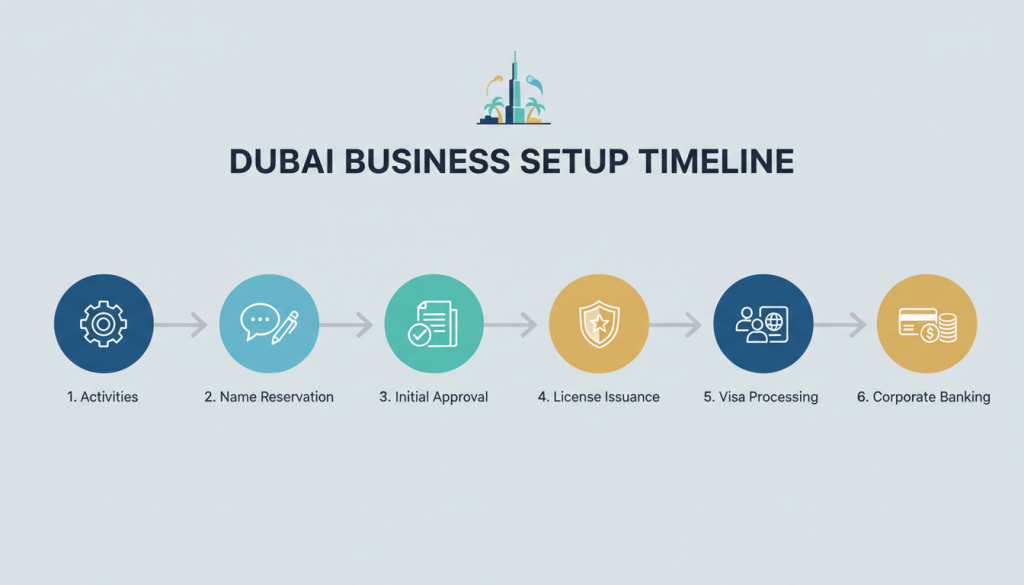
Here’s the cleanest sequence most founders should follow:
Step 1: Clarify your activity + customer type
- What do you sell or deliver?
- Who pays you (UAE clients, international clients, platforms, marketplaces)?
- Will you hire in the next 6–12 months?
Step 2: Choose the legal structure that fits your ownership
Most founders choose a standard free zone company structure with 100% ownership. The details depend on shareholders and future plans.
Step 3: Lock your activity list and licence type
This is where mistakes get expensive later.
Step 4: Name selection and initial approvals
Choose a compliant name that won’t trigger rejections.
Step 5: Submit documents and issue the licence
Once the authority approves, you receive your company documents and licence.
Step 6: Immigration file and visas (only if needed now)
If you need residency visas, you’ll open the immigration file (establishment card) and begin visa processing.
Step 7: Banking and operations setup
This is where most DIY setups slow down—because banks want consistency, clarity, and proof.
If you want a smooth, predictable setup, start with a 15-minute consultation and we’ll map the fastest compliant route based on your activities and visa plan.
Documents checklist (so you don’t get stuck mid-process)
Most IFZA setups require some combination of:
- Passport copy (shareholders / manager)
- Photo (passport-style)
- Contact details and address
- Basic business description (what you do, who you serve)
- If you have an existing company: incorporation documents may be needed
- For regulated activities: extra approvals, qualifications, or supporting documents may apply
Pro tip: prepare a short “business profile pack” early (1–2 pages). Banks love it, authorities move faster, and your setup feels professional from day one.
IFZA Dubai costs: what to budget in Year 1 (real-world view)
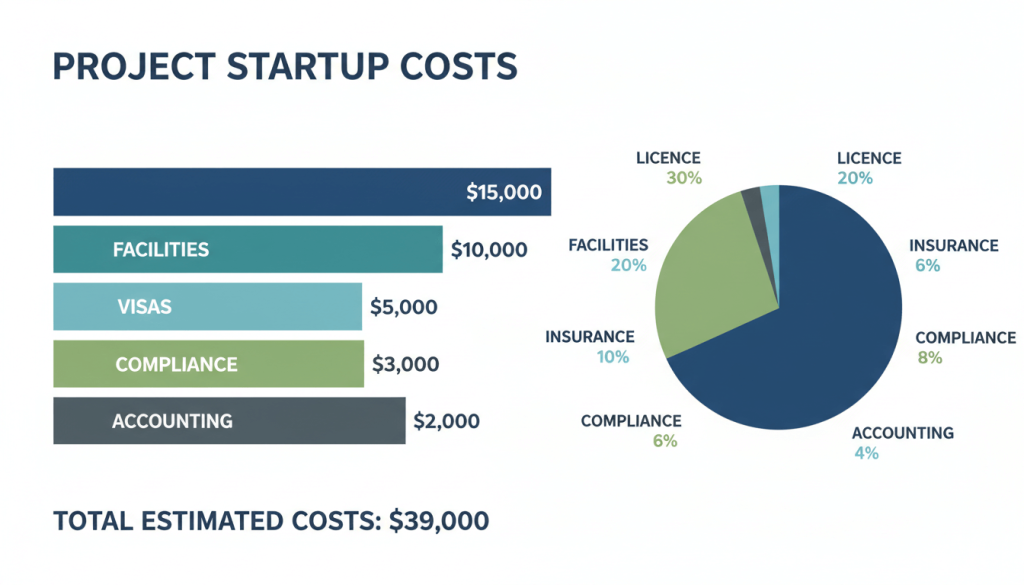
Costs vary by package, activities, and whether you need visas. A realistic first-year budget usually includes:
1) Licence package + registration
This is the base cost of having the company and licence.
2) Facility / office solution
Many founders start with a flexi-desk/shared solution and upgrade later.
3) Immigration file (if sponsoring visas)
You’ll typically need an establishment card/immigration file if you’ll issue visas.
4) Visa costs (per person)
Typical visa-related costs can include:
- Entry permit
- Medical test
- Emirates ID
- Visa stamping
5) Health insurance
Health insurance is required for visa holders.
6) Accounting + compliance foundations
Even small companies should set up:
- Invoicing process
- Bookkeeping
- Corporate tax/VAT readiness (as relevant to your thresholds and activity)
A practical first-year budget planner
Use this simple planner to set expectations:
Total Year 1 = Licence + Facilities + (Visa costs × number of visas) + Insurance + Compliance setup
Three common budget scenarios
- Lean solo founder (no visas yet): lowest entry cost, faster start
- Founder + 1 visa: common for those relocating or needing residency
- Small team (2–4 visas): needs clearer planning for office and operating costs
If you want an exact number instead of guesswork, request a tailored quote and we’ll itemise it so you can see government fees vs optional support costs.
IFZA visas: how quota works and how to scale safely

Visas are where founders either save money—or accidentally lock into costs they don’t need yet.
The smart visa strategy
- Start with the smallest visa requirement that supports your immediate plan
- Build revenue and banking history
- Add visas as your business proves traction
Key visa points founders should know
- You can often start with zero visas and upgrade later
- Your visa capacity is influenced by your package and facilities/office arrangement
- Visa processing adds steps and time, so plan around travel and timelines
If you’re relocating, we’ll help you sequence it so you don’t arrive too early (waiting for documents) or too late (missing banking windows).
Office options in IFZA: what to choose at each stage

IFZA office solutions are designed to let you start lean and upgrade:
Flexi-desk / shared workspace
Best for:
- Solo founders
- Remote-first businesses
- Early-stage operators keeping overhead low
Dedicated desk / enhanced flexi options
Best for:
- Founders who want a stronger “business presence”
- Small teams that need meeting space more regularly
Private office
Best for:
- Hiring
- Frequent client meetings
- Stronger substance and operational footprint
Practical guidance: choose the smallest option that meets your visa and credibility needs—then upgrade when your workflow demands it.
Tax and compliance in 2026: what you must get right early
Most founders don’t get into trouble because they’re doing something wrong—they get into trouble because they didn’t set up the basics.
Corporate tax
Free zone companies can access beneficial treatment when conditions are met. The important part is not the headline—it’s the compliance: substance, proper records, and correct income categorisation.
VAT
VAT depends on your taxable supplies and thresholds. Being in a free zone does not automatically mean “no VAT” in every scenario. You need a clean VAT position based on what you sell and where your customers are.
Accounting and documentation
Banks, partners, and authorities expect:
- Consistent invoices aligned with your licensed activities
- Clean bookkeeping
- Basic contracts and proof of business activity when requested
If you want to keep your UAE company low-stress, treat compliance like a foundation—not a future problem.
Banking in the UAE: the part everyone underestimates
Founders often think “I’ll open a bank account after the licence.” In reality, banking goes smoother when you prepare for it from the start.
What banks typically want to see
- Clear business model and activity match
- Client/contracts proof (even simple LOIs help)
- Clean source of funds explanation
- Professional email domain, website or credible online presence
- Consistent documents (names, addresses, ownership)
If banking matters to your plan, don’t guess. We’ll guide you to the right bank pathway based on your industry, nationality, and transaction profile.
IFZA vs other free zones: a practical comparison (not marketing)

Here’s how founders usually decide:
IFZA
Best for: affordability, flexible start, broad activities, fast setup
Ideal for: consultants, e-commerce, trading, SMEs starting lean
DMCC
Best for: premium ecosystem, brand perception, certain industry networks
Ideal for: businesses that value a premium address and ecosystem (and have higher setup budgets)
RAKEZ (Ras Al Khaimah)
Best for: cost efficiency, industrial options in some cases
Ideal for: founders prioritising lowest cost and specific operational needs
Dubai Silicon Oasis ecosystem
Best for: tech/community environment
Ideal for: tech operators who want proximity to a specific hub vibe
Your best choice depends on the intersection of cost, customer location, credibility needs, and approvals—not the logo.
Timeline: how long IFZA setup takes in real life
Timelines depend heavily on how prepared you are and whether your activities require extra approvals.
Typical stages
- Licence issuance: can be fast when documents are clean and activities are standard
- Visa processing: adds medical, Emirates ID, stamping steps
- Banking: varies widely based on profile and readiness
Fast setups happen when:
- Activities are correct and not regulated
- Documents are ready on day one
- You choose a clean, bank-friendly structure
The 7 mistakes that cause delays (and how to avoid them)
- Wrong activities → causes bank issues and licence amendments
- Overloading activities “just in case” → triggers compliance friction
- Buying visas before you need them → unnecessary cost
- No business profile pack → banking delays
- Inconsistent documents → rejection loops
- Ignoring compliance early → messy tax/VAT later
- Choosing a jurisdiction before defining customers → wrong structure
Avoid these and your setup becomes predictable.
A realistic example: three IFZA setups founders use
Example 1: Solo consultant (lean start)
- Professional/services activities aligned to consulting scope
- Flexi-style facility
- No visas initially
Goal: invoice international clients quickly, open bank account with clean documentation
Example 2: E-commerce trader (structured for growth)
- Trading activities matched to product category
- Facility option that supports credibility
- 1–2 visas planned once operations start
Goal: import/export readiness and scalable structure
Example 3: Small agency (team-ready approach)
- Services activities covering delivery and management
- Office solution upgraded earlier
- Multiple visas planned
Goal: hire, operate locally, and maintain stronger operational footprint
If you tell us your model in one paragraph, we’ll map the simplest version of your setup—then show you exactly how to scale it.
Ready to set up IFZA Dubai without guesswork?

If you want clarity on licence type, activities, visa plan, total cost, and the fastest compliant timeline, talk to First Elite Global.
We’ll give you:
- A clear recommended structure (with reasons)
- An itemised cost breakdown (government fees vs optional support)
- A timeline you can actually plan around
- Banking and compliance guidance so you don’t redo the setup later
Request your free consultation and we’ll build your IFZA setup plan end-to-end.
FAQs
1) What is IFZA Dubai and what is it used for?
IFZA Dubai is a Dubai free zone authority used to set up a UAE free zone company with 100% foreign ownership. It’s commonly used for consulting, trading, e-commerce, and international business operations that want a structured setup and flexible visa scaling.
2) How much does an IFZA Dubai licence cost?
IFZA Dubai licence cost depends on the licence package, activities, and visa quota. Your real first-year cost should include the licence, facilities, and (if applicable) establishment card, visas, insurance, and compliance setup.
3) Can I set up an IFZA company with zero visas?
Yes. Many founders begin with a zero-visa setup and upgrade later when they need residency visas for themselves or staff. This is one of the most common “lean start” strategies.
4) How long does IFZA company setup take in Dubai?
IFZA setup time varies by activity and readiness. Standard activity setups can be quick once documents are submitted correctly, while regulated activities and visa/banking steps add additional time.
5) Is IFZA better than DMCC?
IFZA vs DMCC depends on your priorities. IFZA is often chosen for cost-efficient, flexible startup setups. DMCC is often chosen for premium ecosystem, address perception, and certain networks. The best choice depends on activities, budget, and growth plan.
6) Can an IFZA free zone company do business in the UAE mainland?
A free zone company can do international business and operate under free zone rules, but mainland selling and operational scope depend on the activity and the structure you choose. If mainland access is central to your plan, structure it correctly from day one.